
Bao workshop instructor
Wants to steam bao in successive batches and needs to check how many trays will fit with enough space between them. For its bapao recipe, Miele recommends leaving space between the buns.


For bao, choose an appliance with a confirmed steam-only setting; steam assistance during baking is not the same thing. Then check whether the trays and spacing will accommodate your portions and workshop sessions. If you also want to bake, consider a combination steam oven. For a temporary venue without suitable built-in space, a pan or steamer basket could be an alternative.
Wants to steam bao in successive batches and needs to check how many trays will fit with enough space between them. For its bapao recipe, Miele recommends leaving space between the buns.
Wants to steam bao and use the same built-in oven for baking or roasting. The distinction between a steam-only setting and steam assistance is important here.
Running a workshop at a temporary venue and weighing up whether a steaming pan or basket would be more practical than a built-in oven. The Netherlands Nutrition Centre lists both as ways to steam food.
Start by checking the bao cooking setting, then work out how much space you need per batch. Finally, make sure the appliance suits the available space and any other cooking tasks.
| What to consider | What to look for | Who is this most relevant to? |
|---|---|---|
| Steam-only cooking | Check the manual for the exact model to confirm it has a steam-only setting and that its controls suit your recipe. | If I want to steam bao, I need a suitable setting, not just steam assistance during baking. Around 36% of consumers prioritise steam-only cooking. |
| Space per batch | Compare the usable trays and levels with your portion size, leaving space between the buns so they can rise. Don’t estimate the number of portions from the oven’s litre capacity. | If I’m making several batches in a row, I want to know how many bao will fit on the trays with enough space between them. Around 29% of consumers prioritise reducing the number of batches. |
| Baking and roasting too | Check both the steam-only setting and the oven functions you want to use as well. Compare the appliance dimensions with the dimensions of the recess. | If I want to use just one built-in oven for bao and other dishes, both cooking methods matter. Around 21% of consumers put this versatility first. |
| Workshop space | Compare the appliance and recess dimensions with the space available, or check whether a pan with a steamer basket and lid will fit your cooking area. | If I’m cooking at a temporary venue, I want to know which steaming solution will work there without a built-in oven. Around 14% of consumers give ease of placement top priority. |
Some ovens add steam during a baking programme. That’s a different cooking method from cooking bao with steam alone.
Check the cooking settings in the manual for the full model number.
The buns need room to rise. The capacity in litres doesn’t tell you how many will fit on the usable trays with enough space between them.
Compare the trays and levels with your desired portion size, and allow for the possibility of extra batches.
Depending on the tray configuration, you may need to cook extra batches or buy suitable trays separately.
A recipe’s cooking time doesn’t prove that every portion or filling will be fully cooked under different conditions.
Check the filling separately. For minced meat, make sure it is fully cooked, as recommended by the Netherlands Nutrition Centre.
The DG 7440 is a dedicated built-in steam oven for anyone who mainly wants to steam.
The OFS956ZG is a multifunctional built-in oven with a full steam setting.
The HSG7364B1 is a built-in oven with full steam and additional baking functions.
According to AEG, the BS7900B combines a 100% steam setting with fan cooking and other oven functions.
NEFF offers built-in models with full steam in both compact and taller designs.
The products below range from a built-in oven with steam to freestanding steamers and a steamer designed to sit on a pan.
 No image available
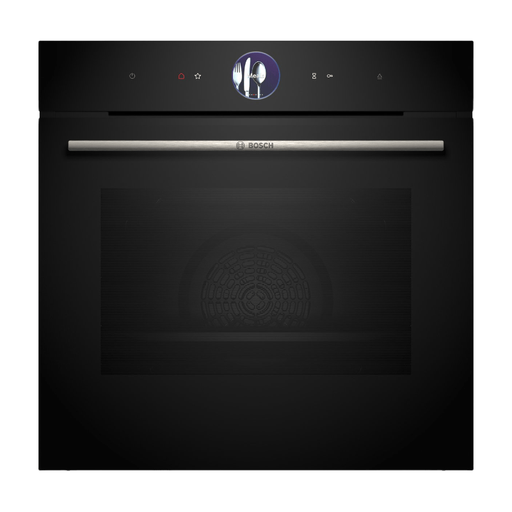
Suited to anyone who wants to cook bao with full steam and use the same oven for baking too.
Bosch lists appliance dimensions of 595 × 594 × 548 mm; check that these fit your available recess.
 No image available
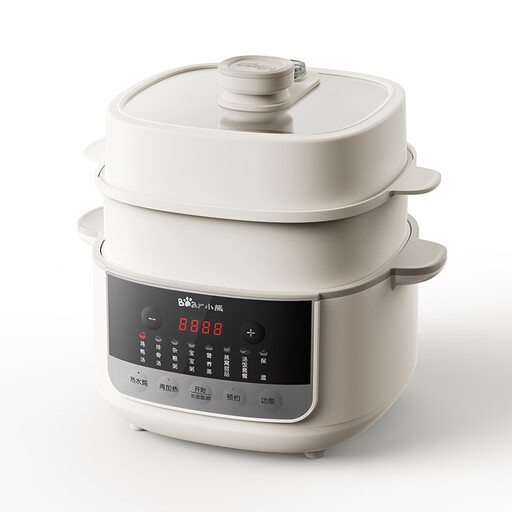
A freestanding steaming option to consider if you don’t want to use a built-in oven for your workshop.
The product name specifies a steamer basket and a transparent glass lid.
 No image available
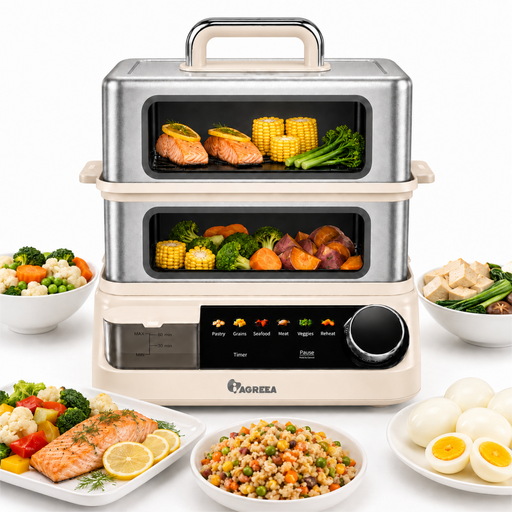
A freestanding model to consider if you want to steam bao without a built-in oven.
The product name specifies 14 L, 2000 W, two tiers, two stainless steel trays and a 2,5 L external water tank.
 No image available
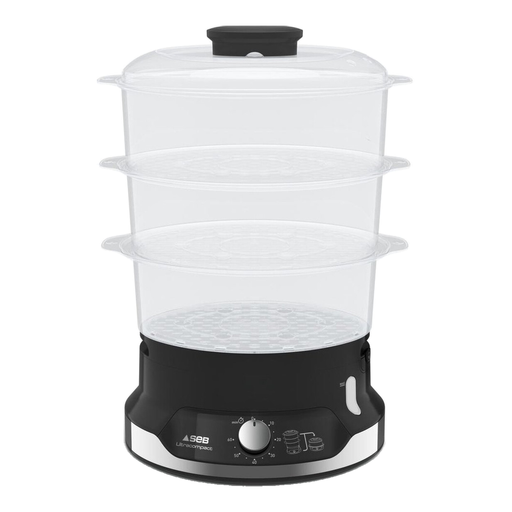
A freestanding steamer to consider if a built-in oven isn’t suitable for your workshop venue.
The product name specifies 800 W, a 9-litre capacity and three tiers.
 No image available
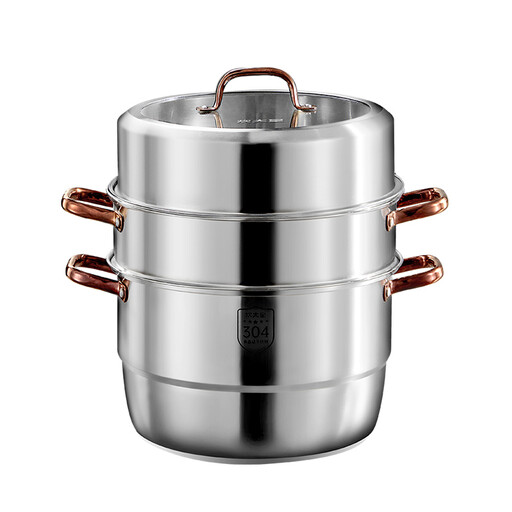
A steamer designed to sit on a pan, worth considering if you don’t want to use a built-in oven for your workshop.
The product name specifies stainless steel and a diameter of 26 cm.
Not on the basis of that feature alone. Check whether the exact model also has a steam-only setting. ETNA makes this distinction explicit, and AEG describes separate programmes for 100% steam and steam with fan cooking.
No. Miele’s recipe sets out separate steps for proving, rising again and steaming, and recommends leaving space between the buns. Follow your appliance’s manual and, if you’re using a minced meat filling, check that the meat is fully cooked; a recipe time can’t confirm that for every portion.
Compare the dimensions of the exact model with those of the recess, and refer to the relevant manual. Also check the type of water reservoir and what cleaning features the model has.
For a consumer purchase in the Netherlands, the seller is responsible under the statutory guarantee if the product doesn’t meet what you could reasonably expect when used normally. ACM ConsuWijzer explains that the seller must resolve the issue under the law. Check separately which terms apply to a business purchase.
If the organiser operates as a food business and produces, processes, sells or distributes food, the NVWA requires a food safety plan based on HACCP or an applicable hygiene code. Rules on allergen information also apply when offering unpackaged products to customers. Whether these requirements apply to a particular private workshop depends on how it is organised and offered.