For a single banana smoothie made with fresh banana, a compact mini or smoothie blender is a sensible place to start. Just remember to measure the space needed for the whole appliance and its separate parts. If you want to drink from the same cup, look for a model with a travel cup. If you often make larger portions or use frozen fruit, compare the capacity and the stated uses of the specific model too.
Who is this guide for?
Making smoothies in a small kitchen
You mainly make banana smoothies at home and want to know whether both the blender and the cup will fit in your cupboard. The Consumers’ Association (Consumentenbond) describes a small blending jug as a typical feature of a smoothie blender.
Fans of thicker smoothies
You also use frozen banana or other firm fruit, so you check which ingredients the manufacturer says the model can handle. The Consumers’ Association includes smoothies made with frozen fruit in its test method.
Taking your smoothie with you
You want to make a small portion straight into a drinking cup, or sometimes blend without a power socket. The cup, lid and, where relevant, charging requirements all influence your choice.
What should you look for when buying?
| What to consider |
What should you check? |
Who should pay particular attention? |
| Storing it in a small cupboard |
Measure the available height, width and depth. Allow room for the cup and other parts too if you store them separately. |
If I have limited cupboard space, I want to know whether I can put the whole appliance away after use. Around 36% of consumers rank storage space as their top purchase priority. |
| Blending a smoothie properly |
Decide whether you use fresh or frozen banana, then check the stated uses for the exact model. |
If you regularly use frozen fruit, check whether the model is designed for it; a manufacturer’s claim is not the same as an independent test result. Around 29% of consumers give the expected blending result top priority. |
| Cleaning after use |
Check the manual to see whether each part is dishwasher-safe. |
If I make smoothies often, I want to know which separate parts the manual says I can put in the dishwasher. Around 21% of consumers put ease of cleaning first. |
| Portion size and taking it with you |
Compare the cup capacity with your usual portion and check whether the lid is suitable for taking with you. |
If you want to make your smoothie straight into a drinking cup or blend on the go, the cup matters more than the size of the base alone. Around 14% of consumers give portion size and portability top priority. |
Common mistakes
-
Measuring only the motor base
The Bosch MMB2111S is listed as 367 mm high; separate parts may need their own storage space too.
Measure your cupboard and decide whether you want to store the appliance assembled or taken apart. Bosch lists dimensions of 367 × 122 × 126 mm for this model.
If the assembled appliance will not fit, you will also need to make room for the cup and any other separate parts.
-
Choosing a rechargeable blender when you only blend at home
Cordless blending can be useful when there is no power socket nearby, but it also means you need to charge the appliance. For the nutribullet Portable, the manufacturer states that one charge provides around 15 blending cycles.
Choose a rechargeable model mainly if blending without a power socket is important to you. A corded blender with a travel cup may be enough if you only want to take your prepared smoothie with you.
-
Assuming every part is dishwasher-safe
Which parts you can wash in the dishwasher varies by model and component.
Check the manual for the cup, lid and blades separately. Follow the user instructions for cleaning the motor housing.
Brands to consider
Philips
The Philips HR2510/90 is described as a compact mini blender for smoothies, sauces and more.
- Philips states that this model’s parts are dishwasher-safe.
- Measure the cupboard height you need yourself; the product information does not provide an independent comparison of blending results.
Bosch
The VitaPower Serie 2 MMB2111S is a smoothie-to-go model. Bosch lists a cup capacity of 0.6 l and dimensions of 367 × 122 × 126 mm.
- Bosch lists a travel cup and dishwasher-safe parts.
- Information about using frozen fruit is a Bosch claim, not an independent test score. Also check that the appliance will fit in your cupboard.
nutribullet
The Portable NBP003NBL is described by the manufacturer as a rechargeable blender for small smoothies, with a 475 ml cup.
- nutribullet states that this model charges via USB-C and provides around 15 blending cycles per charge.
- You need to charge it for cordless use; these specifications do not automatically apply to other nutribullet blenders.
Blenders at Joybuy
These picks from Joybuy are suited to banana smoothies, with compact models and blenders that let you make or take your smoothie in a drinking cup.
 No image available
Philips 3000 Series Mini Blender HR2510/90, 0.6 l, 350 W
An option if you’re looking for a compact blender for fruit smoothies and a 0.6 l capacity suits your portion size.
The product name lists 350 W, ice crushing and a white/silver finish.
View at Joybuy
 No image available
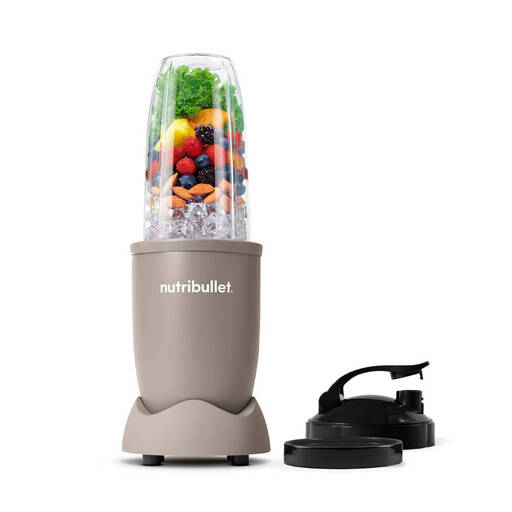
nutribullet Exclusive Blender, Mocha Brown, 700 ml
A good fit if you want to make smoothies and take the cup with you using the To-Go lid.
The product name lists a 700 ml capacity, 900 W and a To-Go lid.
View at Joybuy
 No image available
nutribullet Portable Personal Blender, 475 ml, White Beige
An option if you want to make one small smoothie and be able to blend without a power socket.
The product name lists a rechargeable battery and USB-C charging. It needs to be charged for cordless use.
View at Joybuy
 No image available
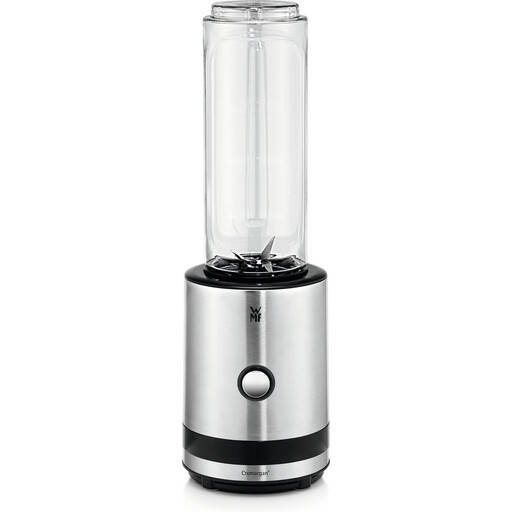
WMF Smoothie To Go Blender, 0.6 l
A good fit if you want to make a smoothie in a drinking cup and take it with you.
The product name lists a 0.6 l capacity and stainless steel.
View at Joybuy
 No image available
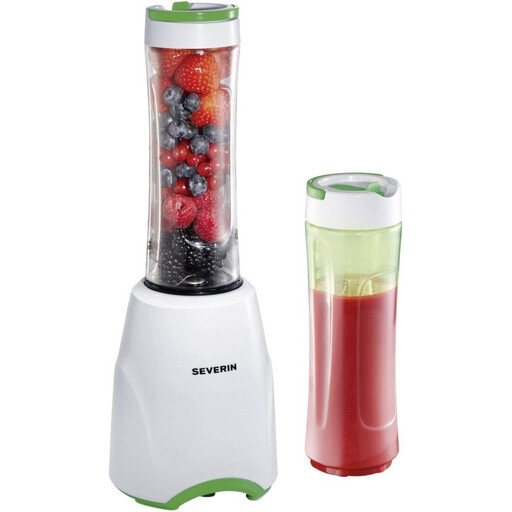
Severin SM 3735 Smoothie Maker
An option if you’re looking for a smoothie blender that lets you make your smoothie in a drinking cup and take it with you.
View at Joybuy
Frequently asked questions
Do you need a high-powered blender for a banana smoothie?
Not necessarily: according to the Consumers’ Association, regular blenders can make smoothies too. Consider frozen or other firm ingredients separately; a higher stated power rating alone does not prove that a blender will blend your recipe better.
How do you use and clean a blender?
Follow the fill line and the model’s user instructions. The Consumers’ Association recommends cleaning the separate parts as directed in the manual and drying them thoroughly; clean the motor housing according to the manufacturer’s instructions.
What can you do if your blender breaks too soon during normal use?
In the Netherlands, you can contact the seller if the product does not meet the legal requirements. ACM ConsuWijzer states that the seller must offer an appropriate solution free of charge, such as a repair or replacement; a manufacturer’s warranty does not replace your statutory rights.
Can you return a blender bought online if it doesn’t fit in your cupboard?
In the Netherlands, many online consumer purchases come with a statutory 14-day cooling-off period after delivery. ACM ConsuWijzer explains the exceptions and conditions for unboxing and trying out a product; check these before using the blender.
What rules apply to a blender cup that comes into contact with food?
According to the Netherlands Food and Consumer Product Safety Authority, products intended to come into contact with food must comply with Dutch and European rules on food contact materials. This does not in itself mean that a specific model on sale has been checked for compliance.


