
Making lunch for one
You usually make one banana smoothie and want to choose between a small cup to take with you and a standard blender that you can use for other things too.


For a single smoothie made with soft banana, a standard blender or compact smoothie maker will usually do the job. If you’re making smoothies for several people at lunch, the usable capacity per blend is what matters most. Only choose ice or frozen fruit functions if you’ll actually use them, and check the fill line and cleaning instructions for the model before you buy.
You usually make one banana smoothie and want to choose between a small cup to take with you and a standard blender that you can use for other things too.
You’re pouring several smoothies one after another, so a good usable jug capacity is especially useful.
You also use frozen banana, other frozen fruit or ice, so you check that the model you choose is designed for those ingredients.
Choose this if: you make one or more smoothies at home and don’t need a cup to take with you.
Keep in mind: the maximum jug capacity may be greater than its effective blending capacity; compare the capacity specified for making portions.
Choose this if: you usually make one portion and want to drink from the same cup or take your smoothie with you.
Keep in mind: a small cup limits how much you can blend at a time and won’t always replace a jug when you’re making smoothies for several people.
Choose this if: you regularly blend for several people or add frozen banana, other frozen fruit or ice.
Keep in mind: check the usable capacity and guidance for those ingredients. Extra functions aren’t necessarily needed for a smoothie made with soft banana alone.
| What to consider | What should you check? | Who should consider this? |
|---|---|---|
| Smooth texture | Where possible, look at a relevant smoothie test; wattage alone doesn’t prove how smooth a smoothie will be. | If I mainly want a smooth banana smoothie, I’d rather compare the smoothie results than just the power. A smooth texture is the top priority for around 36% of consumers. |
| Portion size | Compare the usable blending capacity with the number of portions; don’t rely on the maximum jug capacity alone. | If I want to blend for several lunch guests at once, I look at how much the blender can actually mix in one go. Around 29% of consumers put portion size first. |
| Cleaning | Check which parts can be removed and which are dishwasher-safe according to the manual. | If I want to do as little washing-up by hand as possible after lunch, I want to know how to clean the cup, blades and seals. Easy cleaning is the top priority for around 21% of consumers. |
| Frozen ingredients | Check the instructions for frozen fruit or ice for the exact model. | If I also want to use frozen banana or ice, I look for model-specific guidance on how to prepare them. Around 14% of consumers give frozen ingredients top priority. |
The stated maximum capacity may differ from the effective capacity. For example, Philips lists the HR2041/00 as having a maximum capacity of 1,9 l and an effective capacity of 1 l.
Compare the effective or usable capacity with the amount of smoothie you want to make for lunch.
Power alone doesn’t tell you how well a blender performs when making smoothies. The Dutch Consumers’ Association assesses factors including smoothie results.
Where possible, look at a relevant smoothie test and check the usage limits for the exact model.
Cleaning instructions can vary from one part to another. For example, nutribullet says the cup for the NB603DG can go on the top rack, while the blade assembly should be rinsed separately.
Check the manual to find out how to clean the cup, blades and seals individually.
The HR2041/00 is a jug blender that Philips describes as having a maximum capacity of 1,9 l and an effective capacity of 1 l.
The VitaPower Serie 2 MMB2111S is a compact blender with a 0,6 l to-go cup.
The Original 600 NB603DG is a personal blender supplied with a 700 ml cup.
The PerfectMix+ BL871D31 is a jug blender for which Tefal lists a usable capacity of 1,5 l.
This selection includes jug blenders for several portions, compact models and models with stated ice-crushing capabilities. Choose the capacity and features to suit what you want to make for weekend lunch.
 No image available
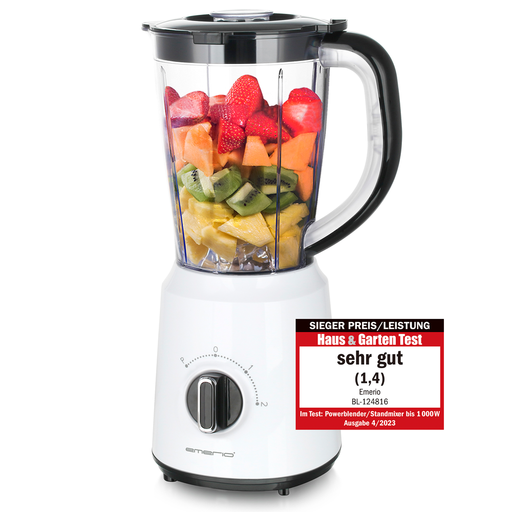
An option for anyone making smoothies for several people who also wants to crush ice; the product name specifies a 1,5 l jug.
1.300 W; 1,5 l; 2 speeds; pulse function; 4 blades; ice crushing.
 No image available
A jug blender for anyone making smoothies for several people; the product description lists a capacity of 1,5 l.
1,5 l; 2 speeds. The product description says that removable parts are dishwasher-safe.
 No image available
The description lists a setting for soft foods such as banana, as well as a mixing jug for preparing food for several people.
800 W; 1.500 ml mixing jug; 600 ml travel bottle; 300 ml chopper bowl. The description also lists a setting for soft foods.
 No image available
A compact mini blender for anyone preparing a smaller amount; the product name lists a capacity of 0,6 l.
0,6 l; 350 W; 2 speeds; ice crushing.
 No image available
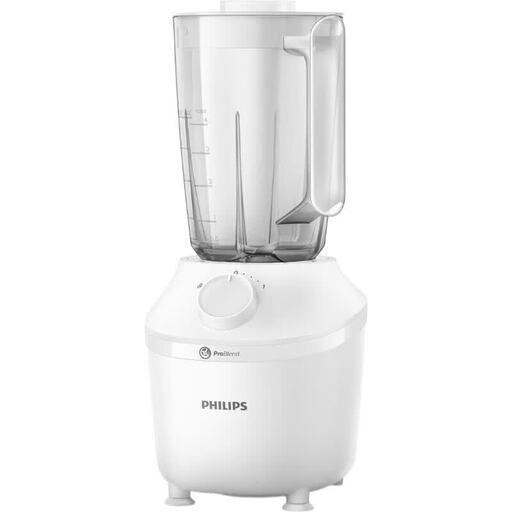
A standard jug blender for making smoothies at home. Philips lists an effective capacity of 1 l, compared with a maximum capacity of 1,9 l.
450 W; 1 speed setting; pulse setting. Philips lists a plastic jug.
Not for soft banana alone: according to the Dutch Consumers’ Association’s buying advice, a standard blender can make smoothies. If you also use ice or frozen fruit, check the instructions for the specific model.
Follow the manual for each part. The Dutch Consumers’ Association advises removing the jug from the base, wiping the housing with a damp cloth and putting only approved removable parts in the dishwasher.
Keep a smoothie made with milk chilled. According to the Netherlands Nutrition Centre, perishable food should be kept in the fridge at 4 °C, and products such as milk should not be left out of the fridge for more than two hours. Check the Storage Guide for advice on ingredients and preparation.
Report a faulty product to the seller. According to the Government of the Netherlands, there is no set statutory two-year guarantee period in the Netherlands; what you can expect depends, among other things, on the product and normal use.
Electrical equipment covered by applicable rules requiring CE marking must carry that mark. For low-voltage rules, the Netherlands Food and Consumer Product Safety Authority lists a nominal AC voltage of 50 V to 1.000 V; check whether those rules apply to the specific version.
For distance purchases from a business, the Government of the Netherlands says that in many cases you have a 14-day cooling-off period. Before using the blender, check the seller’s information about the terms and conditions. A manufacturer’s guarantee or more generous shop policy is separate from this statutory right.