
Vandaag of morgen in huis

Kwaliteit gegarandeerd

Welkomstaanbiedingen ontgrendelen: GRATIS bezorging | Tot 80% korting | Gratis 30 dagen JoyPlus-proefperiode
Download de app
Banana products come in many forms, from banana purée for babies to banana fruit pouches, banana drinks, banana sweets and banana pudding. This wide choice is useful, but it can make comparing products tricky. Eye-catching packaging or claims such as “organic”, “natural” or “no added sugar” don’t tell the whole story.
When it comes to banana baby food, it’s especially important to look beyond the flavour. The age recommendation, allergens, storage instructions and texture all determine whether a product is right for your needs. For adults, the main considerations are ingredients, sugar content, portion size and ease of preparation.
A banana product may look suitable for young babies, but not every product is baby food. A banana drink, pudding mix or gummy isn’t automatically suitable for a baby’s diet. So always check the official age recommendation, such as from 4 months, from 6 months or from 12 months.
Baby food from 4 months is often a smooth purée with a simple ingredient list. Products from 6 months may contain extra ingredients, such as yoghurt or grains. From 12 months, you’re more likely to find pouches containing several types of fruit and grains.
Bananas and other fruit naturally contain sugars. So a product with no added sugar isn’t the same as a sugar-free product. Check the ingredients list and nutrition table. A banana drink, for example, may contain added sugar as well as banana purée.
Yoghurt, milk, oats, wheat, rye and soya are often found in banana products. If it matters to you, also check whether a product contains gelatine. A smooth banana purée is different from a product with grains or pieces, too. The texture should be right for the child’s age and eating experience.
Use the age on the label as your first filter. Banana purée for babies is generally intended for starting with small portions, while a fruit pouch is often designed as a snack for older babies or toddlers. The label “from 12 months” isn’t a general recommendation for younger children.
Also consider the type of product:
Ingredients are listed in descending order by quantity. A product with banana listed first will generally contain relatively more banana than one with banana further down the list. Always check the product packaging, as ingredients and warnings can change.
For example, according to the product information, Ella’s Kitchen Organic Banana Breakfast contains 56% banana, 41% yoghurt, 2% oat flour and 1% rice flour. It contains milk and oats. Organix Squeezable Fruits Oat, Apricot & Banana contains oats and grains containing wheat, among other ingredients, and is suitable from 12 months.
An opened baby food product usually needs to be kept in the fridge and used within a set time. This varies by product: some specify a maximum of 24 hours, while others say 48 hours. Don’t use a pack if it’s damaged or swollen, and check the use-by date on the label.
Pouches are handy when you’re out and about, but it’s best to supervise your baby while they eat. Offering a product straight from the pack can also affect how a child learns to eat. So follow the manufacturer’s instructions for use.
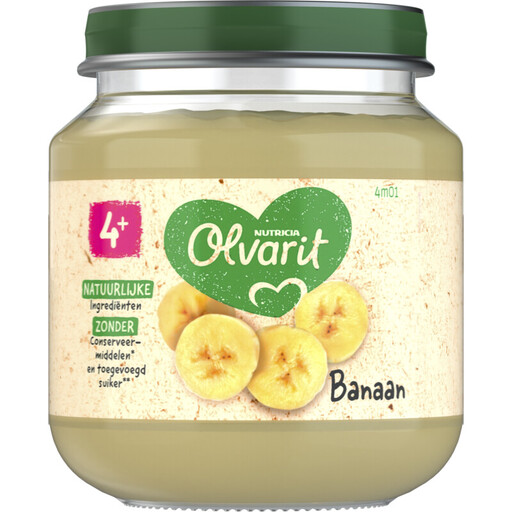
Why it suits this profile: A straightforward choice for parents starting complementary feeding and looking for a 125-gram portion.
The packaging says it’s suitable from 4 months and makes clear that it’s complementary food. According to the product information, it contains no added sugar.
Fruit purée available in a banana variety, in a 125 g portion, with instructions to keep refrigerated for up to 48 hours after opening.
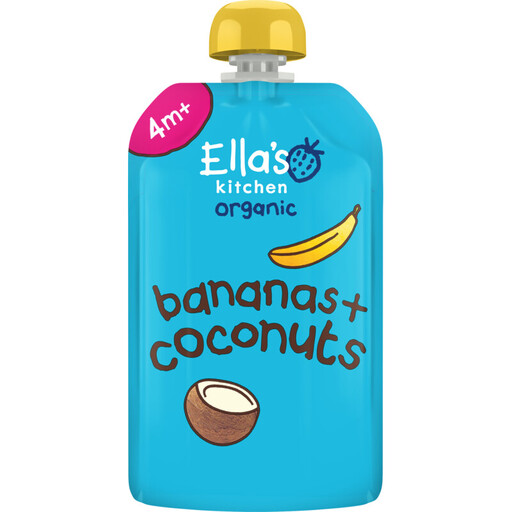
Why it suits this profile: A good fit for parents looking for organic baby food from 4 months with a short ingredients list.
The product information lists banana, coconut milk and lemon juice, and says that no sugar or water has been added. Always check the allergens and age recommendation on the packaging.
Suitable from 4 months according to the product information, labelled organic and keeps refrigerated for up to 48 hours after opening.
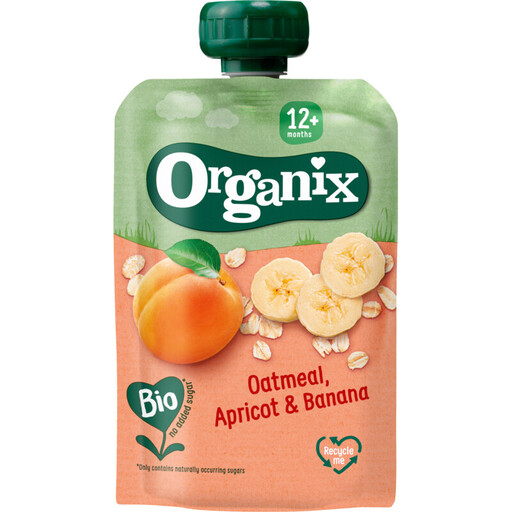
Why it suits this profile: This pouch is designed for eating on the go, such as during a day out or between meals.
The age recommendation of 12 months and over is clearly stated. Gluten is also listed as an allergen, so you can make a choice that suits the child’s diet.
Contains banana, apricot and oats; 100 g per pouch and keeps refrigerated for up to one day after opening.
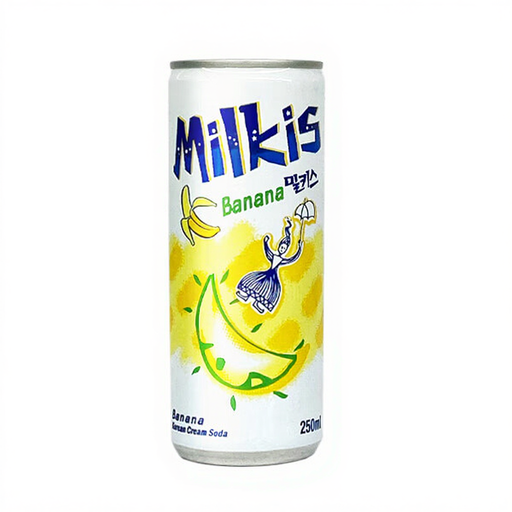
Why it suits this profile: A small portion for adults who want to try a Korean fizzy banana drink.
The product information lists carbonation, sugar, milk ingredients and soya. This means you can compare it based on flavour preferences and allergens, rather than just the packaging.
250 ml per can, banana yoghurt flavour according to the product description, with milk and soya clearly listed as allergens.
We’ve put together a complete, up-to-date list of products that meet these strict selection criteria and current European safety regulations.
Some products are labelled as suitable from 4 months, including certain smooth banana purées. Always check the age recommendation, ingredients and preparation instructions. Until 6 months, milk remains the primary food according to Olvarit’s product information; fruit purée is complementary food.
Products from 6 months are often smoother and have simpler ingredients. From 12 months, they’re more likely to contain grains, yoghurt, several types of fruit and pouch packaging. One example is a banana fruit pouch with oats or other grains. Check for allergens such as gluten, milk and oats before choosing.
It depends on the product. Examples in this selection specify refrigeration for 24 or 48 hours after opening. Once opened, a banana drink should be kept in the fridge and used within the stated time, according to the label. Always follow the packaging, which has the most up-to-date information on shelf life, storage and use.
