
Baking several batches for a school bake sale
If you’re making several batches, compare the amount of mixture per batch with the cake mixture capacity stated for the exact model. Manufacturers sometimes list this separately from the bowl capacity.


You don’t need a stand mixer to make one loaf of banana bread: the Voedingscentrum recipe tells you to mash the bananas and mix the ingredients with a fork or whisk. If you’re making several batches or baking regularly, compare the stated cake mixture capacity, the mixing tools included and the space available on your worktop. Bowl capacity alone won’t tell you how much mixture it can hold. If you’re selling your bakes, also keep an eye on the ingredients, allergen information and hygiene.
If you’re making several batches, compare the amount of mixture per batch with the cake mixture capacity stated for the exact model. Manufacturers sometimes list this separately from the bowl capacity.
If the mixer needs to fit on a small worktop or be put away after baking, check the dimensions and the mixing tools included with the specific model.
For one loaf, a fork or whisk may be all you need; that’s what the Voedingscentrum recipe uses. If you’re selling your bakes, the NVWA advises paying attention to hygienic preparation and allergen information.
Choose this if: you’re making one recipe and don’t expect to use a mixer regularly. The Voedingscentrum recommends mixing banana bread with a fork or whisk.
The trade-off: you won’t need a large appliance, but you’ll do the mixing yourself. Making several batches may mean mixing more than once.
Choose this if: you bake more often, but need the mixer to fit in a limited workspace or be easy to put away.
The trade-off: compare both the dimensions and the stated cake mixture capacity. A lower maximum capacity may mean splitting the mixture into batches.
Choose this if: you’ll regularly make larger recipes after the school bake sale or genuinely use other included functions.
The trade-off: extra bowl space or accessories aren’t automatically necessary for one loaf of banana bread. Check the maximum mixture capacity for each model.
| What to consider | What should you check? | Who should pay more attention to this? |
|---|---|---|
| Capacity for several loaves | Work out the amount needed for each recipe and compare it with the cake mixture capacity stated for the exact model. | If I’m baking several loaves, I want to know whether the mixture will fit in one go, not just how big the bowl is. Around 31% of consumers prioritise capacity for several loaves. |
| Mixing tools and control | Check which whisk or flat beater is included and follow the instructions for use. | When making a mixture, I want the right tools and control while it’s mixing. Around 25% of consumers prioritise this. |
| Worktop and storage space | Measure the available space and compare it with the mixer’s dimensions. | If the mixer needs to be put away after baking, I want to know whether it will fit easily. Around 19% of consumers prioritise where to keep and store it. |
| Buying for occasional use | Consider whether you’ll bake regularly after the school bake sale; for one recipe, mixing by hand is enough. | If I’m only baking for this occasion, I want to avoid buying a mixer I’ll hardly use afterwards. Around 13% of consumers prioritise this consideration. |
| Cleaning between recipes | Check the cleaning instructions for each part and keep track of the ingredients in each recipe you offer. | When making different recipes, I want to clean the parts as instructed and keep track of the ingredients. Around 12% of consumers prioritise cleaning. |
Litres and the maximum amount of cake mixture are different measurements. One doesn’t tell you directly how much mixture you can make.
Compare the amount in your recipe with the capacity stated for the exact model.
The Voedingscentrum banana bread recipe uses a fork or whisk, so you don’t necessarily need a mixer to make one loaf.
Think about how many batches you’ll make and whether you’ll use the mixer regularly afterwards.
The contents of the box and the full model code can vary between versions. Mixing accessories may also be available separately.
Before choosing, check the model code, what’s in the box and compatibility with the manufacturer.
You may need to buy a suitable mixing accessory separately.
If you’re selling your bakes, you need to provide information about the allergens in the bread you’re actually offering. The ingredients you use determine which allergens it contains.
Check the ingredient labels and keep a record of the allergens in each recipe you offer.
The MUM Serie 2 may be worth considering if you want to compare stated cake mixture capacity and the mixing tools included.
The Kenwood Go KZM35.000GY is worth comparing if worktop or storage space is a priority.
The Artisan 5KSM125EER may suit you if you plan to mix regularly after the school bake sale and want a flat beater included.
The 7000 Series HR7962/21 may be relevant if you’ll use the included blender and mincer as well as the mixer.
If the design of a Smeg stand mixer matters to you, check the exact model and what’s in the box first.
This selection includes stand mixers for mixing and kneading, plus one automatic bread maker. The bread maker isn’t a stand mixer, so don’t compare it as a direct substitute for a mixing machine.
 No image available
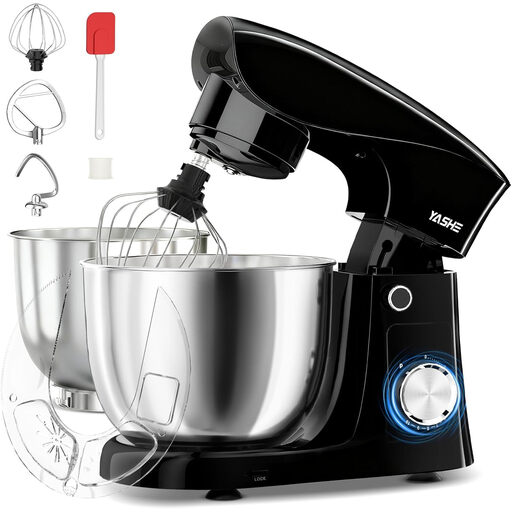
The product description mentions mixing and kneading; compare the stated bowl capacity with the amount in your recipe.
The product name lists a 5.5 l bowl, 11 speeds and a 4.5-inch LED touchscreen.
 No image available
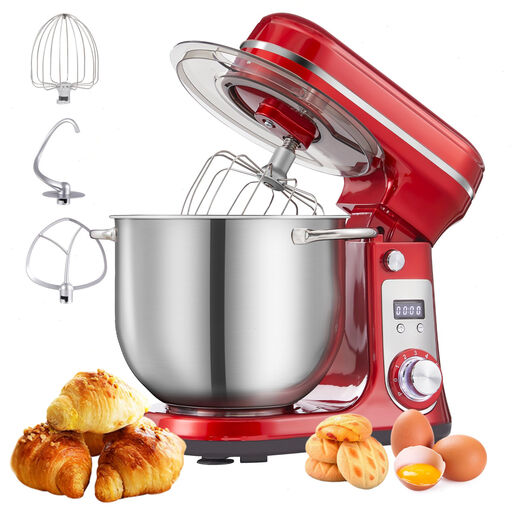
The product description mentions mixing and kneading; two bowls may come in handy if you’re preparing mixtures one after another.
The description lists 4.5 l and 5 l bowls, ten speeds, a pulse function, a beater, dough hook and whisk.
 No image available
The product description mentions mixing, kneading and cake making; compare the bowl capacity with the amount in your recipe.
The product name lists a 6 l bowl, a 1200 W motor, six speeds with pulse function and an LCD screen with timer.
 No image available
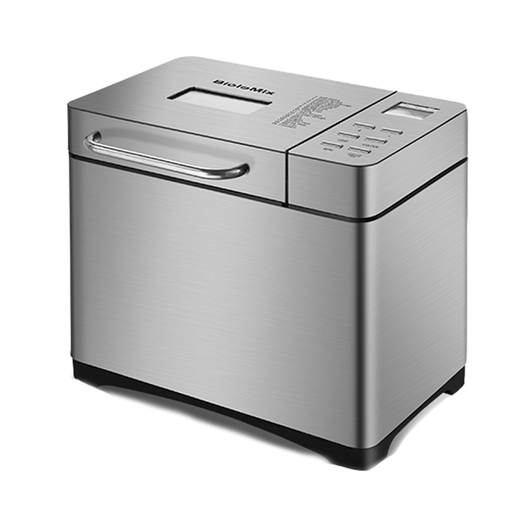
This is a bread maker, not a stand mixer for mixing banana bread.
The product name lists 17 automatic programmes.
 No image available
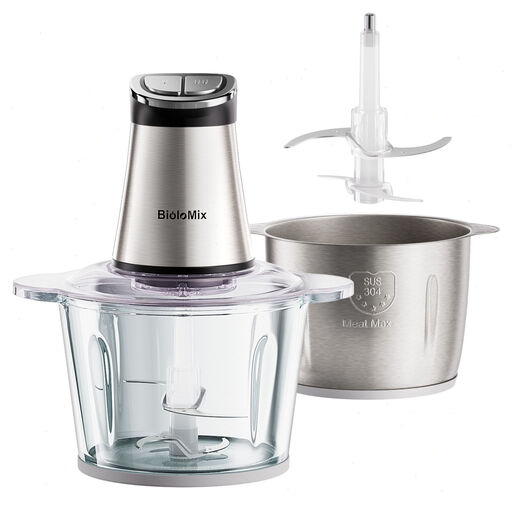
The product description mentions mixing and kneading; compare the stated bowl capacity with your recipe.
The product name lists a 3 l bowl, two speeds, a 300 W motor and an LED timer display. The description mentions removable parts.
No, not for the Voedingscentrum recipe we consulted: it tells you to mash the bananas and mix the ingredients with a fork or whisk. A mixer may be worth considering if you bake more often or make several batches.
Check the instructions for the exact model. KitchenAid describes its flat beater as suitable for cake mixtures and recommends starting on a low speed. For other brands, check which included attachment is designed for the job.
It’s not a good idea: according to the Voedingscentrum, raw eggs and flour can contain harmful bacteria. Raw mixture poses a particular risk to young children and other vulnerable groups.
The NVWA says that individuals selling food at events must also prepare, store and sell it safely and hygienically. Make sure you can give customers information about the allergens in the bread you’re actually offering. For unpackaged products, the NVWA describes ways to provide this information. The NVWA says that anyone who prepares and sells food more than once a year must have an HACCP food safety plan.
No. According to ACM ConsuWijzer, the legal guarantee applies alongside any manufacturer’s or seller’s guarantee. The seller is responsible for providing a suitable solution if a product breaks during normal use sooner than you could reasonably expect. This doesn’t mean there’s a fixed period that applies to every stand mixer.