
Vandaag of morgen in huis

Kwaliteit gegarandeerd

Welkomstaanbiedingen ontgrendelen: GRATIS bezorging | Tot 80% korting | Gratis 30 dagen JoyPlus-proefperiode
Download de app
Banana baby food may seem straightforward to choose. However, fruit purées, porridge, pouches and snacks can differ considerably in recommended age, texture and ingredients. A product that seems convenient for taking out and about, for example, may not always be suitable for your baby’s stage of eating. And packaging with “fruit” on the front may contain more than just banana.
As a Joybuy Product Recommendation Officer, I focus mainly on verifiable information: age guidance, ingredients, allergens, packaging and storage instructions. This helps you avoid paying for marketing terms that reveal little about everyday use.
A baby food suitable from 4 months is not automatically suitable for every baby of that age. The packaging states the age from which the manufacturer positions the product as suitable, but if you have any concerns, discuss introducing solid foods with your health visitor or GP.
Also pay attention to the differences between:
The description baby food with no added sugars does not mean that the product contains no sugar. Fruit naturally contains sugars. So check the ingredients list and nutrition table.
For example, according to the product information, Olvarit Apple-Banana contains 75.96% apple and 24% banana, with no added sugars. The fruit’s natural sugars are still present. Organic products, such as some Ella’s Kitchen varieties, may also contain naturally occurring sugars.
Banana purée for babies may be combined with apple, strawberry, peach, yoghurt, coconut, grains or biscuits. This also changes the allergen profile.
Pay particular attention to:
Always use the current packaging as your main reference. Product information on a website may change, and packaging may contain additional or different information.
Choose the right developmental stage first, rather than focusing on flavour. A smooth fruit purée is practical when your baby is first being introduced to solid foods. A product containing grains or a snack-style product often requires different eating skills.
According to the product information, Olvarit Banana Fruit Puree 4M+ 125g is intended as complementary food and contains banana as a fruit purée. For a 6-month-old baby, there are also apple and banana varieties, such as a 100-gram baby pouch. From 8 months, you can find combinations including strawberry, apricot or biscuit.
Do not look only at the product name. Check how much banana it actually contains and which other ingredients have been added.
Examples from the products available:
“Organic” says something about the production method, but not automatically about age suitability, texture or allergens. So you should still check an organic baby food product on all three points.
A 200-gram jar is convenient at home, but may be more than your baby needs in one sitting. A 100- to 120-gram pouch is compact for taking out and about. After opening, check the storage period:
A pouch is practical when feeding your baby while out and about, but serving the food in a bowl or on a spoon can help support independent eating and getting used to different textures. This is not a medical claim, but simply a practical consideration when choosing how to use the product.
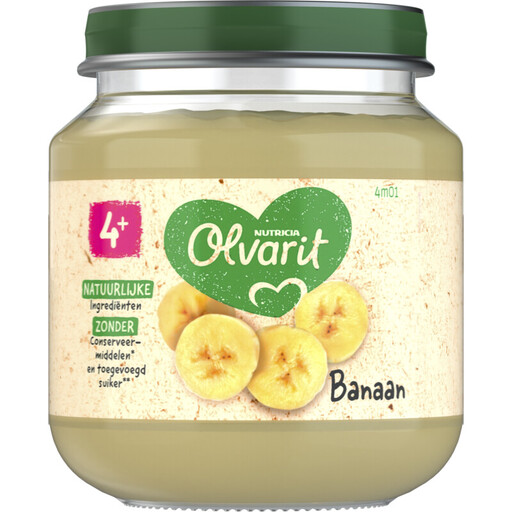
Why it suits this profile: A straightforward choice for anyone looking for a simple banana purée when starting complementary feeding.
The packaging states 4M+ and positions it as a fruit purée. However, always check the current age and storage guidance before use.
125 grams, available in a banana variety and, according to the product information, with no added sugar or preservatives.
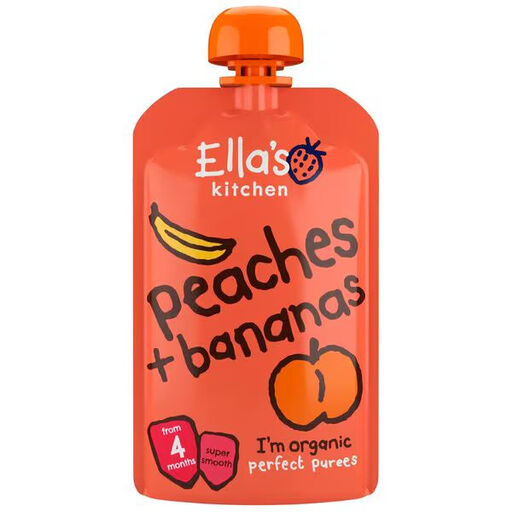
Why it suits this profile: Suitable for parents specifically looking for organic ingredients and a short ingredients list.
The product specification lists 52% organic banana, 48% organic peach and lemon concentrate, with no added water or sugar.
Organic, gluten-free according to the product information, and supplied as a 120-gram pouch.
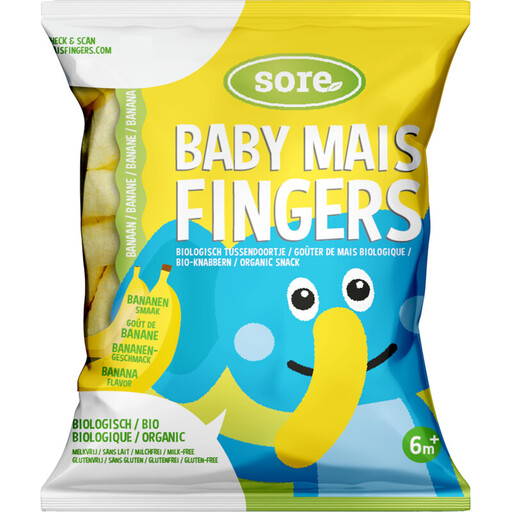
Why it suits this profile: Handy for parents looking for finger food for babies from 6 months, as well as fruit purées.
The product specification states that no salt or sugar has been added. However, always check the current packaging and supervise your baby while eating.
Organic, free from the 14 main EU allergens according to the product information, and made from puffed maize.
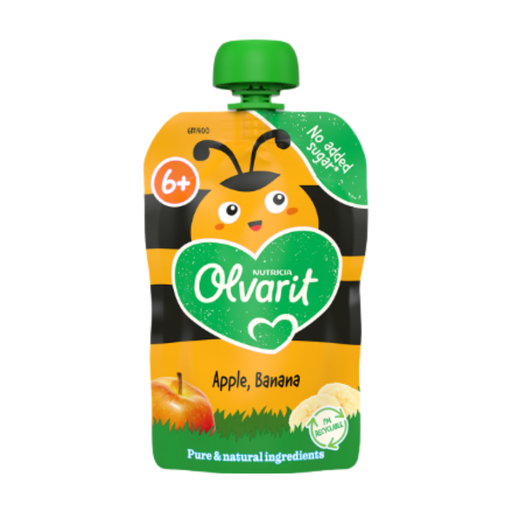
Why it suits this profile: A compact option for walks, nursery or days out.
The portion is 100 grams and the packaging is resealable. After opening, any remaining product must be refrigerated and used within 24 hours, according to the product specification.
Suitable from 6 months, with 75.96% apple and 24% banana according to the listed ingredients.
We have put together a complete, up-to-date list of products that fully meet these strict selection criteria and the applicable European safety regulations.
That depends on the specific product and your baby’s development. Products such as Olvarit Banana Fruit Puree 4M+ and Ella’s Kitchen BIO Peaches Bananas 4M+ are offered from 4 months, according to the product information. Always check the label and consult your health visitor if you have any concerns.
This varies by packaging. Several pouches state that they can be kept refrigerated for a maximum of 24 hours. Other fruit purées state a maximum of 48 hours. Close the product properly, store it according to the instructions and check the current packaging for the exact time limit.
Not always. A pouch is often easy to take with you and has a smaller portion, but the price per 100 grams may be higher or lower. So compare the quantity, the number of packs and the storage period after opening. For everyday use at home, a 200-gram jar may be more practical; when you are out and about, a 100- to 120-gram portion is often more convenient.
