
For viewing in a darkened room
You want to make out costumes and scenery in dark scenes, and are weighing up contrast, black levels and picture settings. The Consumers' Association discusses these picture considerations.


In a darkened room, or if you sit off-centre, OLED is a strong option. If your room gets a lot of light, it’s also worth comparing suitable mini-LED LCD TVs. Choose your screen size to suit your viewing distance, and use your own recording to assess movement, detail and orchestral sound. The stated refresh rate alone won’t tell you what ballet footage will look like.
You want to make out costumes and scenery in dark scenes, and are weighing up contrast, black levels and picture settings. The Consumers' Association discusses these picture considerations.
You also watch during the day or with other people, so you need to weigh up brightness, reflections and viewing angle. The Consumers' Association points out that viewing angles can vary between technologies.
You want to assess movement, picture quality and music using the recording and sound setup you actually use at home. The Consumers' Association recommends adjusting picture settings with detail in both dark and bright areas in mind.
Choose this option: if you often watch in a darkened room and care about black levels, contrast and a wide viewing angle.
Bear in mind: the reflections and brightness in your room; OLED isn’t automatically better in every respect.
Choose this option: if your room is often bright and you want to compare an LCD TV with mini-LED backlighting.
Bear in mind: viewing angles and the way dark stage scenes look vary by model.
Choose this option: if the space available or your budget matters more than a large screen or maximum contrast.
Bear in mind: compare specific models for picture and sound; the name of a technology alone doesn’t determine your viewing experience.
| What to consider | What to look for | Who is this important for? |
|---|---|---|
| Contrast and stage detail | Watch a familiar scene with your usual room lighting and check for detail in both dark areas and bright spotlights. | If I want to see dark scenery clearly, I weigh up black levels alongside detail in bright areas. Around 29% of consumers put contrast and stage detail first. |
| Movement and recording quality | Play one of your own ballet recordings and compare picture modes and motion settings. Also check the quality of your source and its playback options. | If you want to assess dance movements using your own recording, comparing picture modes is more useful than looking only at a refresh-rate figure. Around 23% of consumers give movement and recording quality top priority. |
| Screen size and positioning | Measure your viewing distance and the space available. The Consumers' Association suggests that a viewing distance of around 2.4 times the screen diagonal is comfortable. Use this as a starting point, not a fixed rule. | If I’m looking for a screen that suits my seating position and furniture, I measure the distance, width and height before choosing a size. Around 18% of consumers put size and positioning first. |
| Ambient light and viewing angle | Check reflections, brightness and the picture from the seats you use at home, including when daylight comes in. | If you watch during the day or people sit off-centre, take the light in the room and viewing angle into account. Around 18% of consumers prioritise these conditions. |
| Orchestral sound and connections | Listen to representative content and check which connections your player and any external audio equipment need. | If the music matters to me, I want to know how it sounds with my own setup and which connections I’ll need. Around 12% of consumers put sound and connections first. |
A stated refresh rate or claim of smooth motion doesn’t automatically tell you how your recording will look with your picture settings.
Compare a familiar dance scene in the available picture modes, and don’t let a gaming figure make the decision for you.
Viewing distance is linked to screen diagonal, while your furniture also limits the TV’s overall dimensions. The Consumers' Association describes a viewing distance of around 2.4 times the screen diagonal as comfortable.
First measure the distance from your usual seat, along with the width and height available. Then compare suitable sizes.
A screen that doesn’t fit may need to be positioned elsewhere. Remember to allow for the space around the TV, too.
According to the Consumers' Association, QLED TVs are LCD TVs with backlighting. The name alone doesn’t predict how a specific model handles contrast, brightness and viewing angle.
Compare specific LCD and OLED models based on the features that matter for your room and seating positions.
The Dutch government explains that you’re entitled to a product that is fit for purpose. An additional warranty service does not replace those rights.
Check what extra cover the service offers, and compare its terms with your existing rights when buying from the retailer.
An optional warranty service may cost extra, so check whether its terms genuinely provide additional cover.
The OLED65G69LS.AEU is a 65-inch OLED model for the Dutch market to compare if contrast in a dark viewing room matters to you.
The BRAVIA 5, model K55XR52BP.CEI, is a 55-inch mini-LED LCD TV to compare with OLED.
The 65OLED811/12 is an OLED model with Ambilight, for those who also take lighting around the screen into account.
The QE65S95FATXXN is a 65-inch OLED model to compare if reflections and motion settings matter to you.
These Joybuy products include OLED and mini-LED TVs to compare for watching ballet recordings in a home cinema.
 Image unavailable
This OLED model is worth comparing if contrast in a dark viewing room is a priority.
 Image unavailable
Compare this OLED model if you’re considering contrast in a dark viewing room.
65 inches, OLED Evo, 4K, 120 Hz and VRR up to 165 Hz.
Dolby Vision, Dolby Atmos and webOS 26.
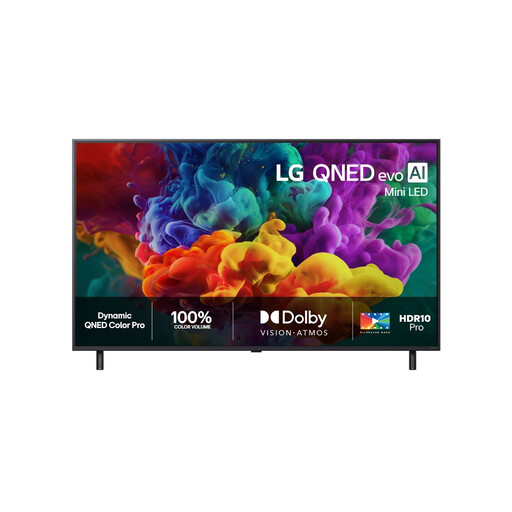 Image unavailable
Compare this mini-LED LCD model if you’re also considering an LCD option for a room with ambient light.
Mini LED and 4K.
 Image unavailable
This mini-LED TV is worth comparing if you’re considering a large screen. Measure your viewing distance and available space first.
75 inches, 4K, Mini-LED and 144 Hz.
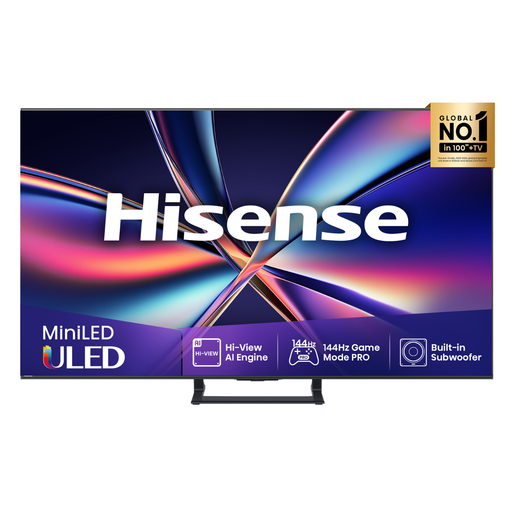 Image unavailable
Compare this mini-LED TV if you’re considering a large LCD screen for your home cinema.
75 inches, 4K, Mini-LED and 144 Hz.
Measure from your usual seat to the screen. The Consumers' Association suggests that a viewing distance of around 2.4 times the screen diagonal is comfortable. Use this as a starting point, then compare nearby sizes and the space available for positioning the TV.
At home, compare different picture modes using your usual room lighting and a familiar scene. The Consumers' Association recommends adjusting the contrast so you can still see detail in both dark and bright areas.
No. You’ll only see extra source detail if the recording you’re watching and the playback route support that quality. Check the specifications of your own recording and player.
No. A stated refresh rate alone doesn’t show what a ballet recording will look like. Compare the available picture modes using a recording you know well.
According to the Dutch government, you’re entitled to a product that is fit for purpose, and you should contact the retailer if a product is faulty. There is no fixed statutory guarantee period; what you can expect from a product depends, among other things, on the product, its price and the information provided.