
Organising a screening in a bright venue
You want the image to remain visible to a large group, but the room cannot be fully darkened.


Start with the room: decide on your preferred image size, the ambient light and the projection distance before comparing projector resolutions. A bright Full HD projector may suit a group space that cannot be fully darkened, while a home cinema model with an emphasis on image detail and positioning may be a better fit for a room you can darken. You’ll also need to plan the sound and playback source, and check the relevant screening rights if you’re showing the footage outside a domestic setting.
You want the image to remain visible to a large group, but the room cannot be fully darkened.
You prioritise detail in the footage and want to carefully match the screen size to the projector’s position.
You need to plan the image position, playback source and sound setup for every seat. If the screening is outside a domestic setting, checking the screening rights should also be part of your preparations.
First decide on the image width, the venue lighting and the available projection distance. Then compare resolution, sound and what you’ll need for the complete setup.
| What to consider | What should you check? | Who is this relevant to? |
|---|---|---|
| Visibility with the venue lights on | Match your preferred image width to the ambient light, and compare brightness figures only when you know how they were measured and which operating mode was used. | If I can’t fully darken the venue, I want the footage to remain clear for the group. Around 29% of consumers prioritise visibility in ambient light above all else. |
| Image detail | Check the projector’s native resolution and compare it with the footage and playback source. Don’t treat 4K PRO-UHD as equivalent to native 3840 × 2160. | If you value ballet detail on a large screen, compare the native resolution with the capabilities of your source. Around 23% of consumers prioritise image detail. |
| Projection distance and image position | Measure the distance to the screen and your preferred image width. Check the throw ratio and, if the projector won’t be centred, the available optical zoom or lens shift. | With a fixed mounting position, I want to know in advance whether the projector can produce the image I want from that spot. Around 18% of consumers prioritise positioning above all else. |
| Sound and playback | Check how the playback source connects and how sound is routed to any external speakers. Test a clip from the seats. | If the whole group needs to follow the music and dialogue, I want to check the playback route and sound setup in advance. Around 18% of consumers prioritise sound and playback. |
| Maintenance and running costs | Check the light source type and the conditions attached to any stated lifespan. Also check what else you’ll need for the venue setup. | For regular screenings, I want to know what maintenance the chosen light source requires and what other equipment I’ll need. Around 12% of consumers prioritise running costs and maintenance above all else. |
The brightness you need depends on the room, and white and colour light output aren’t always specified in the same way. A figure on its own won’t tell you how the footage will look at your preferred screen size in your venue.
Compare how the figures were measured and the operating mode used, then assess the image in the expected venue lighting and at your preferred image width.
A label indicating support for source footage doesn’t automatically tell you what resolution the projector itself displays.
Check the native resolution of the exact model and compare it separately with the resolution of the footage and playback source.
A complete screening may also require a screen, suitable audio equipment and a playback device. Some models also need a replacement lamp as part of their maintenance.
Make a list of everything you’ll need before buying, and check which type of light source the model uses.
The right to watch at home doesn’t automatically give you permission to show protected material to a club or other group. Auteursrechtnl gives club members and colleagues at a company as examples of audiences outside the domestic setting.
Decide who will attend the screening and under what conditions. If you’re showing protected material outside a domestic setting, obtain permission for the specific recording and screening if required.
Worth considering if you’re weighing up a Full HD laser projector for a bright room against a home cinema model with different positioning options.
Worth considering when comparing a bright Full HD laser projector with a home entertainment model offering native 4K resolution.
Worth considering if you’re looking at a Full HD projector for living-room use with a streaming device included.
This selection includes home cinema projectors and models for more compact group setups. Check that each model’s light output, image positioning, sound connections and equipment requirements suit your venue.
 No image available
Worth considering if image detail and adjusting the image position are important; check that your preferred image width suits the room.
The product information lists native 3840 × 2160, 3.800 lumen, 1,3× manual optical zoom, a built-in 15 W speaker and an audio output.
According to the product information, the screen and playback device are not included.
 No image available
Worth considering for a more compact setup if the stated image size and projection distance suit the room.
The product information lists native 1080P, 1.000 ANSI lumen, two 8 W speakers and Whale OS. It also states 60 inches from 1,33 m and a maximum of 140 inches; check that your preferred image size will fit the available space.
 No image available
Worth considering if 4K UHD resolution and an adjustable projection angle suit your viewing setup.
The product information lists 3.000 ANSI lumen and an adjustable gimbal for projecting onto walls, ceilings or floors.
 No image available
Worth considering for a home cinema setup if the image size and sound system suit your venue.
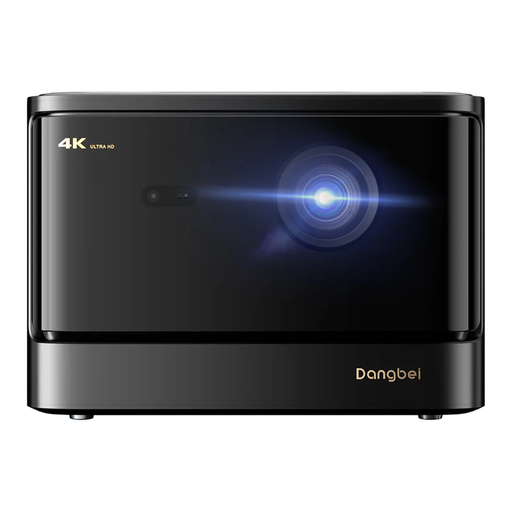
The product information lists 4K resolution, 2.450 ISO lumen and an image size of up to 200 inches. The title lists two 12 W speakers; the product information mentions focus and keystone adjustment.
 No image available
Worth considering if native 1080P, built-in speakers and Google TV suit your preferred playback setup.
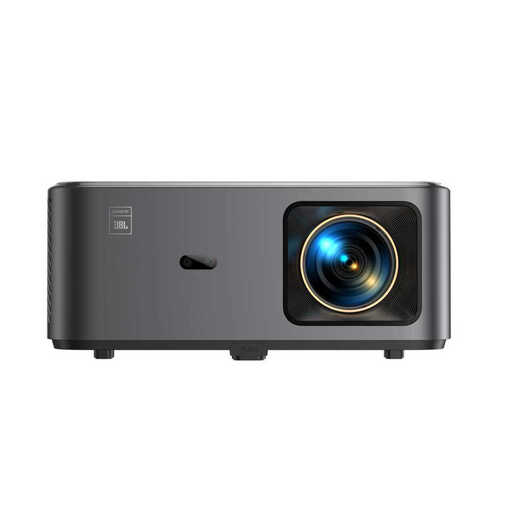
The product information lists native 1080P, dual 10 W JBL speakers, Google TV and automatic focus and keystone correction.
Measure the distance between the lens and the screen, then decide on your preferred image width. Compare these measurements with the throw ratio of the exact model. A projection calculator will give you an estimate, so check the final position before installing a permanent mount.
It depends on the venue and setup. Check how the playback source and any external sound system will connect, then test a ballet clip from the back row. A built-in speaker alone won’t tell you whether the sound will be suitable.
Check whether the exact model has a replaceable lamp or a laser light source, and which operating mode applies to any stated lifespan. The Rijksoverheid says there is no fixed statutory guarantee period in the Netherlands; if a product is faulty, contact the seller. A manufacturer’s guarantee is in addition to your statutory rights.
Not simply because you’ve bought the recording or have a subscription. According to Auteursrechtnl, a screening strictly within the domestic circle is treated differently from, for example, a club evening or company event, which doesn’t automatically fall within that category. Decide who will be watching and under what conditions. If you’re showing protected material outside a domestic setting, obtain permission from the rights holders if required.