
Vandaag of morgen in huis

Kwaliteit gegarandeerd

Welkomstaanbiedingen ontgrendelen: GRATIS bezorging | Tot 80% korting | Gratis 30 dagen JoyPlus-proefperiode
Download de app
A balance bike for toddlers may seem simple: two wheels, a saddle and no pedals. Yet models vary considerably in saddle height, weight, tyres and adjustability. The wrong choice could mean your child cannot reach the ground properly, finds the bike too heavy or outgrows it after a short time.
As a Joybuy Product Recommendation Officer, I filter product information for practical details. This helps you see more quickly which specifications matter and which marketing claims are worth checking.
An age recommendation such as “2 to 6 years” is a guideline, not a guarantee that the bike will fit. Children of the same age can vary considerably in height and leg length. Always check the lowest saddle height and compare it with your child’s inside leg measurement.
Your child’s feet should be able to rest firmly on the ground when stationary. A high saddle makes getting on and pushing off more difficult. A saddle that is too low restricts legroom.
Some product descriptions state only the weight of the frame. For example, the Neuleb 12 Inch lists a frame weight of approximately 0.65 kg; this does not automatically represent the weight of the fully assembled balance bike.
Ask yourself who will usually be lifting the bike: your child on a pavement or you during a walk? A low overall weight is particularly practical for transport, storage and independent manoeuvring.
A balance bike with puncture-proof tyres does not need pumping and is less likely to suffer a puncture. That is handy for use around the neighbourhood, on a flat cycle path or in the garden. However, EVA or rubber tyres do not automatically provide the same cushioning as pneumatic tyres.
Caution is still needed on wet paving stones, loose gravel, slopes and uneven ground. Product information for various models recommends using them on flat, safe surfaces.
An adjustable balance bike can last longer, but only if its range suits your child’s growth. Check:
The Neuleb 12 Inch Balance Bike lists a saddle height of approximately 32 to 39 cm and an adjustable length of approximately 53 to 59 cm. According to the product description, both the handlebars and saddle are adjustable for children aged 2 to 6. Before the first ride, check that all fastening bolts are securely tightened.
A lightweight balance bike is easier to steer and carry. Do not focus only on material names such as magnesium alloy, aluminium or steel. The stated weight, maximum load capacity and finish of the joints are more important.
A metal frame can be sturdy without necessarily being light. Wood may offer a low weight, but you should check for cracks, splinters and loose joints. The YEEHOO wooden balance bike lists a net weight of 2 kg, a load capacity of 25 kg and a fixed saddle height of 28 cm. This makes this type particularly appealing if that saddle height suits your child.
For a toddler balance bike, tyres without inner tubes are practical for everyday use. Also check:
A pedal-free balance bike usually does not have a handbrake. Your child brakes by placing their feet on the ground. Practise in a flat area away from traffic and avoid public roads, stairs, steep slopes, and wet or slippery surfaces.
On the product page or packaging, look for the manufacturer, importer, EU responsible party, age recommendation and warnings. The Neuleb 12 Inch Balance Bike states that, according to the description, its new materials comply with EN 71 toy safety standards. This is information provided by the seller and is not a reason to skip supervision or protective equipment.
According to the product description for the Neuleb models, adults must supervise children, the handlebars, saddle and tyres must be checked before use, and the maximum load capacity must not be exceeded. Use a children’s helmet that complies with the relevant safety requirements.
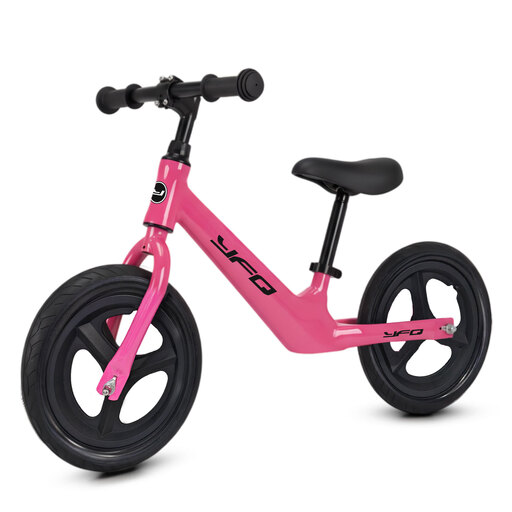
Why it suits this profile: This model is designed for children aged 3 to 6 and features an adjustable saddle. Air-free tyres reduce the amount of tyre maintenance required.
The product description mentions an adjustable saddle, a pedal-free design and puncture-proof tyres. Nevertheless, check the saddle height and fastenings when the bike arrives.
Pedal-free design, adjustable saddle, air-free tyres and a stand included according to the product information.
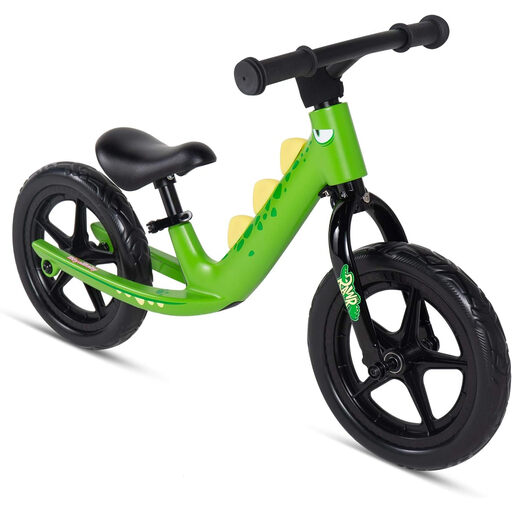
Why it suits this profile: Suitable for parents who consider frame construction, steering control and finish, rather than focusing solely on price.
The description mentions a steering limiter, non-slip grips and EVA tyres that do not need inflating. However, the tyres are still intended for suitable, safe surfaces.
Magnesium alloy, adjustable saddle, 12-inch wheels and a stated maximum load capacity of 22.7 kg.
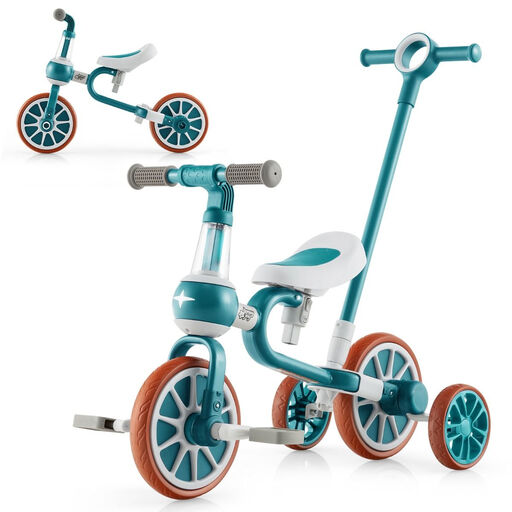
Why it suits this profile: Handy for families looking for one vehicle that can grow with their child, from push bike to balance bike and later to a pedal bike.
The different modes mean you do not need to buy a separate toddler bike and pedal bike straight away. However, this model may be heavier and more complex than a simple balance bike.
Four riding modes, removable pedals and stabilisers, adjustable push handle and a stated load capacity of 30 kg.
Almost every first bike for a child requires some assembly. After unpacking, check:
Wipe the frame and tyres clean with a damp cloth. Do not spray water directly onto the bearings or handlebar components. With a model featuring air-free tyres, you do not need to check the tyre pressure, but you should regularly inspect the tyres for wear, cracks and deformation.
A balance bike will generally remain suitable as long as your child stays within the size and weight limits and the parts do not become damaged. For a fast-growing child, a generous adjustment range is more important than an attractive design alone.
We have put together a complete, up-to-date list of products that fully meet these strict selection criteria and the applicable European safety requirements.
Many models are intended for approximately 2 to 6 years, but the right starting point depends on your child’s height, inside leg measurement and motor development. Choose a model on which both feet can reach the ground, and always supervise your child.
Adjust the saddle so that your child can sit with both feet firmly on the ground and their knees slightly bent. Use the minimum saddle height as your first check and adjust the setting as your child grows.
They do not need inflating, but you should still check them for wear, cracks and loose parts. Even with a balance bike with puncture-proof tyres, checking the bike before every ride is sensible, particularly when it is used outdoors.
