
Vandaag of morgen in huis

Kwaliteit gegarandeerd

Welkomstaanbiedingen ontgrendelen: GRATIS bezorging | Tot 80% korting | Gratis 30 dagen JoyPlus-proefperiode
Download de app
A balance bike for children may seem simple: two wheels, a saddle and no pedals. Yet parents often make choices when buying one that prove impractical after a few months. A saddle that is too high, a heavy frame or tyres designed only for smooth floors can all limit how the bike is used.
As a Joybuy Product Recommendation Officer, I therefore focus mainly on verifiable features. Not bold marketing claims, but age guidance, dimensions, materials, maintenance and where you intend to use the children’s vehicle.
Advice such as “2 to 6 years” is a general indication. Children of the same age can vary considerably in height. Always check the saddle height and make sure your child can place both feet firmly on the ground. This is more important than the age label alone.
An adjustable saddle and handlebars are practical, but they do not automatically make a balance bike suitable for many years. Check the available height settings and the overall dimensions. With a balance bike for toddlers, the saddle must be able to adjust low enough. A model that is too large can be difficult to control.
Airless tyres, such as EVA or other puncture-resistant tyres, do not deflate in the same way as pneumatic tyres. This reduces one common maintenance task. However, regular checks are still needed: look for wear, cracks and secure wheel attachment. No tyre makes unsafe use on stairs, slopes or public roads suitable.
Ideally, measure your child’s inside leg and compare it with the product’s minimum saddle height. Their feet should be flat or almost flat on the ground. The handlebars should be comfortably within reach without requiring your child to lean too far forwards.
Adjustable handlebars are particularly useful when several children use the children’s balance bike, or when you want to use a model for longer. After every adjustment, check that the clamp or screw is securely tightened.
A lightweight model is easier to pick up, turn around and carry to the park. A heavier metal frame may feel sturdy, but it is not always practical for a toddler. Check the stated product weight and maximum load capacity. Do not allow adults to use a children’s vehicle unless this is permitted.
Materials such as magnesium alloy, aluminium alloy or steel do not, on their own, tell you everything about the riding experience. Also consider the construction, handles, edges and attachment points. For the models below, these details have been taken from the product descriptions.
A children’s bike without pedals is designed to be propelled with the feet. Use it on a flat, open surface away from traffic, such as a quiet part of a park, a courtyard or a playground. For indoor use, compact dimensions and quiet tyres are important.
A children’s ride-on car offers a different play experience. An electric model also requires attention to the battery, charging, supervision and the surface it is used on. Before buying, check that the available space and intended use are suitable for the vehicle.

Why it suits this profile: This model is designed for children aged 2 to 6 and has an adjustable saddle and handlebars. According to the product description, the bike is delivered approximately 85% assembled.
The adjustable components mean you do not have to rely solely on the age guidance. The puncture-resistant tyres reduce the risk of ending up with a flat tyre, but they should still be checked for wear.
12-inch wheels, adjustable saddle and handlebars, lightweight design and puncture-resistant tyres according to the product details.

Why it suits this profile: The product description states a frame weight of approximately 0.65 kg and a saddle height of around 32–39 cm. This makes it easy for parents who want to fine-tune the fit accurately.
The specific saddle measurements make it easier to compare the bike with your child’s inside leg. The airless tyres eliminate the need for inflation, but they do not replace a check before use.
Magnesium alloy frame, adjustable saddle and handlebars, puncture-resistant tyres and stated compliance with EN 71 toy safety standards.
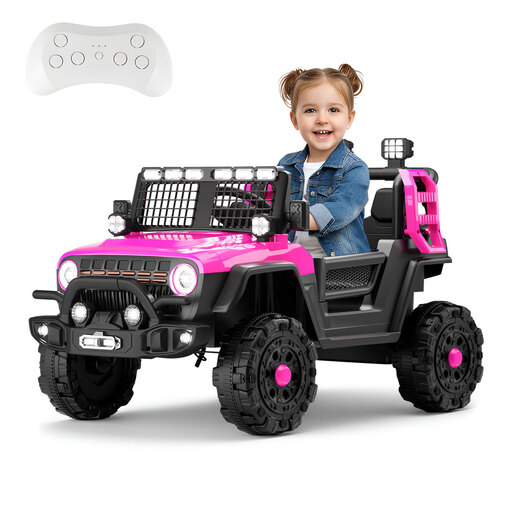
Why it suits this profile: This is not a balance bike, but an electric toy vehicle for children who prefer seated play. The product title mentions a parental remote control, seat belt, lockable doors and a load capacity of 66 lb.
The remote control gives a parent an additional way to operate the vehicle. Before buying, however, check the available space, battery life, charging time and surface requirements; these details are not fully provided in the supplied product information.
12V drive, parental remote control, seat belt and Bluetooth according to the product title.
We have compiled a complete, up-to-date list of products that fully meet these strict selection criteria and the applicable European safety regulations.
Always use a balance bike or other toy vehicle under the direct supervision of an adult. Choose a flat area away from traffic, water, stairs and steep slopes. A helmet and suitable protective gear can be used as an additional precaution.
Check before every ride:
Clean with a soft, slightly damp cloth. Do not use a pressure washer near bearings, battery connections or steering components. With an electric ride-on car, parents should also follow the charging requirements and battery instructions on the product page.
This varies by model and body height. Many models are designed for approximately 2 to 6 years, but you should pay particular attention to the minimum saddle height. For younger toddlers, a low model with three or four wheels may be more suitable. For example, an electric bubble car in the product selection is indicated for children aged 1 to 3.
How long it can be used depends on its adjustability, the child’s growth and the maximum load capacity. A model with an adjustable saddle and handlebars may remain suitable for longer. Check the fastenings regularly and stop using the bike if the frame is cracked, deformed or the tyres show serious wear.
In addition to the purchase price, there are electricity costs and potentially the cost of replacing the battery. The actual running costs depend on battery capacity, charging time, charging frequency and battery lifespan. So do not compare voltage alone; also check whether the product information includes charging and battery details.
