
Vandaag of morgen in huis

Kwaliteit gegarandeerd

Welkomstaanbiedingen ontgrendelen: GRATIS bezorging | Tot 80% korting | Gratis 30 dagen JoyPlus-proefperiode
Download de app
A new baking tray or baking tin might seem like a simple purchase. Yet many home bakers fall into the same traps: a tin doesn’t fit in the oven, a non-stick coating requires more upkeep than expected, or a set includes mostly sizes you’ll hardly ever use. With the right checks beforehand, you can avoid a bad buy and choose a tin that suits your recipes, oven and cleaning routine.
With a round springform tin, the diameter is often the only measurement given. However, the outer size can be larger due to a rim, clasp or handles. A 22 cm loaf tin can therefore take up more space than you’d expect. So always measure the inner size and outer size of your oven rack or baking tray level.
Also pay attention to the height. A low pizza tray is suitable for pizza or thin dough, while a high baking dish may be needed for lasagne, casseroles and saucy dishes.
A non-stick baking tin can make it easier to release cake, quiche or tart. That doesn’t automatically mean every tin is dishwasher-safe. For several metal tins in this range, hand washing is recommended. Scouring pads, metal utensils and harsh cleaners can damage the coating.
So always check:
A metal baking tin generally heats up quickly and is practical for cakes, biscuits and pizza. Silicone is flexible and takes up little space, but a sturdy frame can be important when you need to carry the filled tin to the oven. Ceramic is suitable for casseroles that are also served straight to the table, but requires care with sudden temperature changes.
A product claim about even heat distribution or easy release should be read as information from the product description. According to the PURECOOK brand’s own product description, certain carbon steel tins are designed for even heat conduction and easy release; always check the temperature and care instructions yourself.
Choose the size based on how you’ll use it:
In addition to length and width, also check the height and capacity. A baking tray measuring 48 x 33.5 cm has a different use than a compact tin of 25 x 25 cm. Allow space around the tin for air circulation.
Steel and carbon steel are relevant when you’re looking for a sturdy, oven-safe baking tin. A PTFE coating is often listed as a non-stick layer in product information. Only use the tin within the specified temperature and avoid sharp objects.
Silicone baking tins are flexible and often easy to store. A metal frame can provide extra stability. With ceramic, oven, microwave, freezer and dishwasher suitability are separate features. Don’t assume that a baking dish is automatically suitable for a hob; the product description for ceramic dishes may specifically rule this out.
An oven-safe baking tin is not necessarily suitable for the microwave, hob or open flame. Check the full usage instructions. Some metal tins are oven-safe but not suitable for the microwave or dishwasher. Allow ceramic tins to cool down before exposing them to a large temperature difference. This helps reduce the risk of thermal shock.
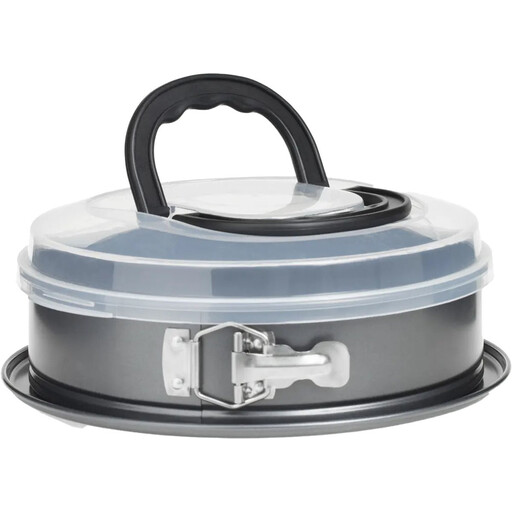
Why this fits the profile: A round springform tin is useful for cakes, quiches and cheesecakes. The 26 cm diameter and 2.4 litre capacity match many recipes for home use.
The product information clearly states that the tin is not dishwasher or microwave safe and should only be used in the oven without the lid.
26 cm diameter, clip closure, steel body and non-stick coating; baking paper and light greasing are recommended.
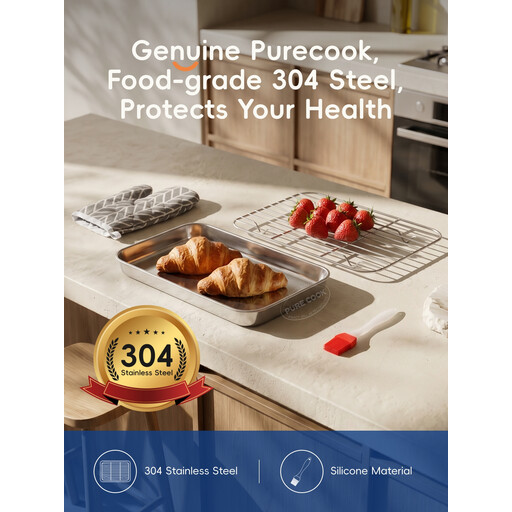
Why this fits the profile: This set combines a baking tray, rack, silicone brush and oven gloves for multiple kitchen tasks.
The dimensions are clearly stated: the baking tray is 23.5 x 17.5 x 2.5 cm. This means you can check beforehand whether this size fits your oven or air fryer.
304 stainless steel, removable rack and, according to the product description, suitable for oven, microwave and dishwasher.
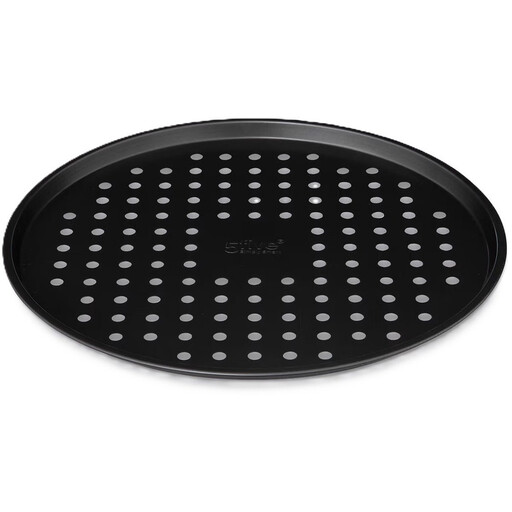
Why this fits the profile: Aimed at those who bake pizza regularly and need a round, low baking tray. The diameter is 33 cm and the height is 1.2 cm.
The perforated design and ILAG coating are explicitly stated in the product information. Hand washing is recommended, so the care limitation is clear upfront.
Steel construction, 33 cm diameter and perforated surface for pizza.
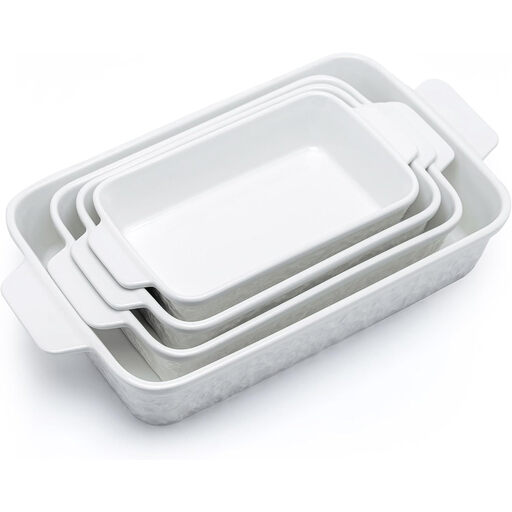
Why this fits the profile: Four sizes are handy for single portions, side dishes and family meals such as lasagne, pasta and roasted vegetables.
The product information states oven, microwave, freezer and dishwasher suitability, but rules out use on gas and induction hobs.
Four rectangular sizes, handles and a glazed surface; the dishes are supplied without lids.
We’ve put together a full, up-to-date list of products that fully meet these strict selection criteria and comply with current European safety regulations.
That depends on your recipes. A springform tin is versatile for tarts and cheesecake, a loaf tin for compact cakes, and a baking tray for biscuits, vegetables or oven dishes. If you make several types of dishes, you might consider a baking tin set, but check whether the included sizes are actually useful.
The lifespan mainly depends on temperature, use and care. Don’t use metal knives or scouring pads, don’t exceed the stated temperature, and follow the cleaning instructions. A tin that isn’t dishwasher-safe will generally stay in better condition for longer if you wash it by hand.
No. Metal is usually not suitable for the microwave. With ceramic and silicone too, you need to check the product information. “Oven-safe” only describes the permitted use in the oven and doesn’t automatically say anything about the microwave, hob, freezer or dishwasher.
