
Vandaag of morgen in huis

Kwaliteit gegarandeerd

Welkomstaanbiedingen ontgrendelen: GRATIS bezorging | Tot 80% korting | Gratis 30 dagen JoyPlus-proefperiode
Download de app
Buying a loose cake tin might seem straightforward – until the batter sticks, the tin doesn’t fit your oven, or the coating starts to peel after just a few washes. When it comes to bakeware, it’s not just about price or looks. The material, dimensions, care instructions and the type of dish you’re making all determine whether a tin is practical for your kitchen.
The most common pitfalls to watch out for:
Metal bakeware made from steel or carbon steel heats up relatively quickly. That’s handy for cakes, bread, brownies and quiche. Carbon steel is also lighter than cast iron. Do check the maximum oven temperature, and don’t use a tin on a gas hob, induction hob or open flame if the product information says not to.
A silicone mould is flexible and can be useful for muffins, small cakes and desserts. A sturdy frame, like the one on a silicone canelé mould, makes filling and moving it around easier. According to the product information from 5five, the Silitop mould is suitable for the oven, microwave and dishwasher. Always check other silicone moulds individually to see if these uses are allowed.
A ceramic or porcelain dish holds heat for longer and can go straight to the table. A ceramic baking dish is ideal for lasagne, roasted vegetables, baked pasta and desserts. However, ceramic is sensitive to thermal shock: don’t put a cold dish directly into a very hot oven, and don’t place a hot dish on a cold, wet surface.
A 22 cm cake tin is quite different from a 26 cm springform tin. Look at the height and capacity as well as the diameter. For a family, several different sizes are handy; for a small household, a set of small ramekins can be more efficient.
Keep an eye out for these common types of tin:
Also check whether the dimensions refer to the outside or the usable inside measurement. A tin that’s 25 x 25 x 5 cm, for example, may hold less batter than you’d expect from the outside size.
A non-stick baking tin can make releasing cake or bread easier, but follow the care instructions. For several PURECOOK carbon steel tins, hand washing with warm water and a soft sponge is recommended. Abrasive cleaners and metal scourers can damage the coating.
An oven-safe baking tin isn’t necessarily microwave-safe. According to the product information, the PURECOOK carbon steel tins are intended for oven use only. The DAFUCERAMIC baking dishes are described as suitable for the oven, microwave, fridge, freezer and dishwasher, but not for the hob.
Let metal tins cool down completely before you try to remove the baked goods. With a springform tin, opening it gently helps prevent a soft cheesecake from cracking. Use oven gloves and keep hot tins out of reach of children.
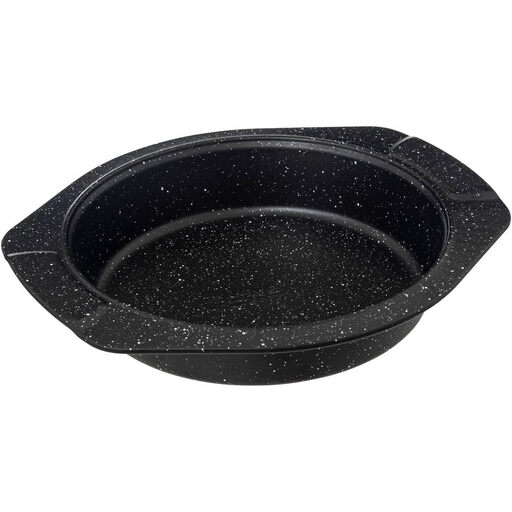
Why this fits the profile: This 22 cm steel cake tin is a straightforward starting point for standard cakes and smaller baking projects. The capacity is stated as 1.9 litres and the tin is suitable for the oven.
The dimensions and oven-suitability are clearly stated. The tin is not suitable for the dishwasher or microwave, so you know in advance what care is needed.
Steel construction, handles and a capacity of 1.9 litres. According to the product information, a PTFE coating has been applied.

Why this fits the profile: The four sizes suit individual portions, side dishes and family meals. According to the product information, the dishes can go from oven to table.
The set states individual sizes and capacities. The warning against sudden temperature changes highlights an important point of use.
Four sizes, handles, stackable design and, according to the product description, suitable for the oven, microwave, freezer and dishwasher.
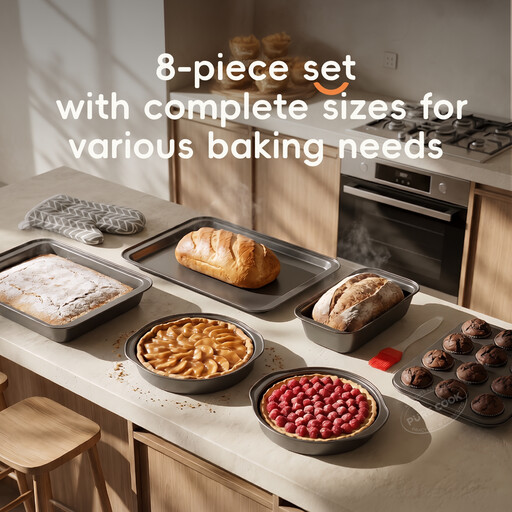
Why this fits the profile: If you regularly make different types of baked goods and savoury dishes, having several square and round tins gives you more choice in size and application.
The set specifies multiple shapes and sizes. At the same time, it clearly states that these are intended for the oven only and must be hand washed.
Eight pieces, carbon steel, stackable design and, according to the product information, suitable for the oven and air fryer.
We’ve put together a full, up-to-date list of products that fully meet these strict selection criteria and comply with current European safety regulations.
A cake tin or springform tin around 22 to 26 cm is a practical place to start. Choose a model with clear dimensions, oven information and care instructions. A non-stick baking tin can make releasing easier, but lightly grease the tin if needed and avoid using metal utensils.
Not automatically. Check the maximum temperature and whether the mould is suitable for your oven or air fryer. Place a flexible silicone mould on a sturdy baking tray before adding the batter. This helps prevent spills when moving it around.
That depends on the material, use and care. A metal baking tin can stay usable for a long time if you respect the maximum temperature, don’t damage the coating and wash the tin by hand if that’s recommended. Replace the tin when the coating starts to peel, the metal becomes warped or the base no longer sits flat.
