
Community cook with lots of portions of baked goods
You want to freeze portions separately in advance. Focus on the usable freezer space and how much food you can add in each freezing cycle.


Start by measuring your wrapped portions and comparing them with the freezer compartment, drawer dimensions and freezing capacity; the total capacity alone won’t tell you whether everything will fit. Choose a fridge-freezer that suits your everyday needs and available kitchen space after the community meal, too, and check that the freezer compartment on the exact model can be set to at least −18 °C.
You want to freeze portions separately in advance. Focus on the usable freezer space and how much food you can add in each freezing cycle.
You may also want to keep baked goods chilled or defrost items with, for example, a perishable filling. The right approach depends on the recipe and storage instructions.
You need an appliance that will fit through the access route and in your kitchen. As well as the total capacity, check the external dimensions and layout of the freezer compartment.
Start with your wrapped portions and the space available in the freezer drawers. Then consider whether the appliance will also suit your everyday needs and kitchen space after the meal.
| What to consider | What should you look for? | Who should pay particular attention? |
|---|---|---|
| Usable freezer space | Measure your wrapped portions and compare them with the separate freezer capacity, drawer dimensions and freezing capacity in kg per 24 hours. Voedingscentrum recommends freezing small portions and not adding too much at once. | If I want to prepare lots of portions in advance, I need to know whether they’ll fit in the drawers and can be frozen in manageable batches. Around 36% of consumers prioritise having enough space for the portions they need. |
| Storage and defrosting | Check the guidance for the specific baked good and whether the freezer compartment can be set to at least −18 °C. Also consider the space and temperature needed for defrosting in the fridge. | For baked goods with a delicate or perishable filling, I want to follow the recipe’s storage and defrosting guidance. Around 29% of consumers prioritise suitable storage and preparation for their baked goods. |
| Positioning and access | Measure the access route and the available height, width and depth. Also check the clearance needed for ventilation and opening the door where you plan to position the appliance. | If my kitchen or doorway is short on space, the appliance needs to fit into the room and sit properly in its position. That’s why around 21% of consumers start by checking the physical fit. |
| Energy use and maintenance | Compare the annual energy consumption in kWh of models with suitable freezer space. Milieu Centraal also recommends checking the energy label; check whether No Frost suits your maintenance preferences, too. | As the fridge-freezer will remain in daily use after the community meal, I also want to factor in energy use and maintenance. Around 14% of consumers prioritise running costs and maintenance after the event. |
Total capacity includes the fridge compartment, too. So a high capacity in litres doesn’t automatically mean your wrapped portions will fit in the freezer drawers.
Compare the separate freezer capacity and drawer dimensions with your portions, and bear in mind the freezing capacity per cycle, too.
Storage advice varies by product. For example, Voedingscentrum gives separate guidance for cake and brownies with nuts. Both can be kept in the freezer for three months, after which their quality may deteriorate.
Look up the specific baked good or recipe before planning when to freeze and defrost it.
A fridge-freezer will remain part of your daily routine after the meal. Size, energy consumption and the space the appliance takes up will still matter afterwards.
First check whether your current freezer can reach the required temperature and hold the quantity you need. If you choose a new appliance, compare the annual energy consumption of models that also offer enough freezer space.
Freestanding fridge-freezers such as the KGN39VLCT offer a useful benchmark when separate freezer capacity matters.
The GBBSJ1CCEP is a fridge-freezer with a stated total capacity of 333 l.
The B3RCNO256W is a freestanding model that’s 54 cm wide, which could be useful if kitchen width is limited.
The CNsfd 7723 Plus NoFrost is a wider fridge-freezer to compare if you have enough space.
The RB38C607AS9/EF is a useful reference for comparing stated total capacity with measured usable capacity.
These fridge-freezers offer different stated freezer layouts and capacities to weigh up against your wrapped portions, available kitchen space and how you’ll use the appliance after the community meal. Check that the freezer compartment on each model can be set to at least −18 °C.
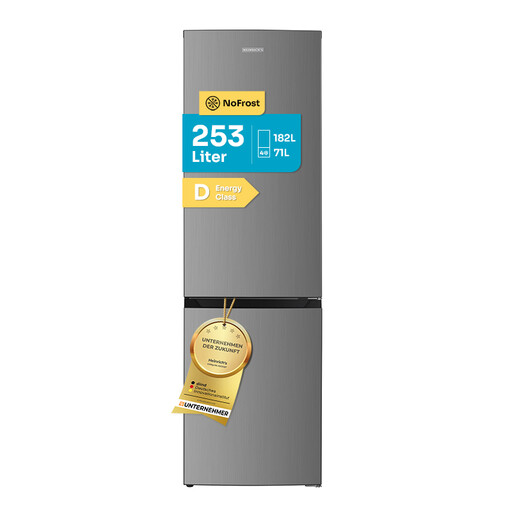 Image unavailable
An option to compare if you’re looking for a separate freezer compartment and large freezer boxes; check that the layout suits your wrapped portions.
Stated capacity: 253 l in total, with 182 l of fridge space and 71 l of freezer space. The product description mentions No Frost and a reversible door. Check that the freezer compartment on this model can be set to at least −18 °C.
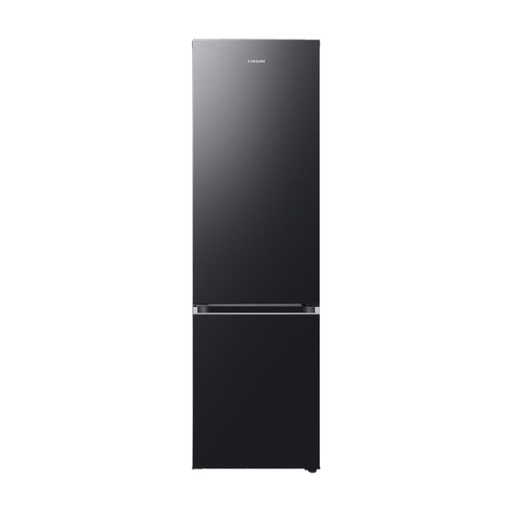 Image unavailable
An option to compare if you need freezer space as well as a fridge compartment for everyday use; check the freezer layout and temperature setting.
The product title lists energy rating A, 108 kWh per year and a height of 2030 mm. The product description mentions No Frost+; check that the freezer compartment on this exact model can be set to at least −18 °C.
 Image unavailable
A narrower option to compare if kitchen space is limited and your portions will fit in the stated freezer capacity.
Stated capacity: 260 l in total, with 187 l of fridge space and 73 l of freezer space. The model is 55 cm wide and has three freezer drawers, with a stated freezing capacity of 3.3 kg per 24 hours. The freezer temperature range is −15 to −22 °C, including −18 °C; manual defrosting is required. The product title lists energy rating E.
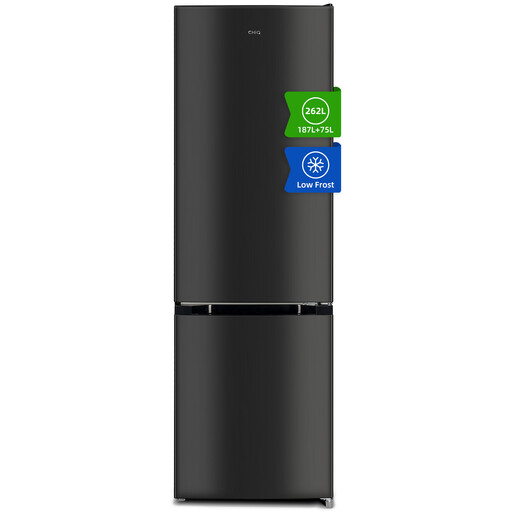 Image unavailable
An option to compare if you’re looking for a fridge with a separate freezer compartment and a reversible door; check that the layout suits your wrapped portions.
The product title lists a capacity of 262 l. The product description mentions a four-star freezer compartment and Low Frost. Check that the freezer compartment on this exact model can be set to at least −18 °C.
 Image unavailable
An option to compare if you want to factor in a separate freezer compartment and stated freezing capacity for multiple portions.
The product description lists 98 l of freezer space, two freezer drawers with a tray, and a freezing capacity of 4.5 kg per 24 hours. The product title lists a capacity of 330 l and energy rating E. Check that the freezer compartment on this model can be set to at least −18 °C.
No, storage time depends on the type of baked good. Voedingscentrum gives separate storage advice for cake and brownies with nuts; both recommendations say three months in the freezer, after which quality may deteriorate. Look up the specific recipe or product before applying that time limit.
Freeze small portions and don’t add too much at once; Voedingscentrum recommends setting the freezer compartment to at least −18 °C. For defrosting, Voedingscentrum recommends using the fridge. Allow enough time for your portions to defrost.
Online consumer purchases generally come with a statutory 14-day cooling-off period after delivery, although exceptions apply. ACM ConsuWijzer also explains that your statutory guarantee applies alongside any manufacturer’s guarantee: with normal use, the product must do what you could reasonably expect it to do. Before ordering, check the delivery route, returns policy and any installation costs.
This depends, among other things, on whether food is being sold. NVWA sets out food safety rules for selling at markets and events, including when the seller is a private individual. According to NVWA, anyone who prepares and sells food several times a year must have an HACCP food safety plan; this does not mean that there is a general requirement to sell food at a one-off, non-commercial community meal.