
Vandaag of morgen in huis

Kwaliteit gegarandeerd

Welkomstaanbiedingen ontgrendelen: GRATIS bezorging | Tot 80% korting | Gratis 30 dagen JoyPlus-proefperiode
Download de app
A backpack may seem easy to choose, but small differences can determine whether it’s comfortable to use every day. A lightweight school backpack has different requirements from a swimming bag, gym bag or backpack for walking and travel. So don’t focus only on colour and price: pay particular attention to capacity, fastening, comfort and rain protection.
A 10-litre backpack sounds spacious, but how much usable room it has depends on its shape and layout. A narrow main compartment may be less practical than a slightly smaller bag with several compartments. So check:
For a gym or sports bag with a drawstring, one large open compartment is often enough. For commuting or school, several compartments are more useful.
A water-resistant backpack can help keep out light rain or splashes, but that doesn’t necessarily mean it’s waterproof for extended periods. Check whether the product description says water-resistant, anti-splash or waterproof. Also look at the zips and seams: water can still get in through them.
According to the product description, the Beneunder LC183’s fabric resists wind, rain and stains. This is a product claim made by the brand, so consider the bag suitable for changeable conditions, but use extra protection for valuables in heavy rain.
A lightweight backpack is handy when cycling, walking or travelling, but thin shoulder straps can become uncomfortable when the bag is heavily loaded. Look for:
A drawstring bag is compact and lightweight, but usually offers less support than a traditional backpack with padded straps.
Choose a capacity to suit how you’ll use the bag each day:
Always check the dimensions in centimetres or inches and compare them with your height and the items you want to carry.
Nylon and synthetic fabrics are often lightweight and easy to wipe clean, making them suitable for everyday backpacks. A product description may also mention a specific water-resistant treatment. Follow the care instructions: for several models, wiping with a damp cloth and leaving to air-dry is recommended. Machine washing can damage the coating, shape or zips.
A drawstring closes quickly and keeps the bag compact. A zipped pocket at the back is useful for keys, cards or a phone. For travel and commuting, an expandable backpack with several compartments is usually easier to organise. Check that the zips run smoothly and the pockets are large enough for your belongings.
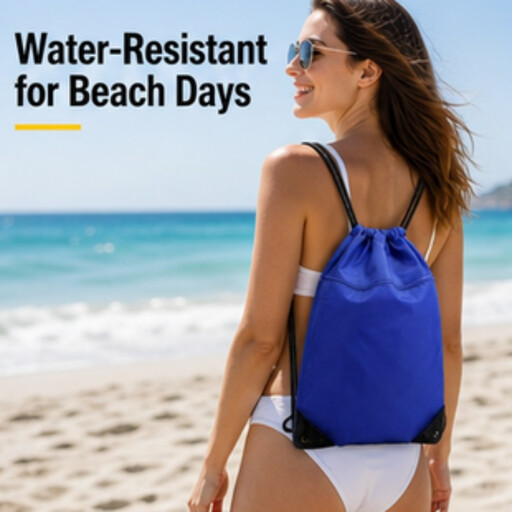
Why it suits this profile: This drawstring gym bag is a simple choice for sport, swimming or as an extra bag to keep in your bike pannier. The zipped pocket has room for small personal items.
The product name clearly specifies a drawstring fastening and zipped pocket. Don’t expect a laptop compartment or complete rain protection.
Lightweight design, suitable for sport and swimming, plus a separate zipped pocket.
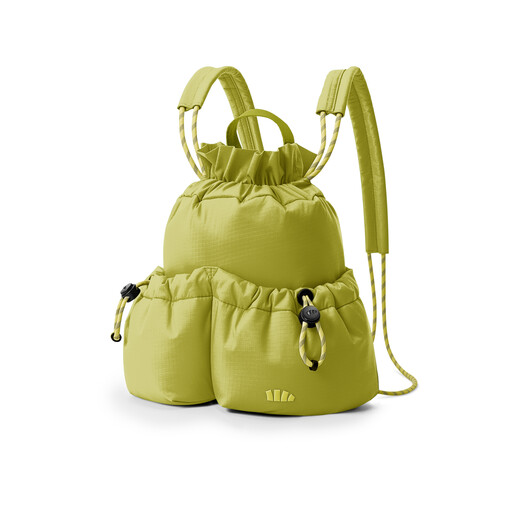
Why it suits this profile: This compact bag is designed for everyday essentials while commuting, shopping or enjoying light outdoor activities.
The product information lists four compartments and a capacity of 4.4 litres. So it’s clear from the outset that this isn’t a large school or travel bag.
4.4 litres of capacity, four compartments and, according to the product description, water-resistant fabric.

Why it suits this profile: This backpack is designed for commuters, walkers and travellers who sometimes carry a little and sometimes a lot.
The standard capacity of 10 litres and expanded capacity of 13 litres are listed separately. This lets you match the capacity to your needs rather than relying on a marketing name alone.
Expandable by 30 per cent according to the product description, with adjustable shoulder straps and several compartments.
For a gym bag or swimming bag, a drawstring style is often practical: it’s quick to open and takes up little space. If you’re carrying wet swimwear, it’s best to put it in a separate waterproof bag; a water-resistant outer fabric doesn’t automatically prevent leaks.
For school, university or the office, a backpack with zipped pockets and enough capacity is more useful. Check in advance that there’s room for documents or a laptop. For walking and short trips, adjustable straps, a lightweight design and an expandable main compartment are useful. A foldable backpack can also serve as an extra bag for shopping or a day out.
We’ve put together a complete, up-to-date list of products that meet these strict selection criteria and the applicable European safety regulations.
Always follow the manufacturer’s care advice. For synthetic models, wiping with a damp cloth is often suitable. Then leave the bag to air-dry completely and avoid prolonged exposure to direct heat. Don’t machine-wash a backpack unless this is expressly permitted.
Its lifespan depends on how heavily and often it’s used, and how well it’s cared for. A lightweight backpack can last a long time with everyday use and a normal load, but overloading puts extra strain on the seams, zips and straps. Check the drawstrings, buckles and stitching regularly, and avoid putting sharp objects in the main compartment.
A water-resistant backpack can be practical in light rain. In prolonged or heavy rain, it’s still wise to keep electronics and documents in a separate waterproof cover. Pay particular attention to the zips, seams and base of the bag, as these parts may not offer the same protection as the outer fabric.
