
Vandaag of morgen in huis

Kwaliteit gegarandeerd

Welkomstaanbiedingen ontgrendelen: GRATIS bezorging | Tot 80% korting | Gratis 30 dagen JoyPlus-proefperiode
Download de app
A backpack may seem simple to choose, until you start using it every day. You might not notice a main compartment that’s too small, shoulder straps that rub or a zip that can’t cope with rain until you’re out and about. Marketing terms such as “lightweight”, “waterproof” and “large capacity” don’t always tell the whole story either.
That’s why the Joybuy Product Recommendation Officer focuses on features you can check: capacity, dimensions, materials, compartments and carrying details. This makes it easier to choose a backpack, sports backpack or travel backpack that suits the way you’ll use it.
A 50-litre backpack sounds spacious, but a large capacity can be impractical for everyday use. For school, work or commuting, around 20 to 24 litres is often more practical. A 45-litre hiking backpack is more suited to multi-day trips or carrying lots of equipment.
Don’t just look at the capacity; consider the shape too. In practice, a slim bag with several compartments may be easier to organise than one large compartment.
A water-repellent backpack may help keep out light rain or splashes, but that doesn’t automatically mean your belongings will stay dry for a long time. So check:
For a laptop or important documents, a separate protective cover may be a good idea, even with a backpack that has a protective coating.
Comfort depends on more than padded shoulder straps. Check the adjustability and back panel, and look for a chest strap or waist belt on larger models. A lightweight backpack can be comfortable to carry, but a very thin back panel or limited adjustability may make it less suitable when fully loaded.
Choose the capacity based on how you’ll use the backpack:
Check the external dimensions too. A 24-litre backpack may be less practical in a bike bag, locker or luggage compartment if it’s wide or deep.
Adjustable shoulder straps are important for adults and older children. A chest strap and waist belt can help keep a hiking backpack or trekking model stable. For some models, check the brand’s sizing information to see how to measure your torso length.
A backpack with several compartments can help distribute the weight. Keep heavy items as close to the back panel as possible and avoid overloading the bag. A sturdy construction isn’t an invitation to fill it beyond its practical capacity.
Polyester, nylon and Oxford fabric are commonly used. Check the product description for information about durability, coatings and care. A bag that should only be cleaned with a damp cloth shouldn’t automatically go in the washing machine.
Also check the following before you buy:
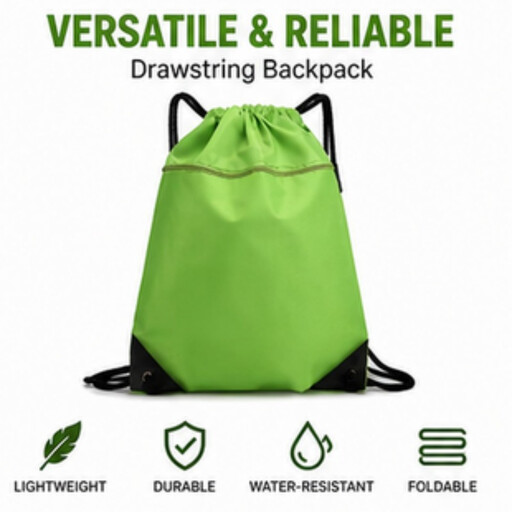
Why it suits this profile: A simple drawstring bag is suitable for sportswear, swimming or a quick trip out. This version has a zipped pocket for smaller items.
Its compact design means you won’t need to buy an unnecessarily large bag for light loads. However, don’t expect a laptop compartment or a carrying structure designed for heavy loads.
Lightweight design for sport and everyday use; extra zipped pocket for accessories.
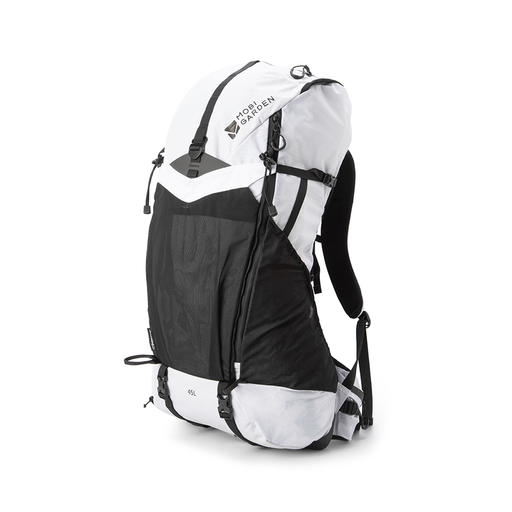
Why it suits this profile: This hiking backpack is designed for trekking and backpacking. The product information lists Dyneema composite fabric, a ventilated 3D back panel and a capacity of 45 litres.
Its specified compartments, waterproof hydration sleeve and adjustable waist and chest straps make it more specialised than an ordinary daypack. It isn’t designed for extreme or aerial sports.
45-litre capacity; separate hydration compartment; external attachment points and ventilation in the back panel.
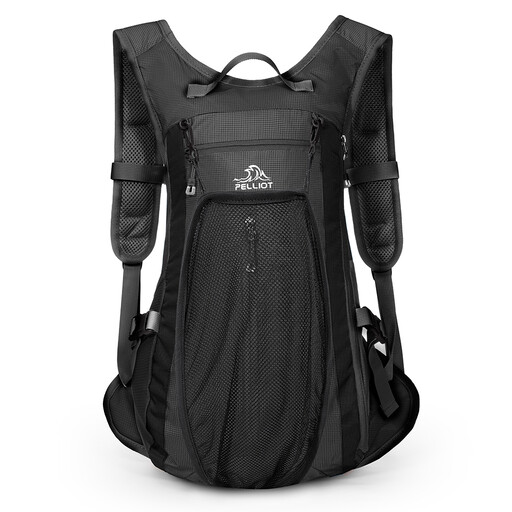
Why it suits this profile: The specified S.L.F. construction and adjustable harness are designed for trail running and cycling. Sizes range from 10–15 litres to 15–20 litres.
The size options are based on torso length and waist measurement, so you can make a more tailored choice than with a one-size-fits-all sports backpack. Take these measurements before buying.
Several compartments for a bottle, tools and phone; grid polyester according to the product information; two size ranges.
We’ve put together a full, up-to-date list of products that meet these strict selection criteria and the applicable European safety regulations.
For school or the office, the 22-litre PUMA Phase Backpack and the approximately 24-litre PUMA Academy Backpack are sensible sizes. Both product descriptions mention padded shoulder straps, a padded back panel and several compartments. When carrying electronics, always check that your laptop will fit within the stated dimensions.
A foldable backpack is useful as a spare when travelling. The NatureHike 30D Nylon Ultralight Foldable Backpack is described as ultralight, foldable and waterproof in the product name. Check the full specifications and, if necessary, use a protective cover for delicate belongings.
If you carry a lot of equipment, consider the 50-litre vidaXL Military-Style Backpack. The product information lists coated Oxford fabric, four compartments, adjustable shoulder straps, a chest strap and a waist belt. Given its size and stated weight of 1,15 kg, it’s more suited to outdoor activities or travel than everyday use as a school bag.
For books, lunch, accessories and light clothing, 20 to 24 litres is usually practical. Compare the dimensions with those of your laptop and any folders you need to carry. A 20-litre backpack can be compact, but it offers less room for sportswear or an extra pair of shoes.
Always follow the care instructions on the product page. Many models can be wiped with a damp cloth and left to air-dry. Don’t use a washing machine or tumble dryer unless the care instructions say it’s safe to do so, as this could damage the coating, lining and reinforcements.
A 45-litre hiking backpack is suitable for multi-day walks when you need to carry clothing, sleeping gear and food. A 50-litre backpack offers extra space for larger or heavier equipment. For everyday cycling, school or work, this type of model is often more cumbersome than a 20- to 24-litre backpack.
