
Vandaag of morgen in huis

Kwaliteit gegarandeerd

Welkomstaanbiedingen ontgrendelen: GRATIS bezorging | Tot 80% korting | Gratis 30 dagen JoyPlus-proefperiode
Download de app
A backpack might seem simple to choose – until you’re carrying a heavy laptop, books, lunch and gym kit every day. A model can look spacious in photos, but in practice it might be awkward to open, sit poorly on your back, or offer insufficient protection against a British downpour.
Three common pitfalls keep cropping up:
With the right checklist, you can compare backpacks more practically and avoid paying for features you’ll barely use.
Do you use a laptop for study or work? Then don’t just check whether the product title says “laptop compartment”. Pay attention to the stated size and how the device is stored.
A 15.6-inch laptop backpack is designed for laptops within that size, but your own laptop’s exact dimensions are still the deciding factor. Measure your laptop including any protective case. A padded compartment can offer extra protection against scratches and light knocks, but it doesn’t replace a sturdy laptop sleeve for heavy-duty transport.
For a school or university bag, multiple compartments are also useful. A separate front pocket for cables, cards and keys stops you from having to rummage around in the main compartment.
A large backpack of 20 to 24 litres can be suitable for daily use, school and commuting. Yet the number of litres doesn’t tell the whole story. A 20-litre bag with a wide opening can be more practical than a narrower model with a slightly larger stated volume.
Pay attention to:
A roll-top backpack often offers flexibility in height. That’s handy when you need to carry more on some days. A model with a drawstring or flap closure can give a different access experience compared with a classic zip.
A comfortable backpack should ideally have adjustable shoulder straps and a back panel that doesn’t dig uncomfortably into your back. A padded back panel can be pleasant on longer bike rides or train journeys. Also check whether the straps are wide enough for the load you’ll be carrying.
When it comes to material claims, nuance is important. “Water-repellent” or “water repellent” doesn’t automatically mean the seams and zips are fully waterproof. In heavy rain, use a separate rain cover if your laptop or documents need extra protection.
PUMA states for several models that at least 70% or 90% of the materials used are recycled. This is a product specification from PUMA’s product information; it doesn’t in itself say how long a backpack will last. So also look at the seams, zips, base and care instructions.
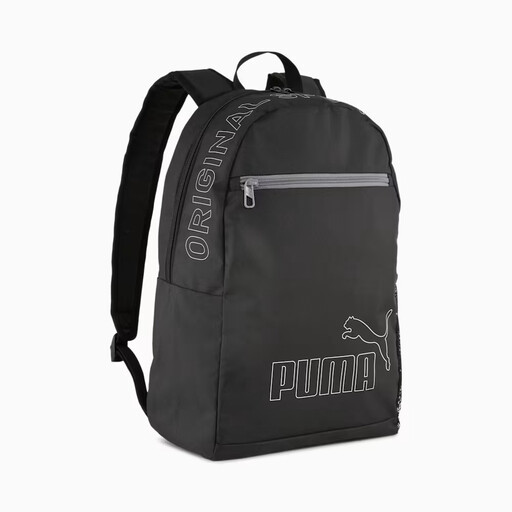
Why it fits the profile: This unisex backpack has a capacity of around 20 litres and is suitable for everyday essentials, school supplies or light gym kit. According to the product information, the dimensions are 44 x 30 x 14 cm.
The multiple compartments reduce the need to search through one large space. The product information mentions a main compartment, front pocket, mesh side pocket and a padded interior.
Padded shoulder straps and back panel; polyester exterior with PU coating; according to PUMA, made with at least 90% recycled materials.
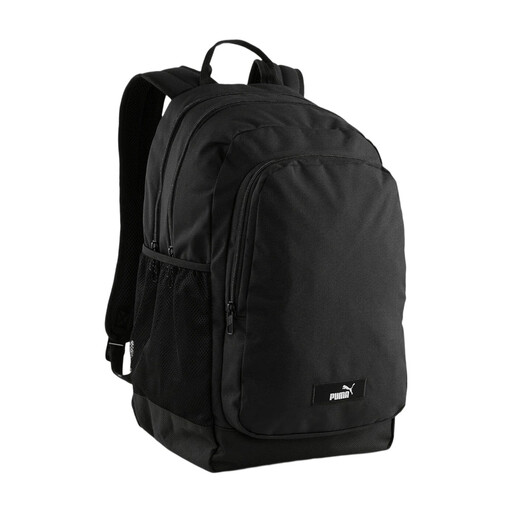
Why it fits the profile: This model offers around 24 litres of capacity and two spacious compartments. The stated maximum compatible device size is 18.7 inches, so you’ll need to compare the dimensions of your laptop and case beforehand.
The combination of two main compartments, a front pocket, two mesh side pockets and a padded interior makes the layout easy to check in detail.
Dimensions of 45 x 30 x 18 cm; padded adjustable shoulder straps and back panel; PUMA states at least 70% recycled materials.
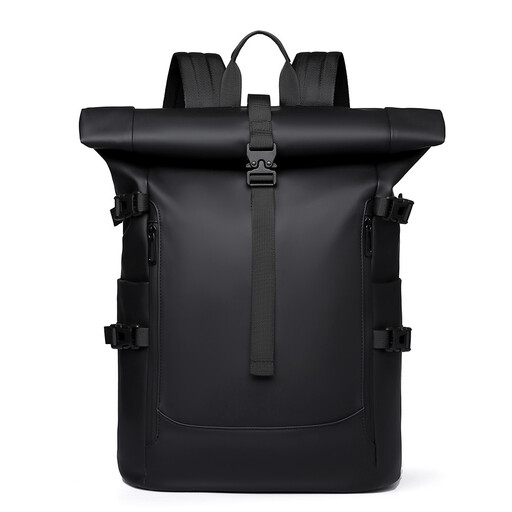
Why it fits the profile: The roll-top design is practical for cyclists, urban users and commuters. The model is listed as a 15.6-inch laptop backpack with generous storage space.
The product name mentions water repellency, but not full waterproofing. So a rain cover is still a sensible idea for prolonged rain and electronics.
Flexible roll-top opening; suitable for a laptop up to the stated 15.6-inch size; designed for work, cycling and city travel.
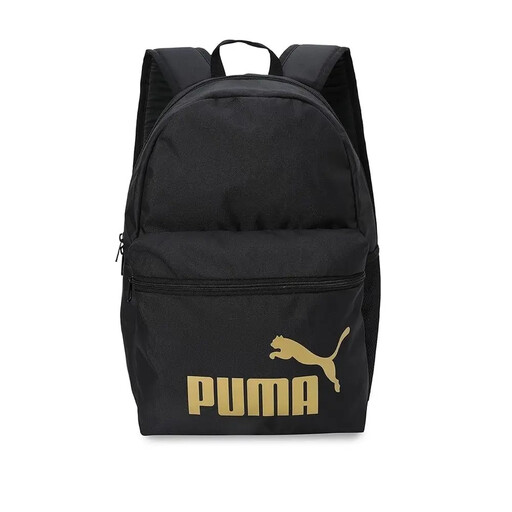
Why it fits the profile: With a stated capacity of 22 litres, this PUMA backpack is suitable for school supplies, workwear or a gym outfit. The black design with gold-toned details suits a sporty backpack for daily use.
The capacity is linked to concrete dimensions of 44 x 30 x 14 cm. A two-way zip, front pocket and side pocket help keep the bag organised.
Padded back panel and adjustable straps; lightweight construction; according to PUMA, made with at least 90% recycled materials.
We’ve put together a full, up-to-date list of products that fully meet these strict selection criteria and comply with current European safety regulations.
No. The size in the title is an indication, but the internal dimensions can vary from model to model. Measure your laptop and check whether there’s room for the thickness of the laptop and any case. So a 15.6-inch laptop backpack isn’t automatically suitable for every device with that screen size.
That depends on use, load, material and care. A backpack that’s heavily loaded every day will wear out more quickly at the zips, seams and shoulder straps. Keep the bag within its stated capacity, remove wet items after use and follow the care instructions. For the PUMA Phase Backpack II, for example, the product information recommends cleaning with a damp cloth and not using detergent.
In light rain, a water-repellent backpack can offer practical protection, but the term isn’t the same as waterproof. So check the construction of the zips and seams, and consider using a rain cover for your laptop, documents and longer bike rides.
