
Vandaag of morgen in huis

Kwaliteit gegarandeerd

Welkomstaanbiedingen ontgrendelen: GRATIS bezorging | Tot 80% korting | Gratis 30 dagen JoyPlus-proefperiode
Download de app
A backpack may look sturdy in a product photo, yet prove impractical on a walk, school day or train journey. Many disappointing purchases are not caused by choosing the wrong colour, but by selecting the wrong capacity, poor carrying comfort or features that work differently from expected.
Pay particular attention to these three pitfalls:
The right backpack therefore depends on your activity, how much you need to carry and how you wear the bag.
Capacity is measured in litres. A practical guide:
A 45-litre trekking backpack is not automatically suitable for everyday use. Check whether you can compress the contents and whether the model has enough compartments. A bag with plenty of volume but poor organisation can actually become difficult to manage.
Also consider the empty weight. A lightweight backpack is appealing when you walk long distances, but very thin material may be less suitable for rough ground or heavy use. The combination of material, stitching, buckles and carrying system is more important than any single marketing term.
A good fit starts with the back length and adjustability. Check the following before buying:
With an outdoor backpack, hiking backpack or walking backpack, a ventilated back panel can be comfortable during exertion. According to the product description for the Mobi Garden Phantom Pro 3D Dyneema, the shoulder straps feature breathable foam and the model has a 3D-ventilated back panel. These are verifiable design features, but they do not guarantee that every user will have the same carrying experience.
Place heavy items close to your back and avoid pressing hard or sharp objects against the material. This advice is also included in the safety information for Mobi Garden backpacks.
Not every backpack can withstand the same conditions.
Looking for a waterproof backpack? Check whether the entire bag is waterproof or only a specific compartment. A separate water-repellent or waterproof drinks compartment is not the same as protection from prolonged rain. Also check whether the zips, seams and fastenings have a specific protection rating. If this information is missing, do not assume the bag is fully waterproof.
A backpack with a USB port also only works with a power bank. The USB connection does not supply power independently.
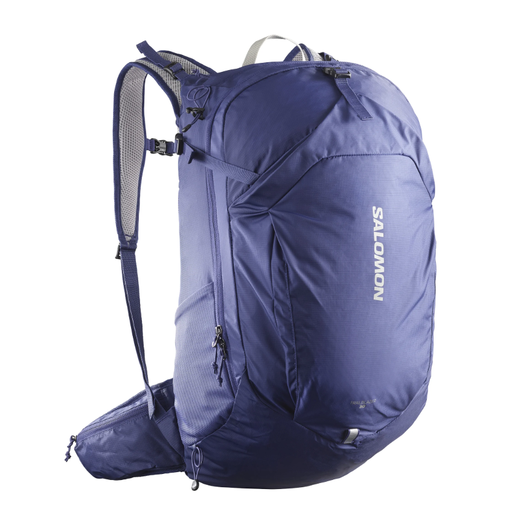
Why it suits this profile: The 30-litre capacity is suitable for day trips, urban use and travel when you want to bring extra clothing or provisions. The product description mentions several compartments and breathable mesh in the shoulder straps and back panel.
The stated capacity and dimensions make it easier to match the bag to a day trip, rather than unnecessarily choosing a much larger model.
30-litre capacity, several storage compartments and an ergonomic design according to the product information.
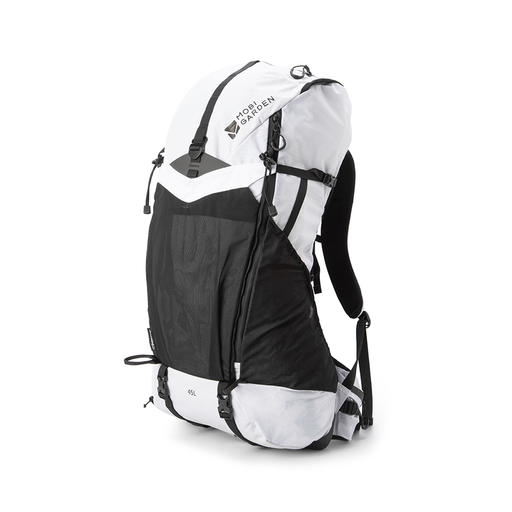
Why it suits this profile: This 45-litre trekking backpack is designed for backpacking, hiking and trekking. Its stated capacity is suitable for multi-day lightweight trips, depending on your equipment.
The model has a separate waterproof sleeve for a hydration system, but the entire bag should not automatically be considered waterproof. Sharp objects can damage the material.
45-litre capacity, approximately 1.35 kg empty weight, hip belt, chest strap and 3D-ventilated back panel.
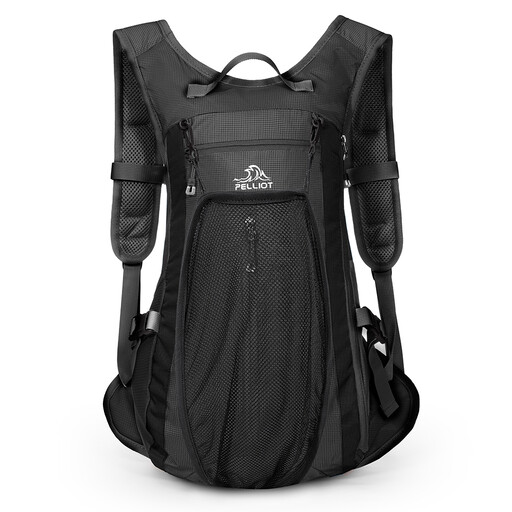
Why it suits this profile: This trail-running backpack is intended for cycling and intensive outdoor activities. The sizing is linked to torso length and waist measurement, allowing you to check the fit more precisely.
The product information lists S/M and L/XL sizes and provides a method for measuring the torso. Check these measurements in advance rather than relying solely on “unisex” or “lightweight”.
10–15 litres for size S/M, 15–20 litres for L/XL, breathable mesh and compartments for a phone, snacks, tools and drinks bottles.
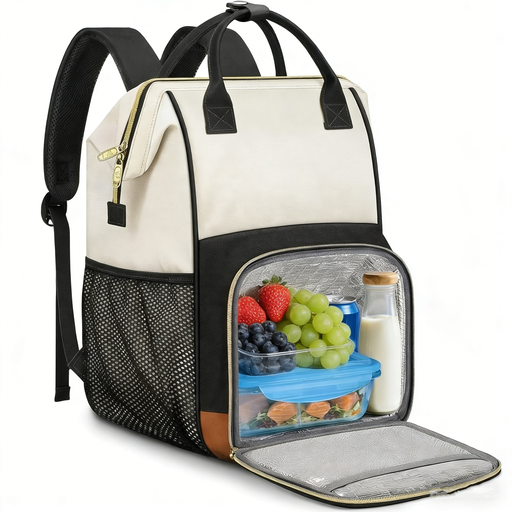
Why it suits this profile: This 2-in-1 model combines a 15.6-inch laptop backpack with a removable insulated lunch compartment. It is suitable for commuting, school, the office and picnics.
The product information distinguishes between water-repellent outer fabric and an insulated lunch compartment. The USB port requires a separate power bank.
Space for laptops up to 15.6 inches, removable lunch bag, organiser compartment, luggage strap and water-repellent fabric according to the product description.
We have compiled a complete, up-to-date list of products that fully meet these strict selection criteria and the applicable European safety regulations.
A school backpack should primarily accommodate books, a laptop and everyday accessories. Check that the laptop compartment is the right size; “suitable for 15.6 inches” does not mean that every model with the same dimensions will automatically fit.
A cooler backpack has an insulated interior. According to the product information for the OutdoorMaster Cooler Backpack, the insulation can help retain the temperature for up to 20 hours when used with ice. This is a claim from the product information and, in practice, depends on factors including the outside temperature, the amount of ice and how often the bag is opened. According to the description, the inner lining is leak-proof, but always keep the bag upright and check the fastening.
For cycling or trail running, a low profile, stable fit and quick access to drinks are more important than a large main compartment. A 20-litre backpack may already be more than sufficient.
For most day walks, around 20 to 30 litres is sufficient. If you are carrying extra clothing, a camera, lunch and waterproofs, 30 litres may be more practical. For a short trail run, 10 to 20 litres is often enough.
Place heavy items close to the back panel. Then adjust the shoulder straps, fasten the chest strap and use the hip belt on larger models. The bag should sit securely without the straps digging into your shoulders. Check the torso length if the manufacturer provides sizing measurements.
Its lifespan depends on the material, load, weather conditions and maintenance. Wipe off dirt, allow a wet bag to dry completely and follow the washing instructions. A bag that is regularly dragged over sharp ground or overloaded may wear out more quickly than one used normally.
