
Vandaag of morgen in huis

Kwaliteit gegarandeerd

Welkomstaanbiedingen ontgrendelen: GRATIS bezorging | Tot 80% korting | Gratis 30 dagen JoyPlus-proefperiode
Download de app
A backpack may seem straightforward to choose—until you use it every day. That is when you notice whether the shoulder straps fit properly, whether your laptop is protected and whether there is enough room for a bottle, lunch, sportswear and other essentials. A budget purchase can quickly become impractical.
Pay particular attention to these three common pitfalls:
A high litre capacity without smart organisation
A spacious backpack is not automatically practical. One large compartment can cause smaller items to disappear to the bottom. Look for a backpack with multiple compartments, a front pocket and, where useful, side pockets.
Comfort claims without concrete details
Terms such as “ergonomic” mean little unless the actual features are specified. Check whether the shoulder straps are adjustable and padded, and whether the back panel offers support or ventilation.
Incomplete or unclear product specifications
Watch for conflicting information about dimensions, weight and capacity. Some product listings omit important details or include figures that do not appear logical. Always check the current product page before placing an order.
For everyday use, a capacity of around 20 to 25 litres often offers a good balance between compactness and space. This is generally enough for a school backpack, work essentials, lunch and an additional layer of clothing. A 30-litre model provides more room for day trips, travel or sports equipment.
A spacious backpack is useful if you carry a lot, but an oversized model can become unnecessarily heavy when fully packed. That is why you should consider more than just the litre capacity: dimensions matter too. A backpack measuring 45 cm in height will sit differently on your back than a compact 40 cm model.
A separate compartment is useful for a laptop or tablet. Check the maximum compatible device size rather than relying solely on the label “laptop compartment”. For example, the PUMA Academy Backpack lists a maximum compatible device size of 18.7 inches, alongside a capacity of approximately 24 litres.
A comfortable backpack should have, at a minimum:
A lightweight backpack is convenient for commuting and school, but make sure the low weight does not compromise protection for the contents. Thin fabric may be suitable for light everyday items, but less appropriate for heavy books or intensive outdoor use.
Polyester and nylon are widely used for backpacks. According to the product information for the models mentioned, these materials are lightweight, easy to maintain and suitable for everyday use. Some brands also mention water-repellent properties; treat this as a product claim, not as proof that the bag is fully waterproof.
Also check:
A black backpack generally conceals marks more effectively and works well with a range of clothing styles. Bright colours are easier to spot in a busy environment. Choose based on everyday practicality, not appearance alone.
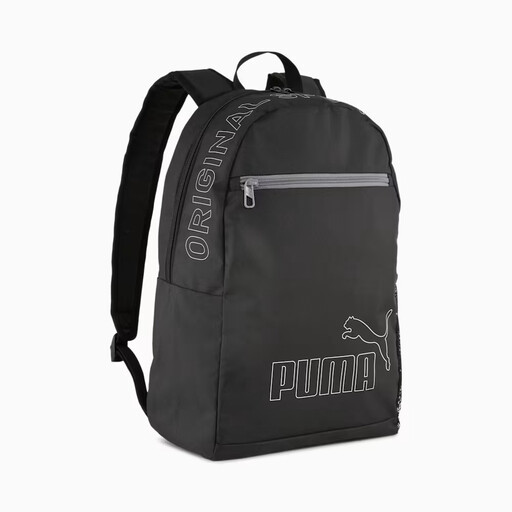
Why it fits the brief: A practical black backpack for school, work and everyday commuting. With a capacity of approximately 20 litres, its design remains relatively compact.
The product details specify a main compartment with a two-way zip, a front pocket, a mesh side pocket and a padded back panel. This provides more structure than a bag with just one large compartment.
Approximately 20 litres of capacity, adjustable padded shoulder straps and a padded back panel. According to PUMA, at least 90% of the materials are made from recycled materials.
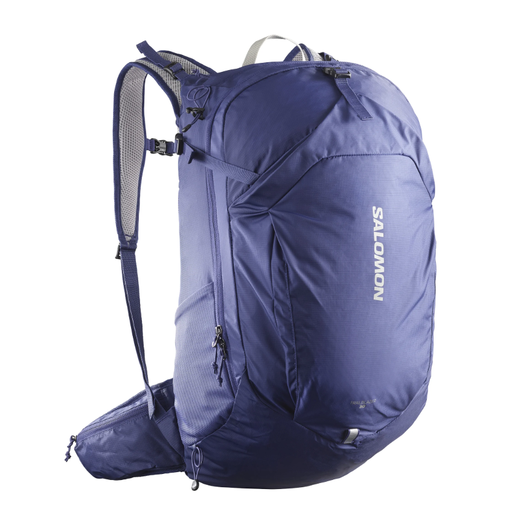
Why it fits the brief: For day trips, urban excursions and users who carry plenty of gear. Its 30-litre capacity offers extra room without requiring a large travel bag.
The product description mentions a redesigned shoulder-strap and back-panel construction, breathable mesh and multiple compartments. Before buying, however, check that the shape and length suit your back.
30-litre capacity, multiple storage compartments and a combination of nylon and polyester, according to the product information.
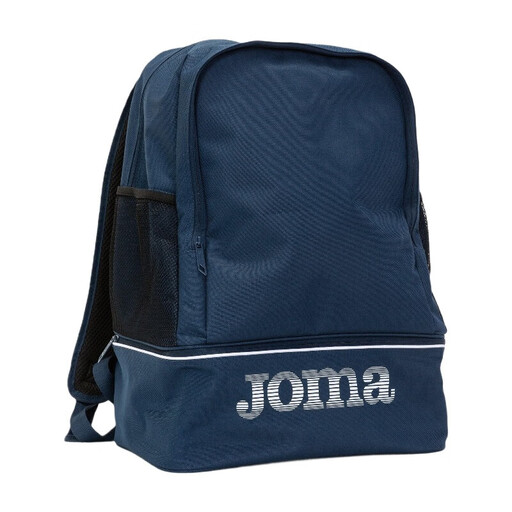
Why it fits the brief: A gym backpack for sportswear, shoes and accessories. Its 24.2-litre capacity is well suited to training sessions and short trips.
The product information lists an inner compartment, a front pocket and a reinforced double base. This helps keep clothing and smaller items separate. For wet items, using a separate bag is recommended.
24.2-litre capacity, polyester construction, a double base and padded, adjustable shoulder straps, according to the product page.
For everyday use, the PUMA Academy Backpack Black Unisex and PUMA Phase Backpack Black are also relevant options. According to the product details, the Academy offers approximately 24 litres of capacity, two main compartments, mesh side pockets and space for a compatible device. The Phase Backpack Black lists approximately 22 litres of capacity, a weight of 300 grams, a front pocket and a side pocket suitable for a water bottle, for example.
Those looking for a sporty backpack in a bold colour may want to consider the Joma Training III Backpack Red One Size or Joma Training III Backpack Blue One Size. The product descriptions mention a main compartment, multiple pockets and padded shoulder straps. Check the current size chart for these models, as the available product specifications are not complete in every case.
For school, work or a short trip, the Reebok Cross One Backpack 45cm Black may be worth considering thanks to its spacious main compartment and additional pockets. The product description mentions adjustable shoulder straps, but check the product page to confirm whether a separate laptop compartment and the exact capacity are specified for your version.
Browse a current selection of training backpacks and compare capacity, compartments, materials and carrying comfort for each product.
For a school backpack or an adult everyday backpack, around 20 to 25 litres is often a useful starting point. If you carry sportswear, a lunchbox and several books every day, consider 25 to 30 litres. Also check that the bag remains comfortable when the main compartment is fully loaded.
Its lifespan depends on the load, maintenance and conditions of use. A backpack that is heavily packed every day will wear more quickly around the zips, base and shoulder straps. Clean the bag according to the care instructions, avoid overloading it and store it somewhere dry. A stated warranty does not guarantee a fixed service life: in the European Union, consumers are entitled to at least the statutory guarantee of conformity; the products mentioned list a minimum period of two years.
Not automatically. A polyester or nylon backpack may have water-repellent properties according to its product description, but that does not mean it will remain protected during prolonged exposure to rain or immersion. If you regularly cycle through wet weather, use a waterproof cover for electronics and important documents.
