
Vandaag of morgen in huis

Kwaliteit gegarandeerd

Welkomstaanbiedingen ontgrendelen: GRATIS bezorging | Tot 80% korting | Gratis 30 dagen JoyPlus-proefperiode
Download de app
A backpack seems easy to choose until you’re carrying a laptop, books or clothes every day. A style may look spacious in photos, but prove awkward to open, sit poorly on your back or offer too little protection from a British downpour. When it comes to a travel backpack, even a few centimetres can cause problems at the gate.
The main pitfalls are:
Focusing only on capacity
A high litre count doesn’t tell you how efficiently the compartments are arranged. A 24-litre backpack may be more practical than a larger style without a laptop compartment or smaller pockets.
Confusing “water-repellent” with waterproof
Water-repellent material can help keep out splashes and light rain. It doesn’t mean the contents will stay dry for a long time in heavy rain or if submerged.
Misjudging the dimensions of a cabin backpack
Airlines set their own limits for personal items and cabin bags. Measure your backpack when it’s full and check your airline’s current requirements before you travel.
For a work or school backpack, the external dimensions and layout matter more than the litre capacity alone. Check that the laptop compartment is actually suitable for your device. A label such as 15.6-inch laptop backpack usually refers to the maximum screen size, but laptops vary in bezel thickness and overall dimensions.
Also look for:
A school backpack with a USB port can be useful, but the power bank is usually not included. Also check how the cable connects inside and whether the compartment is big enough for your everyday essentials.
A lightweight backpack is handy for commuting, but a low bag weight shouldn’t come at the expense of a sturdy build. Check that the shoulder straps are adjustable and wide enough. A padded back panel can make it more comfortable to carry, while a chest strap can provide extra stability on a walking backpack.
Pack heavy items close to your back. A laptop, books and a full water bottle carried towards the outside pull the backpack backwards. This can make cycling, walking and changing buses or trains less practical.
Terms such as “waterproof”, “water resistant” and “water-repellent” aren’t always interchangeable. Look for specific product information:
According to the product information for the LI-NING COUNTERFLOW backpack, the style has a water-repellent finish and a capacity of 16 litres. The same information expressly states that it isn’t waterproof. In heavy rain, use a rain cover or give your laptop extra protection.
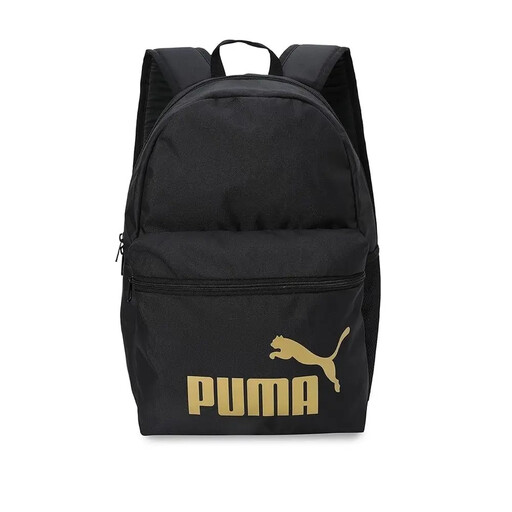
Why it suits this profile: With a main compartment, front pocket and side pocket, it’s well suited to everyday use for school, sport or a short commute.
The product information gives an approximate capacity of 22 litres and specific dimensions of 44 x 30 x 14 cm. This makes it easier to estimate how much space you’ll have before buying.
Two-way zips, padded shoulder straps and back panel, plus at least 90% recycled materials according to the product information.
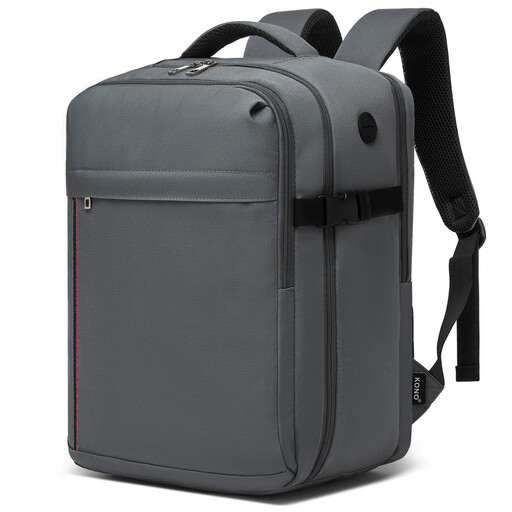
Why it suits this profile: This style is aimed at short trips, business flights and commuters looking for a cabin backpack with a well-organised layout.
The external dimensions are 40 x 30 x 20 cm, and the product information warns that internal dimensions may differ, so it’s important to measure the bag yourself. Always check Ryanair’s requirements or those of your chosen airline.
Approximately 24 litres of capacity, a padded compartment for a 15.6-inch laptop, three compartments, a trolley strap and a weight of approximately 0.5 kg.
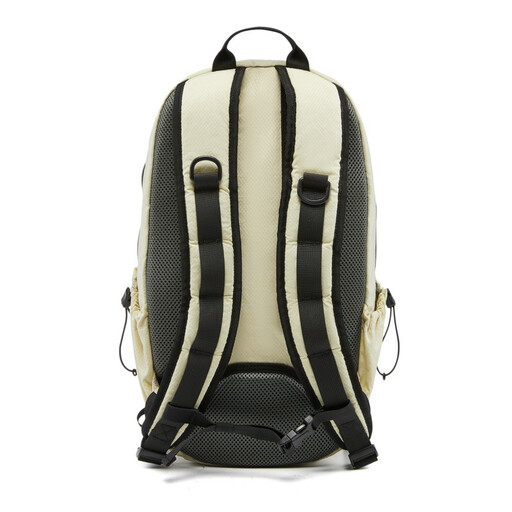
Why it suits this profile: With a 16-litre capacity, adjustable straps and attachment points, it’s a good fit for city use, commuting and light walks.
The product description specifically says that the water-repellent finish protects against splashes; it doesn’t claim the backpack is waterproof. Extra protection is still needed in heavy rain.
Breathable perforated back panel, adjustable straps, a side pocket, a zipped pocket and an elastic attachment for items such as a bottle.
We’ve put together a complete, up-to-date list of products that meet these strict selection criteria and the applicable European safety regulations.
For a laptop, documents and everyday accessories, around 18 to 25 litres is often a practical range. If you also carry sportswear or lunch, you may need more space. Look beyond the litre capacity at the layout, and measure your laptop.
A water-repellent backpack can be suitable for light rain and splashes. It won’t be enough in prolonged or heavy rain. Use a rain cover or a separate waterproof laptop sleeve if you need to keep your electronics dry.
No. The permitted dimensions vary by ticket type and airline. Check the requirements before you travel, and remember to account for full side pockets, handles and any protruding parts. A style that fits the limit on paper may still be too large or too heavy when packed.
