
Vandaag of morgen in huis

Kwaliteit gegarandeerd

Welkomstaanbiedingen ontgrendelen: GRATIS bezorging | Tot 80% korting | Gratis 30 dagen JoyPlus-proefperiode
Download de app
Buying baby food seems straightforward until you have to choose between jars, pouches, porridge and multipacks. Packaging often uses terms such as organic, natural and no added sugar. This information can be useful, but it doesn’t automatically tell you whether a product is right for your child’s age, eating stage or allergies.
The main pitfalls are:
The age shown on the packaging is a useful guide, but it’s no substitute for personalised advice. If you’re unsure when to start solid foods, speak to your health visitor or a doctor. Until around 6 months, milk feeds remain an important part of your child’s diet.
For first tastes, smooth products are suitable, such as a fruit purée for babies or a simple vegetable purée for babies. According to the product information, Olvarit Pear Fruit Puree 4M+ contains 99.98% pear and L-ascorbic acid. The ingredients list for Olvarit Cauliflower Baby Puree 4M+ shows that it consists of 100% cauliflower. Simple recipes like these make it easier to introduce new flavours one at a time.
From 6 months, you can look at combinations with grains, vegetables, fruit or milk. From 8 months, meals with a suitable texture may be appropriate. For children from 12 months, there are also larger portions, drinkable porridge and a wider variety of snacks.
Don’t just look at the front of the pack. Check:
An organic label refers to the production method and certification, not necessarily to a particular nutritional value. For organic baby food such as Organix Bio Mango & Pear Granola 6+ Months, the product information says it’s organic and contains no added sugar. The ingredients are mango, pear and oats. It therefore does contain naturally occurring sugars and oats.
Also watch out for discrepancies between a product webpage and its label. According to the product information for Olvarit Meal 8 months+ Carrot Chicken Potato, the recipe contains wheat starch and gluten. So check the current packaging every time you buy, especially if your child has an allergy or intolerance.
A 125-gram jar can be handy for a first taste. A multipack of four is more appealing if you use the same flavour regularly. Pouches are convenient when you’re out and about, but it’s best to serve the fruit on a spoon or in a bowl while your child is practising. That way, the pouch doesn’t become the only way your child eats.
Check the storage guidance:
Texture also matters for baby snacks, baby fruit pouches and baby porridge. A smooth fruit purée is suitable for a different stage from a meal with pieces or a snack designed for your child to hold independently.
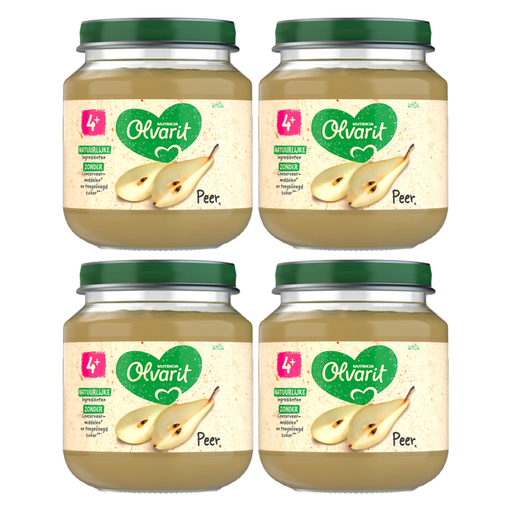
Why it suits this profile: A multipack of four 125-gram portions is practical for parents who want to introduce first fruit flavours gradually and plan several feeding occasions.
The ingredients list is short and the portion size is clear. After opening, be sure to check the storage instructions on the packaging.
From 4 months according to the product information; 125 grams per jar; 99.98% pear according to the description.
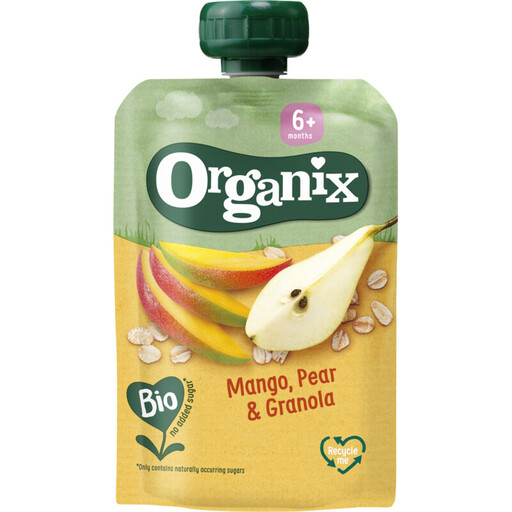
Why it suits this profile: A good choice for parents looking for organic ingredients and a combination of fruit and grains from 6 months.
The product information states that it contains organic ingredients and no added sugar. Still, compare the nutritional information, as fruit contains natural sugars.
From 6 months; 100 grams; mango, pear and oats according to the ingredients list.
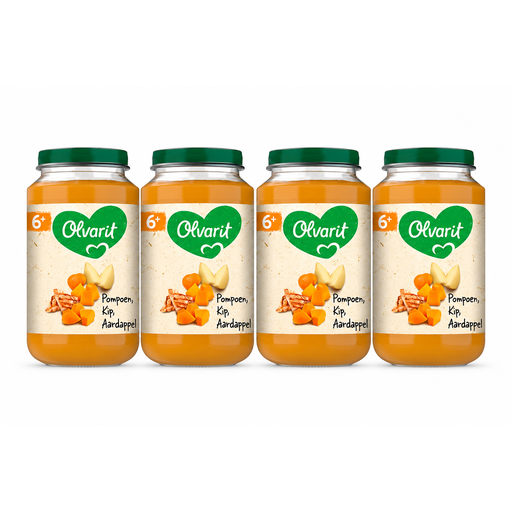
Why it suits this profile: Handy for parents who want to have several meals suitable from 6 months ready, without preparing each one from scratch.
The age guidance, portion size and meal combination are clearly stated. Check the current allergen information on the label before buying.
Four packs of 200 grams; combination of pumpkin, chicken and potato according to the product name.
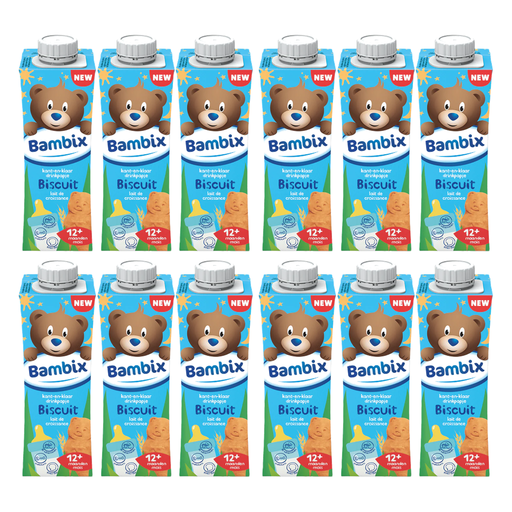
Why it suits this profile: A practical option for children from 12 months when you want drinkable baby porridge at home or on the go.
The age guidance is clear. Do check the full allergen list: the product information includes milk, cereals containing gluten and egg, among other ingredients.
Three 250 ml packs; can be served cold or lukewarm according to the product information.
We’ve put together a complete, up-to-date list of products that meet these strict selection criteria and current European safety regulations.
Start with products specifically labelled as suitable from 4 months, such as a simple fruit or vegetable purée. Introduce new ingredients gradually and follow your health visitor’s advice. Milk feeds remain important at this stage.
It varies by product. Some jars need to be used within 48 hours, while drinkable porridge or rice porridge, for example, may be kept refrigerated for no more than 24 hours. Always check the packaging, seal leftovers and don’t use a product if its smell, packaging or use-by date seems wrong.
A multipack of baby food can bring down the price per portion, but compare the total quantity and storage life. A multipack of four is most practical when your child likes the flavour and you can use the portions within the stated time. Also check delivery costs and the current product price before you order.
