
Vandaag of morgen in huis

Kwaliteit gegarandeerd

Welkomstaanbiedingen ontgrendelen: GRATIS bezorging | Tot 80% korting | Gratis 30 dagen JoyPlus-proefperiode
Download de app
When it comes to baby wipes for sensitive skin, you’re probably looking at scent, ingredients and softness. Yet a pack with a calm, reassuring design can still turn out to be less practical when you’re dealing with a full nappy, out and about, or during daily use. What’s more, marketing terms like “pure water”, “natural” and “hypoallergenic” don’t always tell the full story.
The most common pitfalls:
For newborns and sensitive skin, many parents choose unscented baby wipes. A fragrance-free formula prevents perfume from becoming an extra ingredient in your daily routine. Also check for the presence of alcohol, dyes and plant extracts if you want to keep the formula as simple as possible.
Products with 99% purified water are based on a high water content, but usually contain other ingredients for preservation, moisture and pH regulation. “99% water” is therefore not a synonym for “water only”. Read the label and follow the usage instructions.
A label such as hypoallergenic describes a product feature or a manufacturer’s marketing claim. It is not a guarantee that every skin type will react without problems. If in doubt, test a small area first and stop using the product if redness or irritation occurs.
Thick baby wipes can be more practical for dealing with bowel movements, as they are less likely to tear and offer more surface area. The product information for some BC Babycare wipes states a thickness three times that of many standard wipes and 3.8 times more moisture. These are the manufacturer’s comparisons; check the packaging for the current specifications.
Extra moisture can make wiping gentler, but wipes that are too wet can be awkward during a nappy change. For on-the-go use, smaller packs are practical, while a bulk pack is better suited to daily use at home.
If you want to avoid plastic, look out for terms like plastic-free baby wipes, plant-based fibres and biodegradable baby wipes. However, check whether the claim refers to the wipe, the packaging or both. A plastic-free wipe can still come in a plastic wrapper.
An OEKO-TEX certification refers to a check within the OEKO-TEX system. For the BC Babycare products mentioned, the certificate number 25.HUS.21538 Hohenstein is listed. Use such a number to verify product information, but do not attach any medical benefit to it. A certification mark also does not automatically mean a wipe is suitable for flushing.
The following selection is based on verifiable information such as quantities, material, scent, water content and packaging. Suitability for an individual skin type may vary.
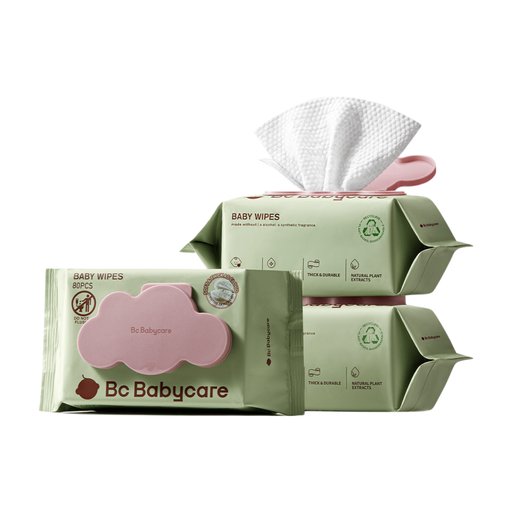
Why this fits the profile: A pack of 240 wipes offers a manageable quantity for daily use without buying a very large stock straight away. According to the product information, the wipes are unscented and designed for sensitive skin.
The product listing mentions 99% purified water, fragrance-free use, extra moisture and a three-times thicker wipe structure. Check these features on the packaging when you receive it.
240 wipes, unscented, 99% purified water and OEKO-TEX certification according to the stated product specification.

Why this fits the profile: The bulk pack of 960 wipes suits families who change nappies daily and like to keep a good stock at home.
The stated thickness and moisture level are designed for cleaning with fewer wipes per change. The pack must be closed properly each time to prevent drying out.
960 wipes, plant-based fibres according to the product information, unscented and OEKO-TEX certification with number 25.HUS.21538.
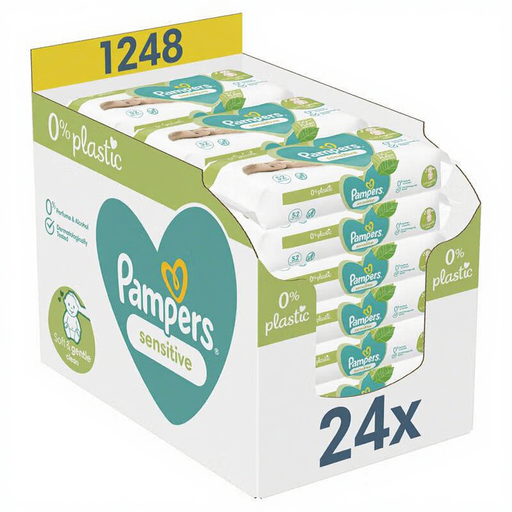
Why this fits the profile: The distribution across 15 packs is handy for a family that uses multiple changing spots, such as the changing table, nappy bag and car.
According to the product information, the wipes are unscented, alcohol-free and made from 100% plant-based fibres. The wipes are not intended to be flushed.
780 wipes, plastic-free wipe fibre according to the manufacturer, unscented variant and suitable from the age stated on the packaging.

Why this fits the profile: The product information states 99.9% purified water and 0.1% grapefruit seed extract. That suits shoppers who are mainly looking for a short ingredients list.
The ingredients are clearly specified. The product information also mentions a shorter usage period after opening; plan how many packs you open at once.
720 wipes, two listed ingredients and a pack of 12 packs with 60 wipes each.
We have compiled a full, up-to-date list of products that fully meet these strict selection criteria and comply with current European safety regulations.
A high water content can match a preference for a simple formula. Also check the full ingredients list, age recommendation and warnings. No product is identically suitable for every baby’s skin. Test gently and stop if irritation occurs.
This varies by brand and formula. The product information for WaterWipes, for example, states that an opened pack must be used within a limited period. For other wipes, the main instruction is to close the packaging properly. Always follow the information on the packaging.
Not automatically. “Plastic-free” or “biodegradable” describes the material, not the disposal method. Used baby wipes belong in the bin, unless the manufacturer and local waste guidelines explicitly state otherwise.
