
Vandaag of morgen in huis

Kwaliteit gegarandeerd

Welkomstaanbiedingen ontgrendelen: GRATIS bezorging | Tot 80% korting | Gratis 30 dagen JoyPlus-proefperiode
Download de app
Your child's first steps are a major milestone. As a parent, you want to support this moment with the right tool. A baby walker seems like a logical choice, but the search is often more challenging than it appears. The market is flooded with models that overpromise and underdeliver, leading to unnecessary expenses and sometimes even unsafe situations.
Before you make a choice, it's wise to understand the most common pitfalls:
baby walker that shoots forward too quickly or tips over at the slightest bump, causing insecurity instead of providing stability.walker with an activity panel full of flashing lights and loud noises might seem appealing, but it often distracts from the main goal: learning to walk. Your child's focus shifts from balance and coordination to pushing buttons.A good walker is more than a toy; it's a learn-to-walk aid that prioritises safety and functionality.
To avoid a bad purchase, focus on a few concrete specifications. These determine whether a baby push walker is genuinely supportive and safe.
The most important feature of a walker is stability. This is determined by two factors:
The choice between a wooden baby walker and a plastic model depends on your priorities.
It's important not to confuse a push walker with a seated walker. In a seated walker, a child sits and is passively moved around. According to various experts, this can encourage an unnatural walking posture. A push walker, on the other hand, which the child actively pushes, promotes an active posture, muscle development, and a sense of balance.
To help you with your choice, we have highlighted several popular models that suit different needs and situations.
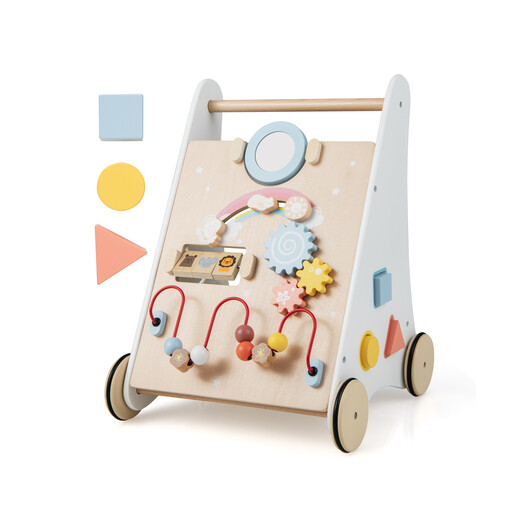
Why This Fits Their Persona: Ideal for parents who prefer natural materials and want a product built to last. This wooden walker combines a classic design with functionality.
The weight of the wood provides extra stability. The wheels feature a rubber trim, which prevents slipping on smooth floors while also protecting them.
Made from durable basswood and MDF. The rubber wheels minimise noise and offer excellent grip. Includes a convenient storage bin for toys.
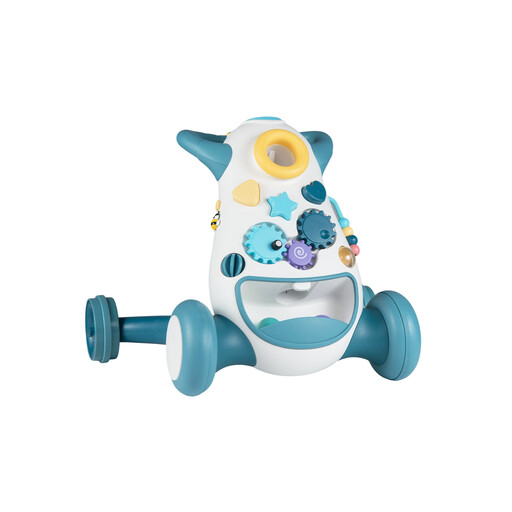
Why This Fits Their Persona: For parents seeking a multifunctional product that serves as both a walking aid and an activity centre. This model offers a wide range of play features to keep a child engaged for longer.
While it has electronic features, it balances them with tactile activities like a shape sorter and spinning gears. This stimulates fine motor skills alongside auditory and visual senses.
Combines walking support with various play elements. The wide base ensures a stable structure during both walking and play.
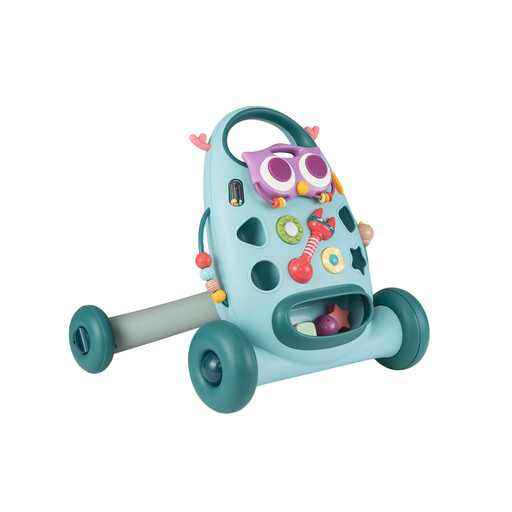
Why This Fits Their Persona: A practical and affordable option for those looking for a functional walker without too many bells and whistles. It provides the necessary support with a fun, but not overwhelming, play feature.
Focuses on a core activity (shape sorter) rather than an overload of electronics. The playboard is removable, allowing the walker to be used purely as a walking aid.
2-in-1 functionality: a walker and a separate playboard. Offers a great balance of support and play value at an accessible price point.
A walker is a great step, but there's a world of toys that support your child's motor skill development. Explore our collection, which meets strict selection criteria and safety standards.
Generally, a push walker is recommended from the moment a baby can pull themselves up to a standing position and shows interest in taking steps, typically around 9 to 12 months. It is a tool to build balance and confidence, not to force the learning process. Always use a walker under supervision.
Not necessarily better, but different. A wooden walker is often heavier and therefore more stable, which can be an advantage for early walkers. They are also very durable. Plastic models are lighter and often offer more interactive play features. The choice depends on your personal preference for material, weight, and play functions. For both types, always check for the CE marking to ensure safety.
This is a crucial distinction. A push walker or baby push cart is pushed by the child. This encourages an active, forward-leaning posture and helps develop muscle strength and balance. A seated walker is a seat on wheels in which the child hangs. Many experts advise against the use of seated walkers, as they can teach an unnatural walking posture and may hinder the development of the hips and leg muscles.
