
Vandaag of morgen in huis

Kwaliteit gegarandeerd

Welkomstaanbiedingen ontgrendelen: GRATIS bezorging | Tot 80% korting | Gratis 30 dagen JoyPlus-proefperiode
Download de app
Buying baby toys seems simple, until you have to choose between soft blocks, a baby walker, interactive toys and a cuddly toy. Many products promise educational play, but they don’t always suit your child’s age, the space you have available or the way they like to play. Use this practical guide to focus on what you can check: age guidance, materials, dimensions, care and safety information.
A colourful product may look appealing for a six-month-old baby, but it could still contain small parts. That’s why the age guidance on the packaging matters. A cuddly toy with accessories, for example, may be less suitable for young children than a simple toy made from a single piece.
Check the product information for any conflicting details, too. Some toys are described as suitable “from 6 months” but also carry a warning about small parts. In that case, follow the label, instructions and safety warnings. If you’re unsure, it’s wiser to wait than to take a chance.
Lights, music and buttons can catch your child’s attention, but more features don’t automatically mean more play value. A baby who’s learning to grasp and turn things may get more out of a simple activity toy than a large electronic play centre.
Look at the actions the toy encourages: grasping, pushing, turning, pulling, stacking or sorting. This helps you see whether it suits your child’s current stage.
Large toys can be awkward at home, especially in a flat or if you need to put them away after use. So check the dimensions and weight. For soft building blocks, a removable cover is also handy. Toys that are difficult to clean may end up unused in a cupboard sooner.
For toys from 6 months, soft materials, easy-to-grasp shapes and simple actions are often practical choices. Think soft blocks, a shape sorter or a compact panel with spinning and pressing activities. From around 12 months, children often become more interested in walking, pushing, building and imaginative play. Pretend-play toys, such as a shop or ice cream parlour, become more appealing to toddlers.
It’s important to distinguish a baby walker from a seated walker that a child is placed in. The models below are push-along activity toys. Use them on a flat surface and supervise your child as they learn to walk.
Don’t just look for words such as “soft” or “safe”; check which materials are listed. Examples include EPE or polyurethane foam, plastic, rubber and polyester. Check that seams, fastenings and moving parts are secure. If a product has small parts, pay extra attention to anything that could come loose or wear down, as well as the risk of swallowing.
A CE marking means the manufacturer declares that the product meets relevant European requirements. Some products also list EN71. This refers to European standards covering aspects such as toys’ mechanical and physical properties, flammability and certain chemical properties. Always check the full product information; a safety mark is no substitute for supervision.
For electronic or interactive toys, an on/off switch, volume control and automatic shut-off are useful features. Check which batteries are required and whether they’re included. Keep the battery compartment closed and have an adult replace the batteries.
Soft blocks with removable, washable covers are handy for everyday use. Electronic parts generally shouldn’t be submerged in water. Follow the instructions and stop using the toy if any part breaks, comes loose or becomes misshapen.
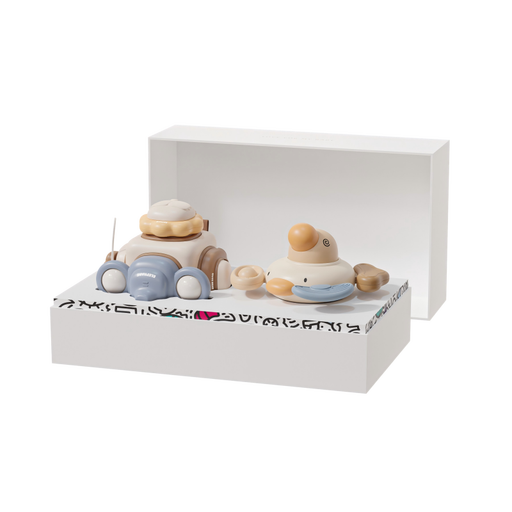
Why it suits this profile: According to the product information, this compact plastic toy is suitable from 6 months and includes six animal parts, each with a different activity. It’s a good choice for parents who want to start with one simple, easy-to-manage toy.
It’s compact, measuring approximately 12.5 × 11.5 cm or 13 × 14.1 cm. The product information also advises supervision and checking for loose or damaged parts.
Pull, turn, push and press with one toy; suitable for indoor parent-and-child play.
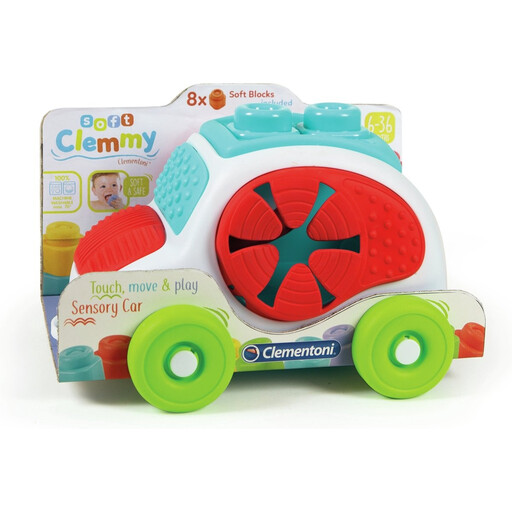
Why it suits this profile: This set includes eight soft blocks and a car with a shape sorter. According to the product information, it’s designed for children aged 6 to 36 months, with details about the materials, parts and dimensions that you can check.
The soft blocks help reduce hard edges while stacking. According to the product information, they can be cleaned on the top rack of the dishwasher.
12 pieces, a shape sorter and soft rubber blocks; the product information states that it is CE-marked and made from BPA-free materials.
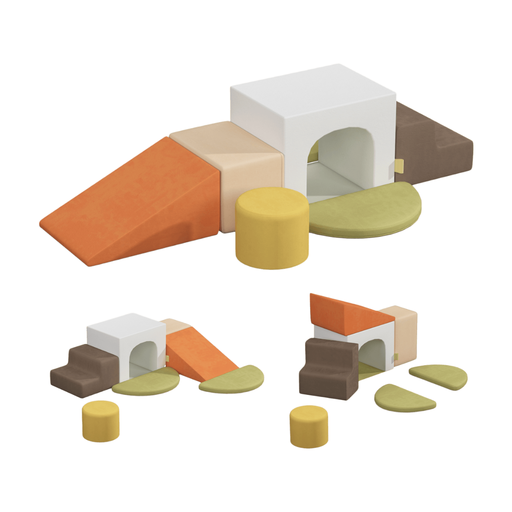
Why it suits this profile: For families, childminders or play areas with plenty of floor space, this set has seven foam blocks for climbing, crawling and building. It’s best suited to settings where active, big-movement play is a priority.
The covers are removable and, according to the product information, machine washable. The set is vacuum-packed, so let the foam expand for up to 48 hours after unpacking before use.
Seven blocks made from high-quality polyurethane foam; non-slip base and listed EN71-1, EN71-2 and EN71-3 standards.
We’ve put together a complete, up-to-date list of products that meet these strict selection criteria and the applicable European safety requirements.
Choose toys with clear age guidance, large parts that are easy to grasp and materials that are simple to clean. Soft blocks, a simple activity toy or a shape sorter could be suitable. Always check for warnings about small parts and supervise your child.
Their lifespan depends on the materials, how they’re used and how well they’re cared for. Check toys regularly for cracks, loose seams, damaged battery covers and parts that have come loose. Washable covers can be handy with frequent use. Discard a toy if a part is no longer secure or its safety is unclear.
Electronic toys may need batteries. Check the battery type, whether the toy switches off automatically and whether it has volume control. Non-electronic toys have no running costs, while an activity table or musical toy may need new batteries regularly. This helps you compare not just the purchase price, but the cost of everyday use too.
