
Vandaag of morgen in huis

Kwaliteit gegarandeerd

Welkomstaanbiedingen ontgrendelen: GRATIS bezorging | Tot 80% korting | Gratis 30 dagen JoyPlus-proefperiode
Download de app
Baby and toddler toys should be fun, but they also need to suit the child’s age, the space available and the way they play. A toy that looks appealing in a product photo may disappoint in practice because of loud sounds, loose parts or an awkward size.
As a Joybuy Product Recommendation Officer, I filter product information against verifiable criteria. This helps you quickly see which baby and toddler toys are suitable for children from around 6 months to 5 years, without relying solely on marketing copy.
A product labelled “6 to 36 months” may support several stages of development, but that does not mean every function can be used independently from 6 months. For example, an activity table only becomes practical once a child can sit or stand steadily. So check:
Lights, music, animal sounds and buttons make interactive baby toys appealing. At the same time, an abundance of sounds can quickly become overwhelming in a living room or flat. An adjustable volume, silent mode or automatic switch-off is therefore useful. Also check the battery type and whether batteries are included.
Terms such as BPA-free, rounded edges and CE marking provide useful information, but you should also inspect the toy itself regularly. Pay particular attention to:
According to the product information for several of the models below, CE and EN71 requirements apply. This information comes from the product listing and is not an independent safety assessment. Always use the toy according to the manufacturer’s instructions.
For everyday use, smooth surfaces, rounded corners and a sturdy base are practical features. With sensory and Montessori toys, the focus is often on feeling, turning, pressing or sorting. Check that the parts are large enough for the stated age and cannot come loose easily.
With wooden toys, it is important to check the finish and stability. For plastic toys, the type of material, edges and care requirements are relevant. A product listing that mentions ABS and BPA-free materials provides useful information about the composition, but always follow the official safety warnings.
Musical toys for toddlers often run on batteries. So check:
A soft volume setting is useful for quiet play, for example during a car journey or in a shared flat. Do not place electronic toys in water and remove the batteries if the product will not be used for an extended period.
A compact activity cube is suitable for smaller homes or for taking to grandparents’ house. An activity table offers more play areas, but requires more floor space. A ride-on toy car or toy excavator needs plenty of clear space and is generally less suitable for small rooms.
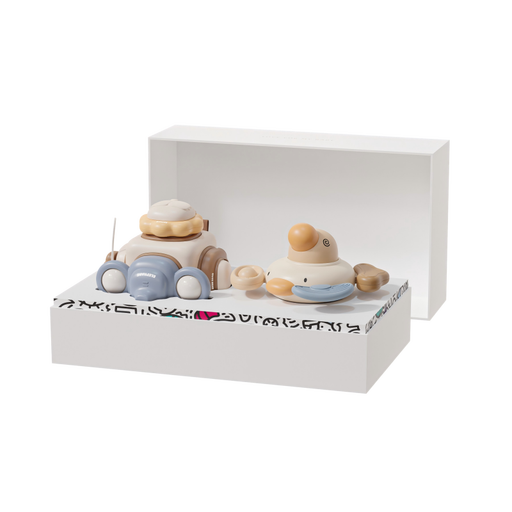
Why it suits this profile: According to the product information, this compact interactive baby toy is suitable from 6 months and offers six ways to press, turn, pull and push.
The functions are clearly described and the size is approximately 12,5 × 11,5 cm or 13 × 14,1 cm. Check which version will be supplied before buying.
Suitable for indoor use, gift packaging and practising gripping, pressing, turning and pulling.

Why it suits this profile: For shoppers who value a familiar product description, this phone features light-up buttons, eight melodies, two sing-along songs and product specifications in Dutch.
The listing mentions adjustable volume and automatic switch-off. Remove the demonstration label according to the instructions to activate the normal sound setting.
Recommended age 6–36 months; according to the product information, two AAA batteries are included.
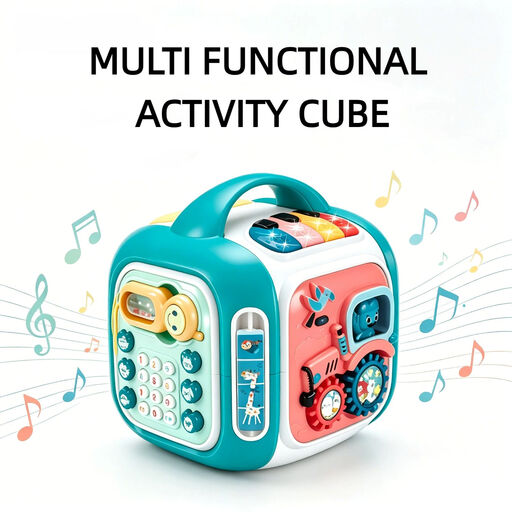
Why it suits this profile: This activity cube is designed for children aged 1 to 3 and combines features including a piano, guitar, telephone, gears and music function in a portable format.
The cube measures approximately 23 × 23 × 24 cm and has a handle. This makes it easier to store or take with you than a large table.
Multiple activities in one product; batteries are not included. The product information states that it is made from BPA-free ABS and has rounded edges.
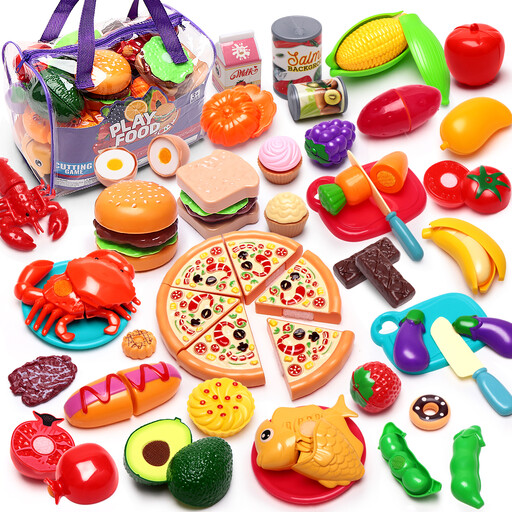
Why it suits this profile: For children aged 3 and over who enjoy imaginative play, this set includes food items, kitchen utensils and a storage bag, according to the product information.
The age limit and warning about small parts are clearly stated. Do not give this set to children under 3 years and tidy away all parts after play.
No batteries required; hook-and-loop fastenings support easy cutting and serving during imaginative play.
We have put together a complete, up-to-date list of products that fully meet these strict selection criteria and the applicable European safety regulations.
For toys from 6 months, gripping, pressing, turning and simple cause-and-effect reactions are suitable activities to explore together with an adult. Consider a baby phone, soft rattle or simple sensory toy.
For toys for 1- to 3-year-olds, you can look at an activity table, activity cube, musical instrument or role-play accessories. Check whether the child can sit, stand or walk independently and whether the base remains stable.
From the age of 3, imaginative toys for children, kitchen sets, play tents and musical play mats become more suitable. The product information supplied remains the key reference: a musical mat with small parts or a kitchen set with loose accessories is not suitable for younger children.
With walkers and ride-on toys, the surface, balance and supervision are especially important. Do not use a ride-on product near stairs, on slopes, in traffic or on wet floors. Check the wheels, handles and attachment points before every use.
Choose toys with large, securely attached parts and simple activities such as pressing, turning or gripping. A product such as the YEEHOO Royal Spin Play is listed as suitable from 6 months. Always supervise your child and check the toy for damage.
How long a toy lasts depends on the material, how intensively it is played with and how well it is maintained. Electronic toys can last longer when you replace the batteries on time and store the product somewhere dry. With activity cubes and tables, it is sensible to check regularly for loose buttons, cracks and signs of wear.
As well as the purchase price, batteries are the main ongoing cost. Check whether batteries are included and whether the toy switches off automatically. Adjustable volume and a silent mode can also be useful if the toy is often used indoors.
