
Vandaag of morgen in huis

Kwaliteit gegarandeerd

Welkomstaanbiedingen ontgrendelen: GRATIS bezorging | Tot 80% korting | Gratis 30 dagen JoyPlus-proefperiode
Download de app
A newborn baby does not automatically need dozens of products. Even so, the range of baby products is extensive, and packaging often promises comfort, natural feeding or ergonomic design. This can make it difficult to work out which features really matter.
Three common pitfalls come up time and again:
Below you will find the key points to check, together with a selection for different family situations.
Start with your daily routines. For feeding, baby bottles, a suitable teat and, if needed, a formula-feeding machine may be relevant. For carrying, you can choose between an ergonomic baby carrier and a baby sling. For rest periods, an age-appropriate baby dummy, safe bedding and, if desired, a baby nest may be useful. Baby toys generally become relevant later, when your child starts reaching and responding more actively.
It is usually better to buy for specific situations rather than purchasing a complete set. This helps prevent you from buying products that are unsuitable for your baby’s age, feeding method or the space available in your home.
Always check the capacity of a bottle and the size of its teat. A 150 ml bottle with a 0m+ mini teat is intended for a different purpose than a 250 ml bottle with a 3m+ slow-flow teat. For a baby carrier, the minimum and maximum weight are decisive. A model with a lower limit of 3.2 kg is not automatically suitable for a smaller newborn.
When choosing baby toys, pay attention to the recommended age and any small parts. According to the product information, the VTech toy below is intended for children aged 6 to 36 months.
For baby bottles, BPA-free materials, food-grade silicone and clear care instructions are useful points to check. Also see whether all the components can be cleaned separately. With a bottle that has a valve, check that the valve remains accessible and cannot become blocked.
A product description is not a guarantee that every baby will respond in the same way. According to Difrax’s own product information, the S-Bottle and LOVI Mammafeel are designed to support reduced air intake and the transition between breastfeeding and bottle-feeding. Treat this as a product specification, not as a medical effect.
Choose components that can be completely dismantled. Check teats and valves before every use for cracks, stickiness or deformation. Replace damaged parts immediately.
For a formula-feeding machine, daily cleaning of the water reservoir and regular cleaning of the funnel are important. With a baby carrier, check the buckles, seams and straps. A baby nest should only be used for sleeping in accordance with the age and safety instructions. Once a baby starts rolling independently, the nest should no longer be used as a sleeping place.
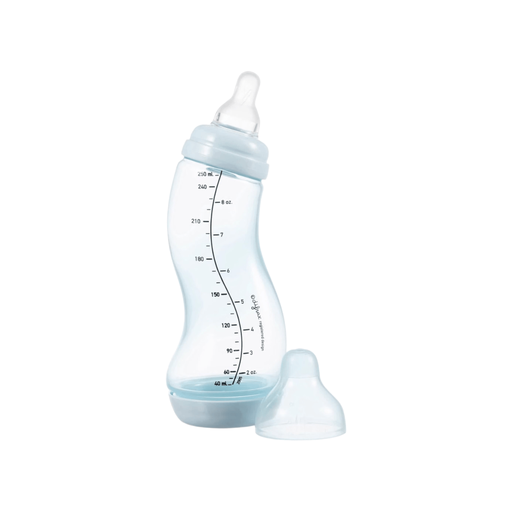
Why it suits this profile: This bottle has a 250 ml capacity, comes with an S teat and, according to the product information, is suitable from birth. This makes it a practical choice for parents looking for one bottle for everyday use.
The components can be taken apart for cleaning. After each use, check that the silicone valve is open and undamaged.
250 ml capacity; BPA-free polypropylene bottle; silicone S teat and anti-colic valve according to the product specification.
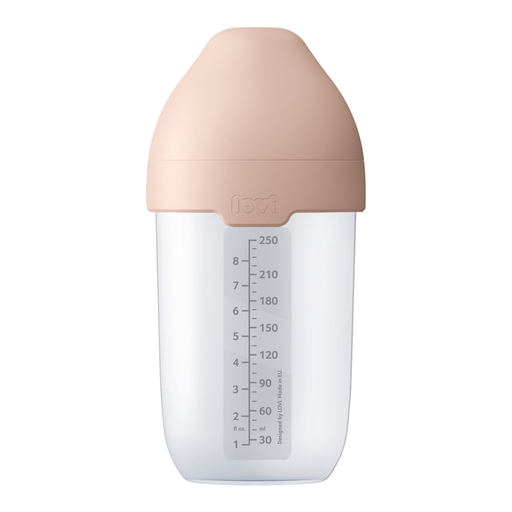
Why it suits this profile: The wide, soft teat is designed for families combining breastfeeding and bottle-feeding. Please note that the supplied 3m+ slow-flow teat is not the same as a 0m+ mini teat.
The teat’s age recommendation is clearly stated. If you use this bottle from birth, you will need to choose a separate 0m+ mini teat.
250 ml capacity; 100% medical-grade silicone teat; bottle and teat are dishwasher-safe according to the product information.
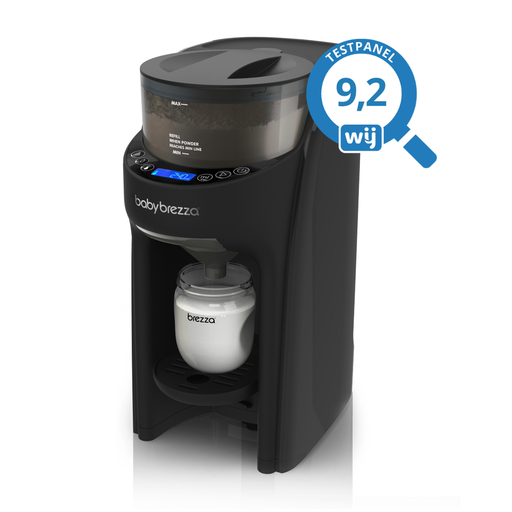
Why it suits this profile: This formula-feeding machine is designed for households that prepare powdered formula frequently and want to spend less time measuring manually. The machine is intended for adult use only.
Doses are dispensed in 30 ml increments, but the reservoir and funnel must be cleaned according to a set schedule. Convenience does not eliminate the need for maintenance.
Dosing from 60 to 300 ml; three temperature settings; water reservoir is dishwasher-safe according to the product information.
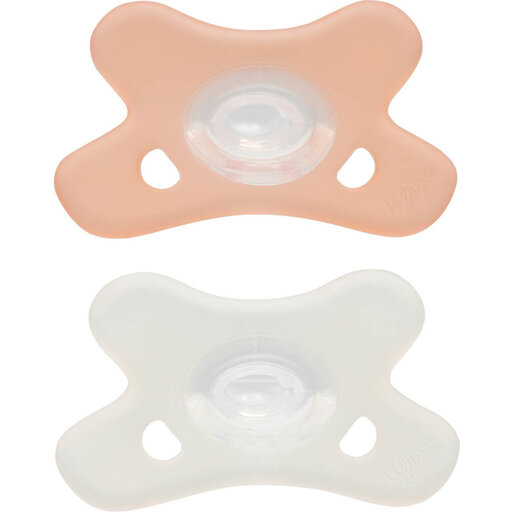
Why it suits this profile: Two dummies are handy as a spare when you are out and about or during the night. The age recommendation is aimed at newborns up to 6 months.
The size is suitable for 0 to 6 months. Check the silicone sucking part daily and follow the replacement instructions on the packaging.
Two-pack; nose cut-out; ventilation holes in the shield; silicone sucking part.
A baby carrier is useful when you are out walking, travelling or simply want to keep your hands free at home. Check that your baby’s face remains visible, the airways are clear and the legs are positioned naturally in an M-shape. According to the product information, the Momcozy baby carrier is suitable for approximately 3.18 to 19.96 kg and has adjustable straps.
A baby sling can be compact and adapt to different body shapes, but it requires careful attention to correct positioning. The Momcozy sling has a ring adjustment and is specified for 3.6 to 15 kg. The product information also lists different age recommendations, so always check the current packaging and instructions.
A baby nest is not a substitute for a firm, flat sleeping surface. According to the description, the Chicco Mommy Pod baby nest is intended for sleeping from birth up to a maximum of 3 months, or until the baby can roll independently. Tummy time has a different recommended usage period. Do not use the nest on a sofa, table or other raised surface, and always stay close by during play.
Choose toys based on age, size and ease of maintenance. The VTech Baby Phone toy is intended for 6 to 36 months, runs on two AAA batteries and has illuminated buttons and English-language audio. Remove all packaging before use and have an adult fit the batteries. With every toy, check that loose parts remain out of reach of young children.
We have put together a complete, up-to-date list of products that fully meet these strict selection criteria and the applicable European safety regulations.
Start with products for feeding, sleeping, changing and transport. Think about one or two suitable baby bottles, an appropriate teat, safe sleeping essentials, clothing and a carrying solution that matches your baby’s weight. Baby toys are generally not a priority during the first few weeks.
This depends on wear, material and frequency of use. Check teats, valves and bottles regularly for cracks, discolouration, stickiness or deformation. Replace any component as soon as you notice damage, and also follow the manufacturer’s instructions.
Not always. An anti-colic design may be worth considering if you are looking for a bottle with a valve or construction that, according to the product description, is intended to reduce air intake. The correct teat size, feeding position, cleaning routine and your baby’s response are just as important. An anti-colic baby bottle does not guarantee a particular feeding result.
