
Vandaag of morgen in huis

Kwaliteit gegarandeerd

Welkomstaanbiedingen ontgrendelen: GRATIS bezorging | Tot 80% korting | Gratis 30 dagen JoyPlus-proefperiode
Download de app
Baby products often seem easy to compare, but marketing copy can make it difficult to distinguish what really matters from what does not. A low price may look appealing, while an impractical design can lead to extra costs later on. Conversely, an expensive product is not automatically suitable for your baby or daily routine.
As a Joybuy Product Recommendation Officer, I therefore start by looking at verifiable specifications: size, material, age recommendation, care requirements and safety instructions. Below, you’ll find what to look out for when choosing baby care products, feeding equipment, nappies and baby carriers.
A 250 ml bottle can be used from birth, but that does not always mean that the teat supplied is suitable for newborns. For example, the Difrax LOVI Mammafeel bottle is listed with a slow-flow teat for 3 months and over. According to the product information, a separate 0m+ Mini teat is required for use from birth.
The same applies to a baby carrier. Do not just look at a range such as 3 to 20 kg; also check whether your baby can support their head independently. A carrier that technically offers several carrying positions is not automatically suitable for every age.
Words such as ‘anti-colic’, ‘12-hour protection’ or ‘natural skincare’ often describe a design feature or a claim made by the brand. They do not guarantee that every child will experience the same result.
According to Difrax’s own product information, the S-bottle is designed to limit air intake through a valve at the base. This is a technical product feature, not a medical promise. Claims about skin comfort, absorption or protection provided by nappies should also be read as information from the manufacturer.
A product may seem inexpensive, but could require additional teats, refills, filters or replacement parts. When choosing baby bottles, check whether the components are available separately and whether they can go in the dishwasher or steriliser. With a formula maker, you need to allow for daily cleaning of the water reservoir and regular cleaning of the funnel.
For nappies, size and fit are more important than simply counting the number of nappies in a pack. A size that is too small may leak more quickly, while a large stock may go unused if your baby grows quickly.
Always check the weight range on the packaging when choosing nappies. Size 1 is intended for newborns, while sizes 5 to 8 are suitable for heavier or more active children. Pull-up nappies are practical when changing a child while lying down becomes more difficult, but standard nappies are often more convenient for young babies.
For baby carriers, check:
Always read the instructions. A baby carrier is not intended for cycling, running, cooking over an open flame or other activities involving a risk of falling or burns.
Polypropylene and silicone are commonly used materials for baby bottles. Polypropylene is lightweight and less likely to break than glass. Silicone teats are flexible, but should be checked before every use for cracks, stickiness or deformation.
When choosing skincare products, look at ingredients that your baby may not tolerate well. A product containing perfume, essential oils, lanolin or almond oil may not suit every skin type. The WELEDA Calendula Nappy Change Cream lists ingredients including zinc oxide, beeswax, lanolin, almond oil, calendula and chamomile. According to the product information, the balm carries the NATRUE label. For sensitive skin, always check the full ingredients list and stop using the product if irritation occurs.
A certification such as OEKO-TEX or NATRUE says something about the requirements of the relevant certification scheme, but it does not replace checking the product information and instructions for use.
Baby bottles should be able to come apart completely for thorough cleaning. Check valves and teats before every use. Replace dummies according to the instructions on the packaging; for the Difrax dummy mentioned above, the recommended replacement period is six weeks, with daily checks of the sucking part.
Hygiene is particularly important when preparing formula. A formula maker can save time, but it also requires maintenance. Use only fresh drinking water as instructed, clean the components at the recommended intervals and check the temperature of the feed before giving the bottle to your baby.
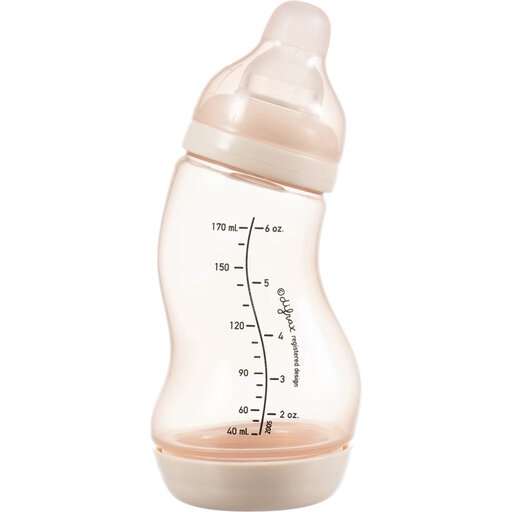
Why it suits this profile: The bottle has a capacity of 170 ml, comes with an S teat and, according to the product information, is suitable from birth. This makes it a straightforward choice for parents who want to start with one bottle.
The age recommendation and teat size are clearly stated. The bottle can be taken apart for cleaning and has a detachable base.
170 ml capacity, BPA-free polypropylene according to the product description, and an anti-colic valve at the base.
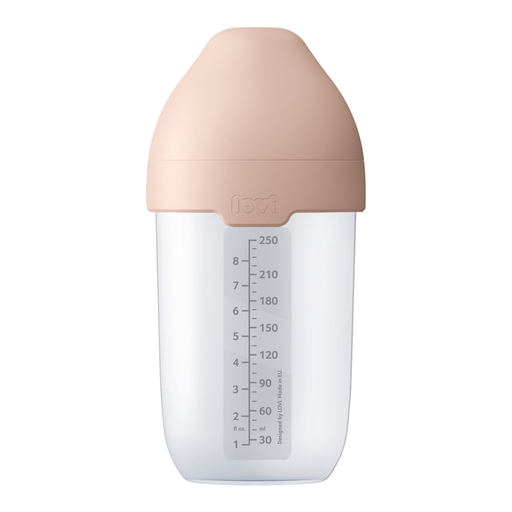
Why it suits this profile: This bottle is designed for parents who want to combine breastfeeding and bottle-feeding and value a soft silicone teat with dynamic movement.
The bottle clearly states that the 250 ml version includes a 3m+ Slow Flow teat. A separate 0m+ Mini teat is required for use from birth.
250 ml capacity, 100% medical-grade silicone according to the product information, and a dynamic teat.
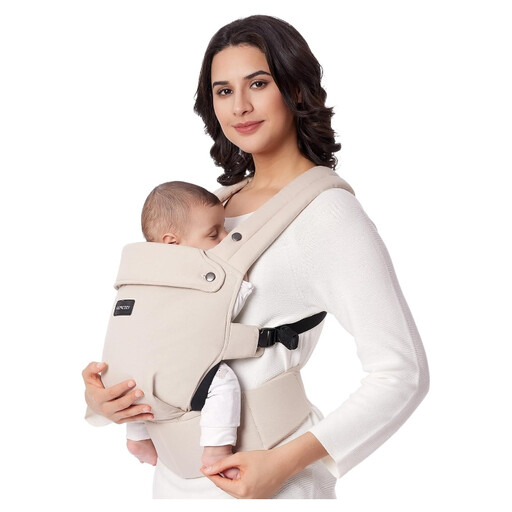
Why it suits this profile: This ergonomic baby carrier is intended for everyday use, outings and travel. The product information specifies a range of 3.18 to 19.96 kg and three carrying configurations.
The weight limit and the warning for babies who cannot yet support their heads independently are clearly stated. Check the buckles, straps and fabric before every use.
3-in-1 design, adjustable straps, lumbar support and 100% cotton according to the product description.
For changing, it is practical to have nappies in several sizes. Pampers Premium Protection sizes 1 and 4 list features including a navel-friendly cut-out and a Stop & Protect pocket. Pampers Baby-Dry Pants in sizes 5 to 8 are pull-up nappies with an elasticated waistband and tear-away sides. Treat claims such as ‘up to 12 hours’ as an indication from the manufacturer and time changes according to your child’s needs.
For baby skincare, a simple baby cream may be enough for dry patches. According to the product information, Zwitsal Baby Soft Cream 200 ml is pH skin-neutral, intended for the face and body, and contains vitamin E. Avoid contact with the eyes and check whether fragrances suit your preferences.
Other baby essentials include a dummy, spare bottles and, if needed, pregnancy vitamins or a supplement for after pregnancy. A supplement does not replace a varied diet. If you take medication, have a medical condition or are unsure about anything during pregnancy or breastfeeding, it is advisable to consult a doctor or pharmacist.
We have put together a complete, up-to-date list of products that fully meet these strict selection criteria and the applicable European safety regulations.
A small supply of nappies in the right size, nappy cream, gentle baby care products, a few baby vests, a safe sleeping environment and feeding essentials provide a practical starting point. Do not buy large quantities from one brand straight away; nappy fit and whether your baby accepts a bottle or dummy can vary from one baby to another.
This depends on the material, use and maintenance. Check teats, valves and bottles before every use. Replace components if you notice cracks, deformation, discolouration or stickiness. For dummies, follow the replacement advice on the packaging; for the Difrax model mentioned above, this is six weeks.
A formula maker is primarily a convenience purchase. The initial price, electricity consumption and maintenance all need to be taken into account. Compare the daily time saved with the costs, and always follow the manufacturer’s cleaning and safety instructions.
