
Vandaag of morgen in huis

Kwaliteit gegarandeerd

Welkomstaanbiedingen ontgrendelen: GRATIS bezorging | Tot 80% korting | Gratis 30 dagen JoyPlus-proefperiode
Download de app
A baby night light may seem like a simple purchase, but small details can make the difference between a useful aid and a disappointing buy. A light might be dimmable, for example, yet still be too bright for night feeds. Or a rechargeable model might claim a long battery life in the product description, but only on its lowest setting.
For parents in the Netherlands, these three pitfalls are particularly relevant:
So a good choice starts not with the appearance, but with the brightness, controls, power supply and position in the nursery.
A dimmable night light should have at least a low setting for sleep and a brighter setting for night feeds or nappy changes. Check what type of dimmer it has:
A warmer light colour can be pleasant as ambient lighting. Always check the stated colour temperature, though. A 3000 K light, for example, differs from a 4000–4500 K model. The latter usually gives a more neutral light.
A rechargeable night light can easily be moved from the nursery to the living room or guest bedroom. Check the:
A claim of, say, 100 hours of use should be considered alongside the light setting. According to the VAVA VA-CL009 product description, the run time of up to 100 hours applies at the lowest brightness; at maximum brightness, the stated run time is around 7 hours.
A light with a fixed mains plug is less flexible, but doesn’t need recharging. Check whether each model is intended for indoor use only. An IP20 rating, for example, offers no protection against water and doesn’t make a light suitable for a damp bathroom.
An LED night light generally uses little power, but its construction still matters. A soft silicone exterior feels different from metal or hard plastic. Also check:
A soft-feel design doesn’t mean a baby should play with it. Keep the night light outside the cot and charging cables out of reach.
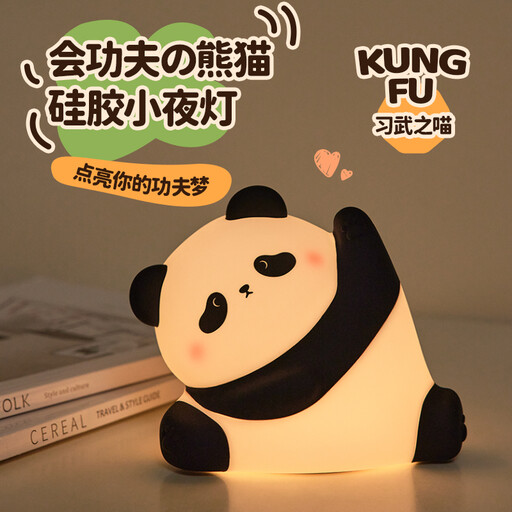
Why it suits this profile: This compact panda-shaped light combines simple touch controls with three brightness settings. It’s a good choice for parents looking for a straightforward night light for the nursery.
The three dimming settings make it easy to choose the right brightness. According to the product description, the model has a 1200 mAh rechargeable battery, so you don’t need to keep replacing disposable batteries.
Food-grade silicone, according to the product description, 3-level LED dimming, touch controls and USB charging.
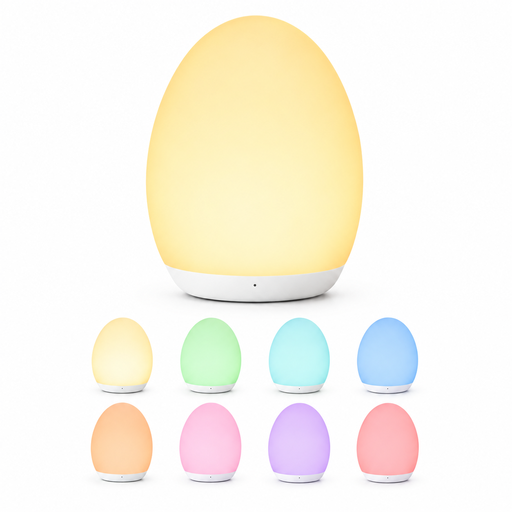
Why it suits this profile: This model is designed for night feeds, nappy changes, story time and travel. The combination of warm white light, colour settings and a timer gives you more ways to use it.
The product description clearly states that the maximum run time applies only at the lowest brightness. The 1-hour timer also stops the light from staying on unnecessarily.
2000mAh battery according to the product specifications, touch controls, eight colour modes, a memory function and a compact size of 9,2 × 9,2 × 11 cm.
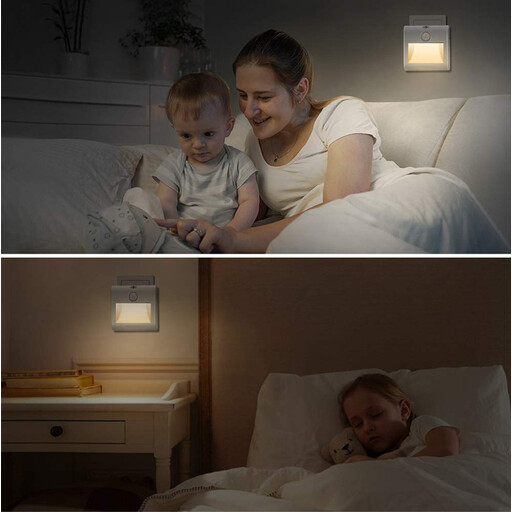
Why it suits this profile: The two lights are handy for a bedroom and hallway, or for routes to the toilet and bathroom. The sensor switches the light on automatically when it detects movement.
There’s no need to search for a button in the dark. According to the product details, the sensor works at up to 20 LUX and has a detection range of 3 to 5 metres.
Set of 2, constant or automatic lighting mode, stepless touch dimming and a memory function. According to the specifications, each light uses 1 W.
We’ve put together a complete, up-to-date list of products that meet these strict selection criteria and the applicable European safety requirements.
Place a portable table lamp on a stable, flat surface, not on the edge of a chest of drawers or bedside table. Keep the light outside the cot. For a motion-sensor light, check that its detection area isn’t blocked by a cupboard, curtain or other large object.
Only use the recommended USB power source to charge the light. Don’t leave a charging cable loose next to a sleeping child. Clean the light according to the instructions and don’t use abrasive cleaners.
Not necessarily, but dimmed light can help illuminate the room without making it too bright while you feed or change your baby. Choose a model with a low setting and don’t place it right next to your baby’s face.
It depends on the battery, brightness and operating mode. The stated maximum run time often applies to the lowest setting. So compare the run time at different brightness levels and check the battery capacity.
It can be, particularly for the route to the door or a nearby hallway. Check the detection range and light sensitivity. Keep the light out of your child’s reach and don’t use it in a damp environment if the product specifications advise against it.
