
Vandaag of morgen in huis

Kwaliteit gegarandeerd

Welkomstaanbiedingen ontgrendelen: GRATIS bezorging | Tot 80% korting | Gratis 30 dagen JoyPlus-proefperiode
Download de app
A baby night light may seem simple, but there are big differences between models. Some lights are brighter than expected, others have a battery that needs frequent recharging or controls that are awkward to use during a night feed. Features such as RGB colours, a timer and a motion sensor may sound appealing, but they are not useful in every nursery.
The following points will help you separate marketing claims from product specifications you can check.
A light that seems suitable for creating a cosy atmosphere may still be too bright when you are feeding or changing your baby. So don’t just look at the number of LEDs or the colour settings. Check for:
A dimmable night light is usually more practical than a model with just an on/off switch. A soft setting is often enough for night feeds, while you may need a little more light for changing your baby.
A rechargeable night light can be handy, especially if you move it between the nursery, living room and changing bag. However, check the conditions behind any stated battery life. The battery will generally last less time at maximum brightness than on the lowest setting.
So check:
A night light with a timer, motion sensor or RGB colours can be useful, but not always. A motion sensor may switch on automatically in the middle of the night, while a timer can stop the light from staying on all night. RGB colours are mainly interesting for older children or for creating a cosy atmosphere.
A light with lots of features is not automatically more practical. First, think about when you will use it: for night feeds, bedtime, a trip to the toilet or reassurance in the dark.
Warm light is usually pleasant as part of an evening routine, making it a good choice for a nursery night light. Check whether the manufacturer lists the colour temperature. Some LED lights, for example, have a warm white setting of around 2600 to 3200 K.
A touch-control night light is easy to use when you want to keep the light low. Check where the sensor is: on some models, you need to tap a specific part of the casing. A physical button may be more practical if the light is on a shelf.
Check the product information for:
If a brand describes a product as “baby-safe” or “child-friendly”, don’t take this as an established fact without checking. According to VIVREAL’s product description, the panda and unicorn lights are made from food-grade silicone and intended for use by babies, toddlers and children. The same description also recommends adult supervision and says the product should be used indoors, away from heat and not submerged in water.
For electrical products, also check the available safety information, instructions, manufacturer details and EU responsible person. A statement on a product page is no substitute for careful placement and supervision.
A night light with a motion sensor can be handy in a hallway, on a landing or near a changing area. Check the detection range and light threshold. According to the product description, one of the models mentioned switches on when it detects movement within around 3 to 5 metres and the ambient light is low.
A timer is particularly useful at bedtime. According to the product information, the VIVREAL unicorn has a 30-minute shut-off timer. The VAVA VA-CL009 has a one-hour timer, according to its description. Always check whether the timer runs just once or needs to be reset every time you switch the light on.
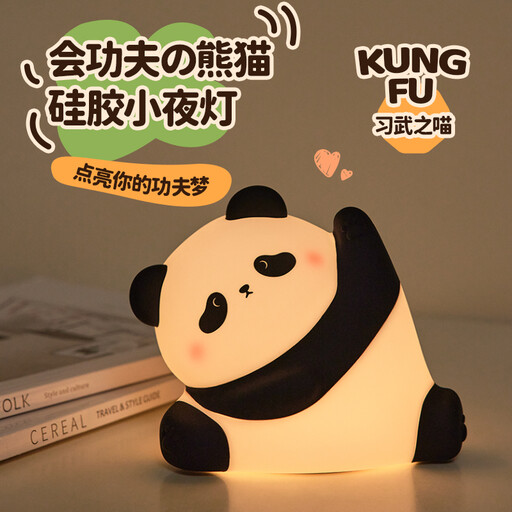
Why it suits this profile: This compact panda design combines a rechargeable battery with three light settings and touch controls. It’s a straightforward starting point for a nursery, without a complicated app.
The three brightness levels reduce the risk of having only a bright light. USB charging means you won’t need to replace disposable batteries regularly.
1200mAh rechargeable battery, three light settings, touch controls and a casing made from ABS, PP and, according to the product description, food-grade silicone.
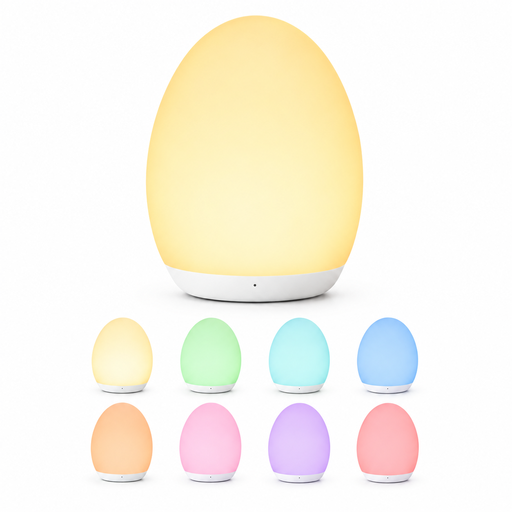
Why it suits this profile: This model is designed for parents looking for a gentle light for a range of routines: night feeds, changing, story time and travel.
The brightness is adjustable, and the light works without an app or Wi-Fi. That means you can use its core features even when you need to act quickly and quietly.
2000mAh battery, touch controls, eight colour modes, memory function and a one-hour timer. According to the product description, battery life is up to 100 hours on the lowest brightness setting.
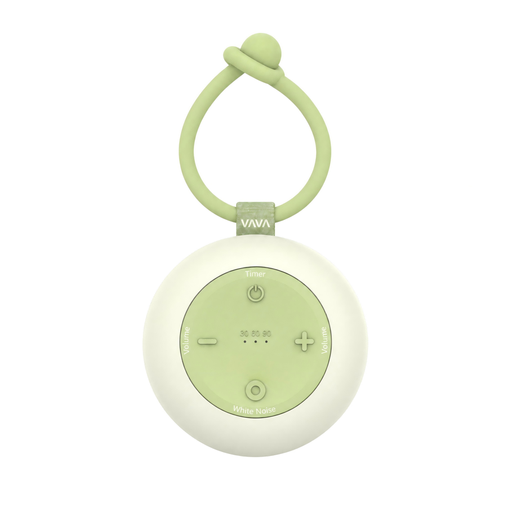
Why it suits this profile: This combines a portable night light and sound machine, for parents who want one unit to take between the bedroom, a place they’re staying and the pushchair.
According to the product description, you can set the light and sound independently. The timer stops either feature from staying on unnecessarily.
18 sound options, five light settings, 30-, 60- or 90-minute timers, USB-C charging and stated battery life of up to 40 hours under specific test settings.

Why it suits this profile: A set of two lights is handy for the nursery and a hallway, landing or bathroom. The sensor means you don’t have to search for a switch in the dark.
According to the product information, motion mode switches on only when light levels are low. Five dimming levels let you adjust the brightness to suit the location.
Two lights, a 500mAh rechargeable battery per unit, three colour temperatures, five brightness levels and a stated sensor range of 3 to 5 metres.
We’ve put together a complete, up-to-date list of products that meet these strict selection criteria and the applicable European safety requirements.
Yes, a night light can be useful for night feeds and changing your baby. Ideally, choose a dimmable LED night light with a warm light setting. Place it so you can see the surface, but the light doesn’t shine directly into anyone’s eyes. A light is an aid and does not replace supervision.
It depends on the battery capacity, brightness and features in use. A light with a 1200mAh or 2000mAh battery may last longer on a low brightness setting than at maximum brightness. Always check the battery life for each setting and charge the product using the recommended USB charger.
A low-wattage LED light generally uses little electricity. A 0.3 to 1 watt model has a low power consumption, but total usage depends on how many hours it is on. A timer, light sensor or motion sensor can help prevent it from staying on unnecessarily.
