
Vandaag of morgen in huis

Kwaliteit gegarandeerd

Welkomstaanbiedingen ontgrendelen: GRATIS bezorging | Tot 80% korting | Gratis 30 dagen JoyPlus-proefperiode
Download de app
You will usually notice quickly when your baby’s nappies are the wrong size: red marks around the legs, leaks during the night or an unopened pack because your baby already needs the next size up. Marketing terms such as “12-hour protection”, “extra soft” and “hypoallergenic” do not always give you the complete picture either.
So pay particular attention to these three common pitfalls:
Use the weight range as your starting point, but look at the fit as well. A nappy should fit snugly around the waist and legs without digging into the skin.
The following sizes are widely available:
Signs that it is time to move up a size:
A larger size is not automatically more absorbent. A nappy that is too loose can actually create gaps around the legs. For active toddlers, nappy pants may be more practical, as they are easier to pull on while standing and walking.
With absorbent nappies, the construction of the core, leg cuffs and waistband is particularly relevant. Product descriptions often mention superabsorbent polymers, micropores or an extra absorbent layer. These are technical features, but they do not by themselves indicate how a nappy will perform for every child.
Look out for the following:
“Leak-proof nappies” should therefore be understood as a product claim about the construction, not an absolute promise. According to the product description, some Pampers Baby-Dry models use features including a Stop & Protect pocket, wider protective cuffs and an extra absorbent layer to help reduce leaks.
Parents looking for nappies for sensitive baby skin often consider fragrance, lotion, dermatological testing and certifications. Always check exactly what claim is made on the product.
According to the product descriptions, Pampers Premium Protection and Pampers Harmonie state 0% EU fragrance allergens. Pampers Harmonie also states that it contains 0% perfume and lotion, an absorbent core made with cellulose from FSC-certified forests and a wetness indicator. The product information also mentions dermatological assessment and OEKO-TEX Standard 100 certification.
BC Babycare Royal states a pH value of 5.5 at the skin-contact surface and a material structure consisting of non-woven material, SAP and a breathable film. The manufacturer describes this as gentle on the skin. This is a brand claim; stop using the product if irritation occurs and seek advice from a healthcare professional if necessary.

Why this suits the profile: A manageable pack of 40 nappies is useful for assessing the fit before buying a large pack.
The weight range is clearly stated, so you are not choosing based solely on age or a general marketing claim.
A stated 460 gsm absorbent core, 14.5 grams of SAP and 360-degree leak protection according to the product information.
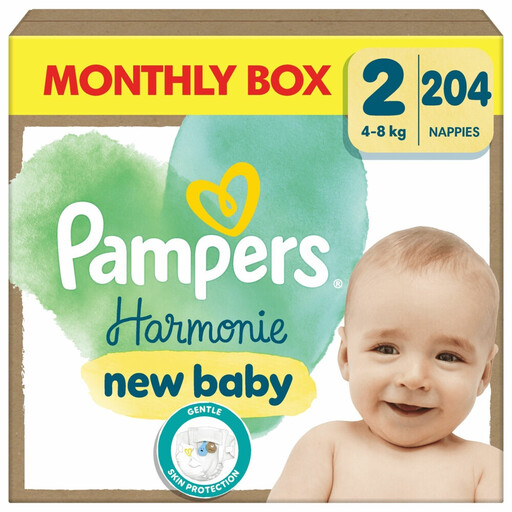
Why this suits the profile: Suitable for parents who want to consider material choices, fragrance and certification when choosing size 2 nappies.
The product description specifically states 0% perfume and lotion, rather than making only a general softness claim.
Stated wetness indicator, Stop & Protect pocket, OEKO-TEX Standard 100 and FSC-certified cellulose.

Why this suits the profile: Nappy pants are practical for active children who move around a lot, stand up or are already practising changing independently.
The flexible waistband and wider protective cuffs are designed for children on the move; the right size remains crucial for a good fit.
160 nappy pants, a 360-degree waistband and an absorbent core; according to Pampers, dermatologically tested.
We have put together a complete, up-to-date list of products that fully meet these strict selection criteria and the applicable European safety regulations.
Do not compare only the total price. Divide the price by the number of nappies or nappy pants and take usage into account. A baby may need several nappies a day; a toddler may use fewer, but might need a larger size at night.
A monthly box of nappies is particularly useful when:
If you are buying a brand for the first time, it is best to start with a smaller pack. This helps prevent waste if the fit is not right or your child reacts sensitively to a material.
Check the nappy regularly and change it immediately after a bowel movement. With urine, the timing depends on how full the nappy is, your baby’s age and when it is being used. A nappy that feels heavy, leaks or is visibly soiled should be replaced. Also follow the instructions on the packaging.
Store unopened nappies somewhere dry and clean, away from direct sunlight. Check the packaging for any expiry or usage information. Once opened, it is best to keep the pack properly closed and use it normally. Throw away any nappies that are torn or damaged.
No. Compare the price per nappy and check that the number of nappies matches the contents of another pack. A large pack is only practical when the size fits well and your child is not likely to move up to size 5, 6, 7 or 8 nappies in the near future.
