
Vandaag of morgen in huis

Kwaliteit gegarandeerd

Welkomstaanbiedingen ontgrendelen: GRATIS bezorging | Tot 80% korting | Gratis 30 dagen JoyPlus-proefperiode
Download de app
Choosing the right baby nappies might seem straightforward, until you have to compare sizes, quantities, absorbency and skin comfort. A pack with lots of nappies isn’t automatically good value if the fit isn’t right. Terms like “12 hours of dryness” or “leak-free nights” are no guarantee that every baby will have the same experience.
So, pay particular attention to three common pitfalls:
With nappies by size, the recommended weight is the first thing to check. A nappy that’s too small can gap at the legs or back. A nappy that’s too loose can shift and also cause leaks.
As a practical guide:
The weight ranges overlap. That’s normal. If in doubt, choose the size that fits better around the waist and legs, rather than just looking at the highest weight.
Most disposable nappies contain a core with superabsorbent polymer, often abbreviated as SAP. This material absorbs moisture and holds it partly in place. A thicker nappy isn’t automatically more absorbent; the distribution of the core and the overall fit are at least as important.
For daytime use, a slim design can be comfortable when your baby is moving around a lot. For a baby night nappy, look for:
According to the product description from Pampers, the Baby Dry models feature, among other things, an extra absorbent layer and a Stop & Protect pocket. These are product features that can help reduce leaks; they are not a guarantee for every situation.
If you’re looking for nappies for sensitive skin, look for concrete information such as 0% perfume, 0% lotion, material composition and any available certifications. A claim like “soft” is subjective. A stated certification or ingredients list is easier to verify.
The product description for Pampers Harmonie states 0% perfume and lotion, hypoallergenic properties and OEKO-TEX Standard 100. The BC Babycare Royal line mentions, among other things, a pH 5.5 surface, but this doesn’t automatically mean irritation is ruled out. Stop using them if redness persists and seek medical advice if necessary.
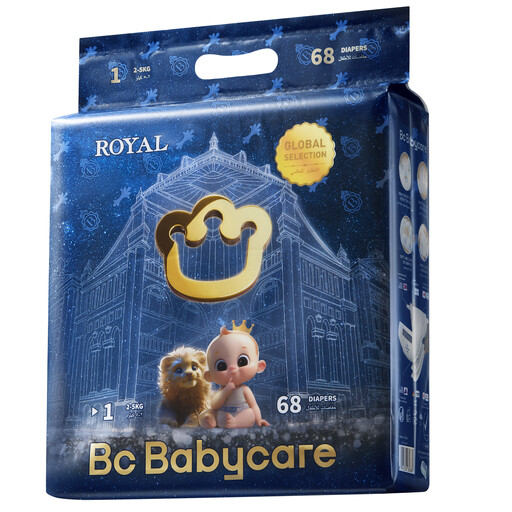
Why this fits the profile: The pack contains 68 size 1 nappies for babies weighing 2–5 kg. That’s practical when you want to try a smaller quantity first.
The weight indication and wetness indicator make it easier not to rely solely on age or marketing text.
68 nappies; suitable for 2–5 kg; the product description mentions an absorbent core and breathable outer layer.

Why this fits the profile: This monthly box is aimed at parents who prioritise material choice and extra product information over the lowest price per nappy.
The description specifically mentions 0% perfume and lotion, rather than just a general claim about softness.
186 nappies; size 3; according to Pampers’ product description, hypoallergenic, OEKO-TEX Standard 100 certified and with a wetness indicator.
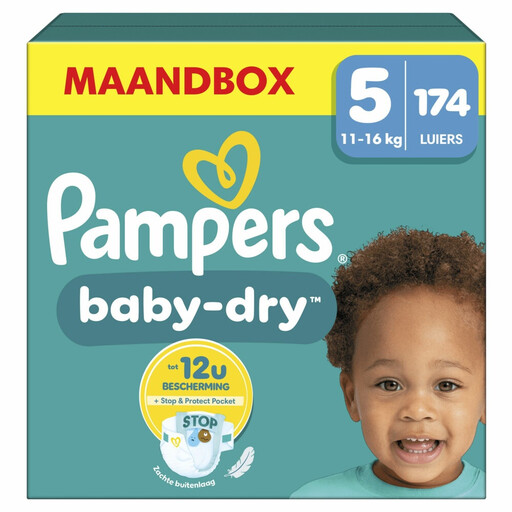
Why this fits the profile: Suitable for children weighing 11–16 kg when you’re looking for a larger supply for daily and overnight use.
The size is linked to weight and the product description mentions a Stop & Protect pocket and elasticated sides; check the fit on your child.
174 nappies; size 5 for 11–16 kg; according to Pampers, an absorbent core and material for day and night use.
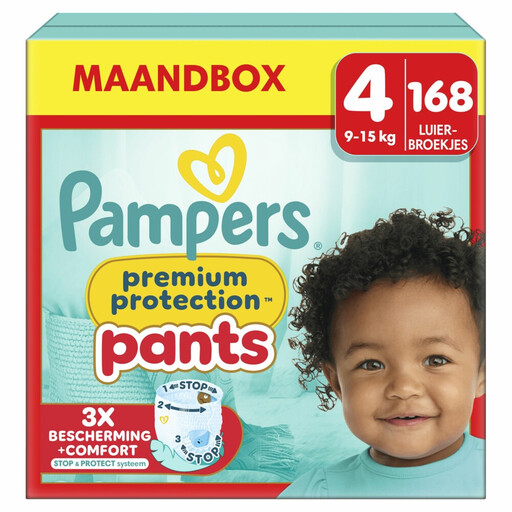
Why this fits the profile: The pants are designed for active babies who move around a lot during nappy changes and where pulling on in one go is convenient.
The flexible waistband stops you from choosing a much larger size for convenience; the size remains linked to body weight.
168 nappy pants; size 4; 360° waistband, protective leg cuffs and a sticky tab for rolling up after use.
Regular nappies with sticky tabs give you more control over the fit. They’re often handy for a baby who lies down a lot or needs changing regularly. Nappy pants are quicker to pull on for a child who crawls, stands up or twists during changes. For a good fit, the waistband should sit flat without leaving deep marks.
For older children who are dry during the day but still need support at night, DryNites pyjama pants are a separate category. The Huggies DryNites model mentioned is designed for children aged 4–7 years and weighing 17–30 kg. So don’t use this as a replacement for baby nappies.
We’ve put together a full, up-to-date list of products that fully meet these strict selection criteria and comply with current European safety regulations.
Look out for recurring leaks, red marks around the legs or a waistband that barely fastens. First, check that the nappy is put on correctly. If the problem persists, compare the weight range with the next size up.
Store unused nappies in a dry, clean place away from direct sunlight or high temperatures. Check the expiry or usage information on the pack. Don’t buy a very large stock if your baby is likely to move up a size soon.
That varies from child to child. According to Pampers’ own product descriptions, Harmonie and certain Premium Protection models contain no EU fragrance allergens; Harmonie also states 0% perfume and lotion. Always check the current packaging and stop using them if irritation persists.
