
Vandaag of morgen in huis

Kwaliteit gegarandeerd

Welkomstaanbiedingen ontgrendelen: GRATIS bezorging | Tot 80% korting | Gratis 30 dagen JoyPlus-proefperiode
Download de app
Choosing the right baby nappies seems simple, until you’re faced with a shelf or online selection featuring dozens of sizes, brands and pack options. A low price per nappy can be tempting, but the wrong fit can lead to leaks, more frequent changes and waste. Marketing terms such as “12-hour protection” or “hypoallergenic” also need a little context.
So watch out for these three common pitfalls:
Start with the recommended weight range, then check the fit. Size 1 nappies are generally designed for newborns weighing around 2 to 5 kg. A model with a navel cut-out can be useful during the newborn stage. Size 2 nappies often cover a weight range of around 4 to 8 kg.
Guidance varies between brands for larger sizes. Some size 5 nappies, for example, are designed for babies weighing around 11 to 16 kg, while other products are sold as nappies for 12–17 kg. Always check the packaging for the specific product. Red marks around the legs, gaps at the back or a nappy that leaks quickly may indicate the wrong size or a poor fit.
Most disposable nappies use superabsorbent polymer, often referred to as SAP, in the absorbent core. This material locks in moisture, but the amount used and how it is distributed vary between models. A thicker nappy isn’t automatically better: a thin core can also absorb enough when it distributes liquid effectively.
A wetness indicator is especially useful for newborn nappies. On some BC Babycare models, three lines change colour when they come into contact with liquid. This can help you decide when to change your baby, but it doesn’t replace checking the nappy regularly.
When choosing a nappy for sensitive skin, look for a soft inner layer, fragrance-free specifications and clear information about materials. Pampers says that several of its models contain no EU fragrance allergens. The brand describes Pampers Harmonie as hypoallergenic and free from fragrance and lotion. These are claims made by Pampers; they don’t guarantee that every baby’s skin will react in the same way.
For its Royal range, BC Babycare lists features including a pH 5.5 surface and a core containing SAP. According to the product description, these are intended to make the nappy feel soft and help limit irritation. Stop using the product if redness or irritation persists, and seek advice from a healthcare professional if needed.
A traditional nappy with fastening tabs is usually handy for a baby who spends a lot of time lying down. You can undo the tabs easily and adjust the fit. Nappy pants are often practical for an active child: pull them on like underwear and tear the sides open when it’s time for a change.
Do pay attention to the weight range and waist fit. Nappy pants can feel tight if you choose a size that’s too small. A flexible style can be comfortable for daytime activity. For night-time, a good combination of absorbent core, leg cuffs and waistband matters more than the brand alone.
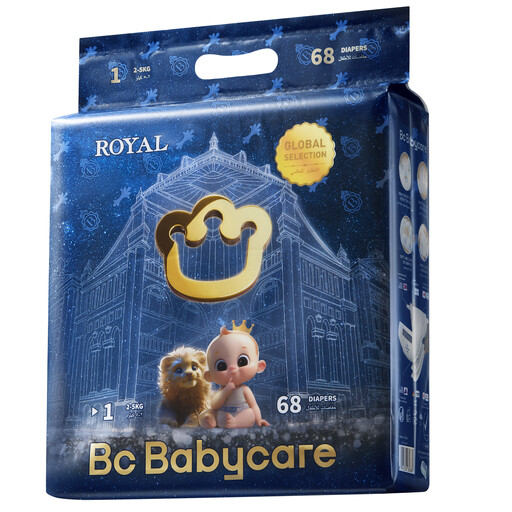
Why it suits this profile: A pack of 68 gives new parents the chance to try out a size and fit without ordering a large monthly box straight away.
The 2-5 kg weight range makes it easier to compare options. The product description also mentions a wetness indicator and a navel-friendly cut-out.
68 nappies per pack, SAP in the absorbent core, and a construction featuring non-woven fabric and breathable PE film.

Why it suits this profile: This monthly box is aimed at parents who value clear information about materials and certification when choosing newborn nappies.
The description states that it contains 0% fragrance and lotion, and features a urine indicator and a Stop & Protect pocket. Pampers says the product has been dermatologically tested.
180 size 1 nappies for babies weighing 2-5 kg, described as hypoallergenic by the brand and certified to OEKO-TEX Standard 100.
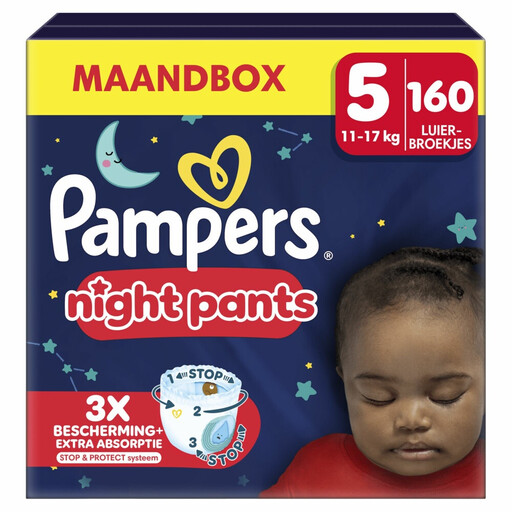
Why it suits this profile: A good choice for parents looking for a night-time nappy for an active child weighing around 12-17 kg, with the convenience of pull-on pants.
The 360° waistband and wider leak guards are designed to help maintain a close fit as your child moves. Pampers says the core is designed for night-time use.
160 size 5 nappy pants, tear-away sides and an adhesive strip for rolling up used pants.
We’ve put together a complete, up-to-date list of products that meet these strict selection criteria and the applicable European safety regulations.
Check the nappy regularly and change it when it’s wet or dirty. Newborns may need changing often, as they feed and have bowel movements several times a day. A wetness indicator is a helpful guide, not a set schedule. Also follow the instructions on the packaging.
Disposable nappies don’t usually have a short shelf life like food products. Store unused nappies somewhere dry and clean, away from direct sunlight. If you buy a monthly box, always check the information on the packaging, and don’t use any nappies that are damaged, wet or dirty.
A monthly box can lower the price per nappy and save you from having to order new packs so often. Any savings disappear if your baby quickly moves up to a larger size or the fit isn’t right. So compare both the price per nappy and the number in the pack, and try a new brand in a smaller pack first.
