
Vandaag of morgen in huis

Kwaliteit gegarandeerd

Welkomstaanbiedingen ontgrendelen: GRATIS bezorging | Tot 80% korting | Gratis 30 dagen JoyPlus-proefperiode
Download de app
Finding the right baby nappies seems straightforward, until you have to choose between disposable nappies, nappy pants, different brands and a monthly box containing hundreds of nappies. Attractive packaging or a promise of “up to 12 hours of protection” doesn’t automatically mean a nappy will fit your baby well.
The main differences usually come down to sizing, fit, absorbency and materials. Use the checks below to avoid buying a large supply that leaks, rubs or goes unused.
Age is only a rough guide. Fit depends mainly on your child’s weight, build and how much they move. A nappy that’s too loose around the legs can leak. One that’s too small may leave pressure marks or red lines.
Always check the weight range for the size. This applies to newborn nappies as well as larger sizes, such as baby nappy sizes 1 to 8.
A monthly box of nappies often costs less per nappy, but a large supply isn’t much use if your baby quickly outgrows the size. Fits can also vary between brands and product ranges.
When trying a new range, start with a smaller pack. Check the following over a few nappy changes:
If the fit works well, a larger pack is a practical next step.
Terms such as “dry nights”, “hypoallergenic” or “leak-proof” need to be read in context. According to Pampers’ product description, certain Baby-Dry models are dermatologically tested, contain no fragrance allergens classified by the EU and have an absorbent core. This describes the product specifications, but doesn’t guarantee that every child will avoid leaks or skin reactions.
If your baby has any problems, it’s sensible to change their nappy more often. Seek medical advice if skin irritation persists.
A well-fitting nappy sits snugly around the waist and legs without leaving marks. A cut-out for the umbilical cord is useful for newborn nappies. The product descriptions listed for Pampers Premium Protection and Pampers Harmonie include an umbilical cord cut-out for certain sizes.
Check the weight range as well as the size number. Examples from the range include:
Always follow the detailed size guide on the pack.
An absorbent core is usually made from cellulose, superabsorbent polymer or a combination of the two. Pampers Baby-Dry lists an absorbent core and a Stop & Protect pocket at the back. Baby-Dry Pants also have wider leak guards around the legs and a flexible waistband, according to the product information.
Don’t focus only on the amount of absorbent material. Even a highly absorbent nappy can leak if the waistband or leg cuffs don’t fit properly. Checking the fit is more useful than relying on a claim on the pack alone.
If your baby has sensitive skin, it can help to check:
According to the product information, Pampers Harmonie nappies contain 0% perfume and lotion, and the cellulose in the absorbent core comes from FSC-certified forests and other controlled sources. Pampers Premium Protection lists soft materials, dermatological testing and no fragrance allergens classified by the EU. These are statements from the brand’s product information; individual skin reactions are still possible.

Why it suits this profile: A pack of 40 lets you try a new nappy range without committing to a large monthly supply straight away.
The pack clearly states size 4 and 9–14 kg. This makes it easy to check the weight range and fit before buying a larger pack.
According to the product information: absorbent core, 360° leak protection and a surface with pH 5.5.
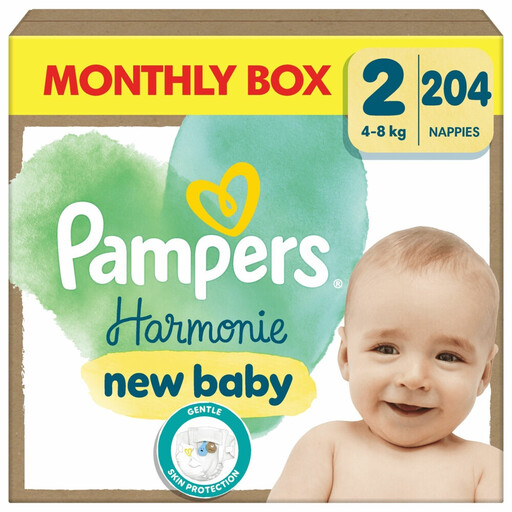
Why it suits this profile: A good option for parents who consider materials, fragrances and the source of the cellulose as well as the fit.
The product description states 0% perfume and lotion, so you can compare this with other Pampers nappies.
Hypoallergenic according to the brand, dermatologically tested, OEKO-TEX Standard 100 certified and featuring a Stop & Protect pocket.
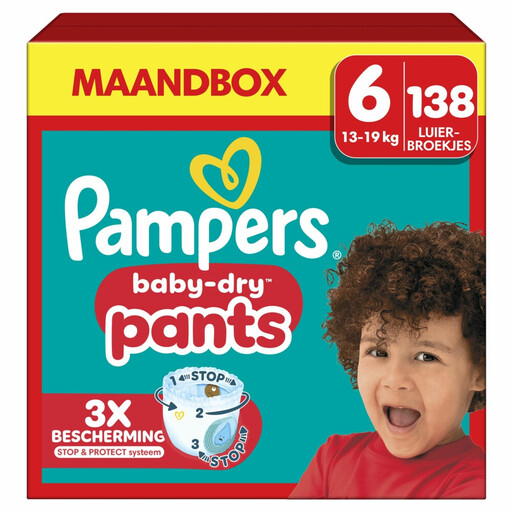
Why it suits this profile: Nappy pants are handy for active toddlers who are always on the move and need a quick change, even when standing up.
The 360° waistband and wider leak guards are designed to move with your child, but always check that size 6 fits snugly.
According to Pampers: pull on in one movement, tear the sides to remove, absorbent core and 0% fragrance allergens classified by the EU.

Why it suits this profile: An option for parents looking for newborn nappies with an umbilical cord-friendly fit and soft materials.
The product information mentions an umbilical cord cut-out and size 1 for approximately 2–5 kg. Compare this with your baby’s current weight.
According to Pampers: more than 1,000 absorbent micropores, dermatologically tested, no fragrance allergens classified by the EU and OEKO-TEX Standard 100 certified.
We’ve put together a complete, up-to-date list of products that meet these strict selection criteria and the applicable European safety regulations.
Start by choosing a size based on your baby’s current weight, then check the fit around the waist and legs. A nappy should fit snugly without leaving red marks. If it leaks, a larger size isn’t always the answer. First check that the nappy is fitted properly and that the leg cuffs are turned outwards.
How often you change a nappy depends on how wet or soiled it is and how sensitive your baby’s skin is. Check it regularly and change it straight away after a bowel movement. For specific products, follow the instructions on the pack. A stated wear time, such as “up to 12 hours”, is a product claim and isn’t a reason to leave a visibly dirty or wet nappy on.
That depends on the price per nappy, how many changes you need and which pack you choose. Nappy pants can save time with active children, but they don’t always work out cheaper per nappy. Compare the total price, the number of nappies and the size. A monthly box only makes financial sense if the size continues to fit well throughout the time you use it.
