
Vandaag of morgen in huis

Kwaliteit gegarandeerd

Welkomstaanbiedingen ontgrendelen: GRATIS bezorging | Tot 80% korting | Gratis 30 dagen JoyPlus-proefperiode
Download de app
You can quickly find yourself needing several cloths a day for newborns and young children: one for feeding, a clean one after bath time, a towel for when you’re out and about, and a few spares in the changing bag. Baby muslin cloths should therefore feel soft, but they also need to be practical in size, care and everyday use.
There are a few pitfalls to watch out for. An attractive pattern, for example, tells you nothing about the fabric composition. A large towel may also be awkward to use with a newborn, while a small muslin cloth might not provide enough coverage after a bath. Use the points below to compare baby muslin cloths, cotton baby cloths and baby bath towels based on verifiable information.
“Soft” isn’t a precise material specification, so always check the fibre composition. 100% cotton, a cotton blend, bamboo fibre and synthetic fibres all have different properties. According to the product descriptions, several models are made from 100% cotton. The Momcozy sets are made from either a bamboo blend or a cotton-polyester blend.
The composition tells you more than a general marketing claim. Also check the number of layers, the size and the washing instructions.
A 70 × 140 cm cloth may work well as a baby bath towel, but it’s less handy as a burp cloth or for use in a pushchair. Sizes around 30 × 50 cm are more practical for feeding and little spills. A newborn set with a small towel and a larger bath towel can be a useful combination for everyday use.
Baby textiles are often washed several times a week. Check whether the cloth is machine washable according to the care label, and at what temperature. Some product descriptions recommend washing at 40 °C and advise against tumble drying because of possible shrinkage. This may affect drying time and convenience in a household with limited space for drying.
Look for:
A multi-layer cloth may hold moisture better than a thin, single-layer one, but it may also take longer to dry. Quick-drying cloths are handy when you’re out and about; at home, a larger, thicker cloth may feel more comfortable at bath time.
Think about the different ways you might use them:
A set of five smaller cloths is practical if you change them often. Two large bath towels are more useful if you’re mainly looking to keep a regular supply for bath time.
Wash baby cloths before first use, following the instructions. Don’t use a cloth with loose threads, damaged seams or hard embellishments in areas that come into direct contact with the skin. For bath textiles, always check the temperature of the water and cloth before using them on your baby’s skin. Keep textiles away from naked flames.
Also check what the manufacturer actually states. A certificate such as OEKO-TEX STANDARD 100 should only be mentioned if it appears in the product information. Its absence is not a reason to automatically reject other materials.
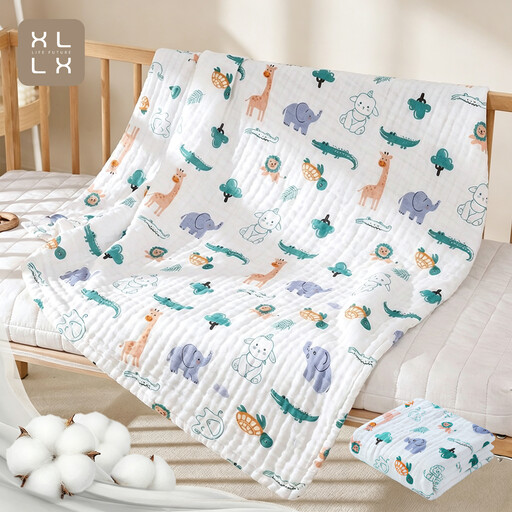
Why it suits this profile: Five cotton cloths provide a practical supply for feeding, changing and everyday clean-ups.
The pack size and dimensions are clearly stated, so you won’t have to use a small cloth as a full-sized bath towel.
According to the product description: 100% cotton, six layers, 5 cloths and dimensions of 30 × 50 cm.

Why it suits this profile: This set combines a hooded towel with washcloths and a bath mitt for a complete bath-time routine.
The contents are specified: one hooded towel, three washcloths and one bath mitt.
According to the product description: 92% bamboo, 8% microfibre, a 76.2 × 76.2 cm towel and an OEKO-TEX STANDARD 100 certification mention.
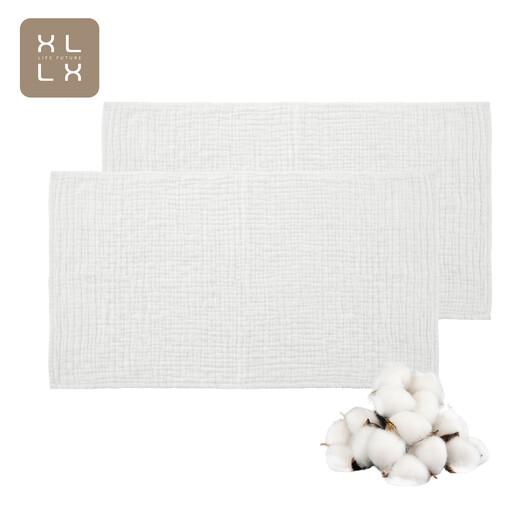
Why it suits this profile: Two large cloths are ideal for families who bathe their baby regularly and want a reliable supply of baby bath towels.
The large size is clearly stated, so you’ll know before buying that this set is intended for drying off, not for smaller baby-care tasks.
According to the product description: 100% cotton, six layers, two towels and dimensions of 70 × 140 cm per towel.
We’ve put together a complete, up-to-date list of products that meet these strict selection criteria and the applicable European safety regulations.
For everyday use, a combination works well: several small cloths for feeding and cleaning, along with one or two larger towels for bath time. The exact number depends on how often you do the washing and how often your baby spits up or makes a mess.
Sizes around 25 × 50 cm or 30 × 50 cm are handy for a newborn as burp cloths, washcloths or cloths to take out and about. For drying your baby after a bath, a larger cloth, such as one measuring 70 × 140 cm, offers more coverage. Make sure the cloth doesn’t come over your baby’s face during use.
Their lifespan depends on the fabric, seams, how often they’re washed and how they’re dried. Follow the care label and check regularly for thinning, fraying or stubborn stains. Replace a cloth if it becomes damaged or no longer feels comfortable.
