
Vandaag of morgen in huis

Kwaliteit gegarandeerd

Welkomstaanbiedingen ontgrendelen: GRATIS bezorging | Tot 80% korting | Gratis 30 dagen JoyPlus-proefperiode
Download de app
As an expectant or new parent, you're flooded with advice and product lists. Muslin cloths are always at the top, but the choices are endless. Unfortunately, this often leads to purchasing mistakes. Many parents end up with a pile of cloths that feel like sandpaper after a few washes, are too small for practical use, or simply don't absorb well. Before you fill your shopping cart, it's helpful to know the most common pitfalls.
To avoid wasting money, there are a few objective specifications you can check. These determine the functionality and lifespan of the cloths.
The term "hydrophilic" means water-attracting. The effectiveness depends entirely on the material.
The size determines what you can use the cloth for. A good mix of sizes is essential for your baby essentials list.
burp cloths or baby face cloths. Handy to always have a few in the diaper bag for small messes.cotton baby towel after bath time or swimming. These soft baby towels are large enough to wrap your baby completely and keep them warm.Based on product specifications, we have selected a few options that suit different needs and budgets.

Why This Fits Their Persona: This is a practical starter pack for daily care. The set of five cloths is ideal for catching spit-up, as a face cloth, or as an impromptu bib. A no-fuss start for any baby essentials list.
These cloths are made of 100% cotton with a six-layer structure. This ensures good absorbency and durability, without the high price tag of luxury sets. You get functional quality without paying for frills.
Multipack of 5; ideal for frequent use. The six-layer cotton construction offers excellent absorbency for a competitive price.
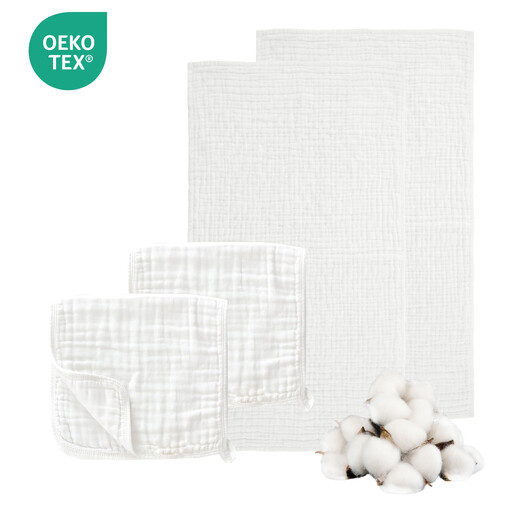
Why This Fits Their Persona: For parents who invest in a complete, durable set. This 4-piece set includes both large bath towels and smaller washcloths, all in the same high quality. Ideal for those who value consistency and long-lasting softness.
This set solves the 'size misconception' by immediately offering two functional sizes. The six-layer cotton structure guarantees that the cloths will remain soft and absorbent, wash after wash.
Complete set with 2 large bath towels (70x140cm) and 2 washcloths (30x50cm). Made from durable, soft, and highly absorbent 100% cotton.

Why This Fits Their Persona: Looking for a useful and cute `baby shower gift`? This set combines a large bath towel and a smaller cloth with a playful design. It's a thoughtful gift that new parents are guaranteed to use.
This isn't a generic cloth, but a well-thought-out set. It combines two commonly used sizes, making it instantly practical. The 100% cotton quality ensures it's a durable and appreciated gift.
Combination pack with a large cotton baby towel (70x140cm) and a smaller cloth (25x50cm). The cute Panda Land design makes it an ideal baby shower gift.
We have compiled a complete, up-to-date list of products that meet these strict selection criteria and safety standards.
For a complete baby essentials list, a minimum of 12 to 18 muslin cloths is often recommended. This may seem like a lot, but you'll find you use them constantly: as a towel, burp cloth, changing pad liner, or even a light blanket. With a large supply, you'll never run short, even when the washing machine is running.
Wash the cloths before first use to activate the fibres and increase absorbency. Use a mild detergent and avoid fabric softener, as it leaves a residue on the fibres that reduces absorption. Washing at 40°C (104°F) is usually sufficient. Tumble drying on a low temperature can make them extra soft and fluffy, but air drying is also fine.
The terms are often used interchangeably, but there is a slight technical difference. "Hydrophilic" describes the function of the fabric (water-attracting). "Muslin" describes the structure: a lightweight, loosely woven fabric, usually made of cotton, that often consists of multiple layers. Therefore, most high-quality hydrophilic cloths are made of muslin cotton.
