
Vandaag of morgen in huis

Kwaliteit gegarandeerd

Welkomstaanbiedingen ontgrendelen: GRATIS bezorging | Tot 80% korting | Gratis 30 dagen JoyPlus-proefperiode
Download de app
As an expecting or new parent, you want a reliable way to keep an eye on your baby. However, the market for baby monitors with cameras is vast and filled with marketing promises that don't always reflect reality. Many parents fall into the same traps, leading to frustration and unnecessary expenses. As a Joybuy Product Recommendation Officer, I'll help you understand the right specifications so you can make a choice that fits your situation.
Before we look at recommendations, let's discuss three common pitfalls:
baby monitor with night vision, but the quality varies enormously. A grainy, blurry image in the dark is useless. You want to be able to clearly see if your baby is breathing peacefully and lying safely, not just a grey blob in a crib.To avoid a bad purchase, it's important to look past the marketing and focus on the technical specifications that truly matter. These are the three most important points of focus.
The choice of connection type is perhaps the most important one.
non-Wi-Fi baby monitor. The camera and the parent unit establish a direct, encrypted connection with each other. This signal is 100% private and interference-free. You don't need to install anything on your network; it works right out of the box. This is a robust and secure option.You buy a video baby monitor to see your child. Therefore, image quality is crucial.
1080p video baby monitor (Full HD) offers even sharper images, allowing you to zoom in and see details more clearly. This is a significant advantage, especially at night.baby monitor with a 5-inch screen or larger offers much more viewing comfort and makes it easier to assess the situation at a glance.A baby monitor should be practical for daily use.
portable baby monitor with a battery. Pay attention to the capacity (expressed in mAh). A battery around 5000 mAh can typically last an entire night in the power-saving VOX mode (where the screen only turns on when sound is detected).baby monitor with a two-way talk feature, you can soothe your baby with your voice without having to go directly to the room.baby monitor with a temperature sensor and a built-in baby monitor with lullabies can be very useful for creating a comfortable and calming environment for your baby.Not every parent needs the same thing. Below are some popular choices, linked to specific needs.
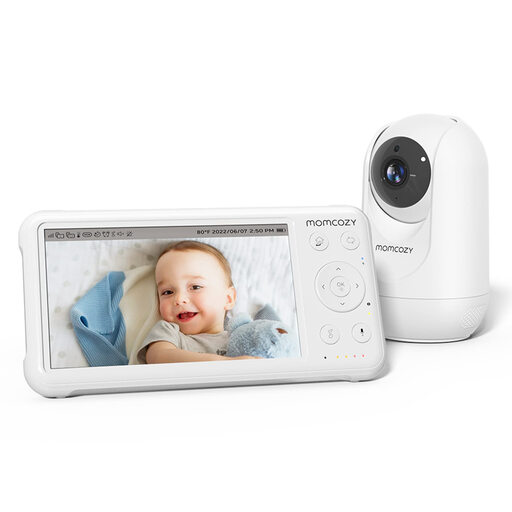
Why This Fits Their Persona: This parent wants a reliable, secure, and complete solution without the hassle. Privacy and ease of use are top priorities. A stable connection is more important than app access.
This is a non-Wi-Fi baby monitor that uses a direct FHSS connection, eliminating the risks and complexity of Wi-Fi. The 1080p resolution ensures clear night vision, unlike lower-quality models.
Large 5-inch 1080p screen, a powerful 5000mAh battery for long usage, and all essential features like a temperature sensor and two-way talk function.
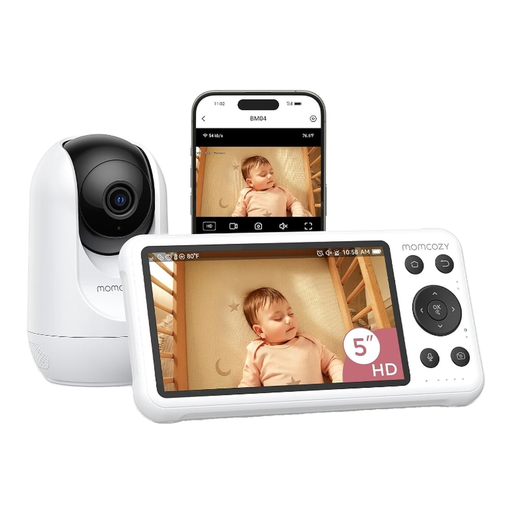
Why This Fits Their Persona: This parent wants both the reliability of a direct monitor at home and the flexibility to check in via an app, for example, from work or another floor.
This dual-mode system bypasses the Wi-Fi dependency trap. If your Wi-Fi goes down or you're concerned about the connection, you can still rely on the direct link between the camera and the 5-inch 1080p monitor.
Offers the best of both worlds: a dedicated monitor for home and app access for remote viewing. Includes smart features like cry and motion detection.
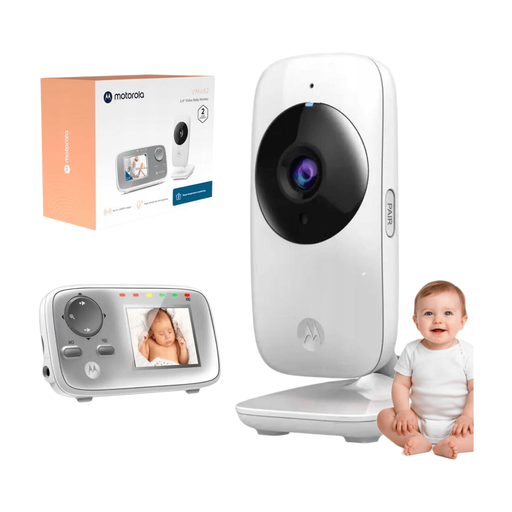
Why This Fits Their Persona: This parent is looking for an affordable and reliable solution from a well-known brand. The basic functions need to work well, without the need for a large screen or advanced extras.
This model focuses on reliability with a 2.4 GHz FHSS connection, so you aren't dependent on Wi-Fi. It provides a solid foundation without overpromising. The range, according to Motorola, is up to 300 meters in open space, but is practically sufficient for most homes.
A no-nonsense baby monitor that performs the essential functions well: infrared night vision, a sensitive microphone, and a temperature display on the parent unit. Simple to use and reliable.
We've compiled a complete, up-to-date list of products that fully meet these strict selection criteria and local safety regulations.
The advertised range (e.g., 300 meters) is a theoretical maximum. In a typical modern home with concrete floors and walls, you can expect an effective range of about 30 to 50 meters. This is usually sufficient to have coverage from the baby's room in the attic to the living room on the ground floor. Test the range in your own home before you permanently install the baby monitor.
Generally, yes. A non-Wi-Fi baby monitor (using FHSS technology) creates a closed, direct connection between the camera and the monitor. This connection is encrypted and cannot be accessed from the outside via the internet, which minimizes the risk of hacking. Wi-Fi models depend on the security of your home network and the manufacturer's servers.
This depends heavily on the model and usage. A portable baby monitor with a battery with a capacity of around 5000 mAh can last for about 8-12 hours with continuous video streaming. However, most parents use the VOX or power-saving mode, where the screen only activates when sound is detected. In this mode, the battery can easily last 18 to 24 hours before needing a recharge.
