
Vandaag of morgen in huis

Kwaliteit gegarandeerd
Download de app
Categorieën

Choosing a baby monitor with a camera can be overwhelming. You want a reliable device that gives you peace of mind, but the market is flooded with models promising a wide range of features. Should you opt for a smart baby monitor with a smartphone app, or is a traditional video baby monitor with its own screen a more secure choice? This guide will help you make the right decision based on facts and features, ensuring you find a model that fits your family's needs.
Before you buy a baby monitor, it's helpful to understand the key features. Your preferences for convenience, security, and functionality will determine the best choice for you.
A sharp image is essential. Modern baby monitors often offer HD quality (720p or 1080p). Good night vision is indispensable for seeing your baby clearly in a dark room. Also, consider the screen size of the parent unit; a larger screen (around 5 inches) offers more viewing comfort. The sound quality determines how clearly you can hear your baby without distracting static or background noise.
Many baby monitors offer extras that enhance the user experience:
With a Wi-Fi baby monitor, digital security is crucial. Choose models with strong encryption (such as 256-bit AES encryption) and always set a strong, unique password for both your Wi-Fi network and the baby monitor app.
Based on the criteria above, we have selected three popular models that meet the different needs of parents.
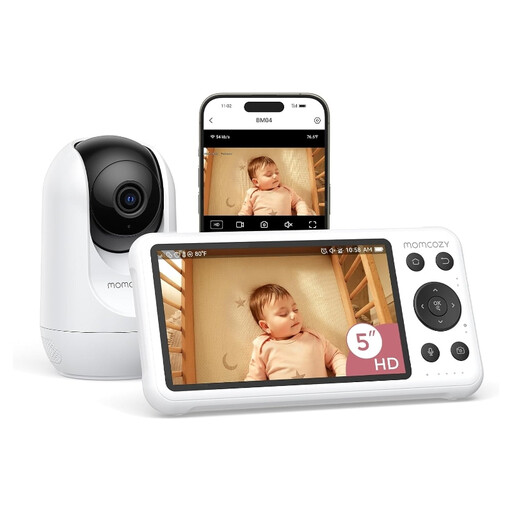
Why this product: The Momcozy baby monitor combines the best of both worlds. It's a dual-mode system: you get a physical parent unit with a 5-inch 1080P HD screen for direct use at home, and you can connect the camera to Wi-Fi for monitoring via the app on your phone.
Pros:
Who is this for: For parents who want the security of a traditional monitor (for a babysitter, for example) but also desire the flexibility to check in via their smartphone when they are not at home.
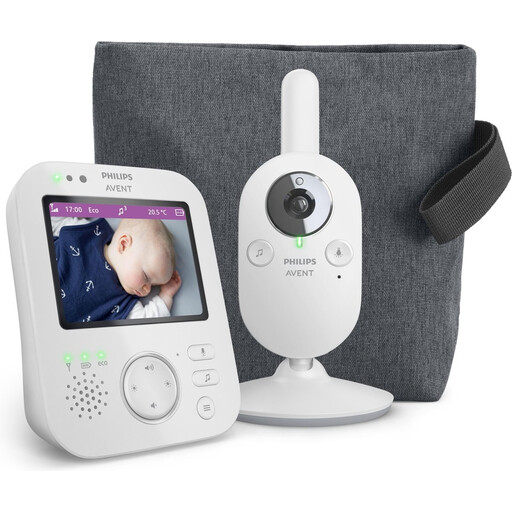
Why this product: The Philips Avent baby monitor is a classic that focuses on one thing: an ultra-reliable and secure private connection. This model does not use Wi-Fi but its own wireless technology (FHSS) that minimises interference and eavesdropping.
Pros:
Who is this for: For parents who prioritise an interference-free, secure, and direct connection and do not need monitoring via a smartphone app.
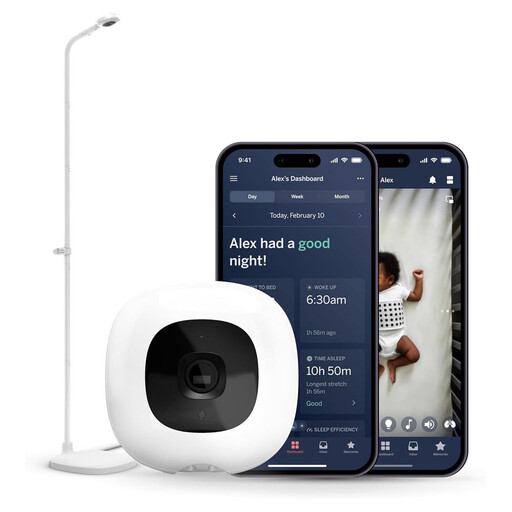
Why this product: The Nanit baby monitor is more than just a camera; it's a complete sleep tracking system. This model is focused on data and insights. Its most unique feature is the sensor-free breathing detection, which works via a special pattern on the included swaddle or band.
Pros:
Who is this for: For tech-savvy parents who value data, detailed sleep insights, and the extra reassurance of breathing monitoring.
Our selection highlights three popular choices for different types of parents. However, the baby monitor market is broad and diverse. Are you looking for a model with a different screen size, a specific price point, or a unique feature not mentioned here? Countless other options are available.
Explore our full range for more choices.
View all baby monitors with camera
1. Is a Wi-Fi baby monitor secure? Yes, provided you take the right precautions. Choose a model from a reputable brand that uses strong encryption (like 256-bit AES). Most importantly, set a strong, unique password for both your baby monitor account and your home network. Avoid using public Wi-Fi networks to log into your baby monitor app.
2. What is the range of a baby monitor with a camera? This depends on the type. A Wi-Fi baby monitor has a virtually unlimited range, as long as both the camera and your smartphone have a stable internet connection. A baby monitor with a direct connection (FHSS/DECT) has a limited range, typically around 50 meters indoors and up to 300 meters in an open field. Walls and ceilings can reduce this range.
3. Do I need a baby monitor with breathing detection? A baby monitor with breathing detection is not a medical device and does not replace safe sleep guidelines. It is a tool that can offer an extra layer of reassurance for parents. It detects the movement of the chest and can sound an alarm if no movement is detected for a certain period. Whether you need this is a personal decision.