
Vandaag of morgen in huis

Kwaliteit gegarandeerd

Welkomstaanbiedingen ontgrendelen: GRATIS bezorging | Tot 80% korting | Gratis 30 dagen JoyPlus-proefperiode
Download de app
As an expecting or new parent, you want one thing above all else: peace of mind. A good baby monitor with a camera seems like the perfect solution. But the market is flooded with models that make lofty promises. Many parents fall into marketing traps and end up with an expensive device that fails to deliver.
Before you purchase a baby monitor with a camera, it's crucial to recognise the most common pitfalls. This is how you avoid buyer's remorse.
smart baby monitors entice you with advanced features like sleep analysis or unlimited cloud storage. What often isn't immediately clear is that after a free trial, these features only work with a costly monthly or annual subscription.baby monitor with an app that works over Wi-Fi sounds convenient. You can check in from anywhere in the world. But if your home Wi-Fi network is unstable, the connection will drop constantly—precisely when you need it most.To find a model that truly fits your situation, it's wise to check a few key specifications. Brands like Philips Avent and Motorola often offer various options that differ on these points.
This is the most important choice you'll make. Both systems have distinct advantages and disadvantages.
Baby Monitor without Wi-Fi (FHSS Connection): This type creates a direct, private connection between the camera (baby unit) and the monitor (parent unit).
Baby Monitor with App (Wi-Fi Connection): This smart baby monitor connects to your home network, allowing you to view the feed via an app on your smartphone or tablet.
A video baby monitor is useless without a good picture. Pay attention to two things:
baby monitor with night vision is indispensable. Almost all models have this feature, but the quality varies. Good infrared night vision ensures you have a clear black-and-white image even in a completely dark room.The baby unit (camera) almost always needs to be plugged into a power outlet. The parent unit usually runs on a rechargeable battery. Check the battery life, so you're not constantly fumbling with a charger. Handy extras that are often standard include a two-way talk feature, a temperature sensor, and built-in lullabies.
Based on the criteria above, we have selected a few popular choices that suit different types of parents.
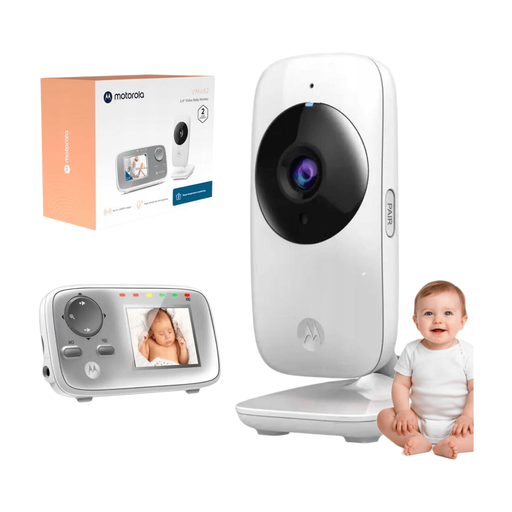
Why This Fits Their Persona: You're looking for a reliable, straightforward solution without the hassle of apps or Wi-Fi passwords. Turn it on, and it works instantly. Ideal for home use where a stable connection is the top priority.
This model uses a direct 2.4 GHz FHSS connection, so you aren't dependent on your home network. No hidden subscription fees for basic functions and no worries about a dropped internet connection.
Interference-free and secure private connection. Includes useful features like a temperature sensor, digital zoom, and clear infrared night vision.

Why This Fits Their Persona: You want to keep an eye on things anytime, anywhere via your smartphone and appreciate a crystal-clear picture. This model combines a physical monitor with the flexibility of an app.
Although it works over Wi-Fi, this model offers local recording functionality. This means you aren't immediately forced into a cloud subscription to save footage. You have the choice between the included monitor and your own phone.
Large 5.5-inch 1080P screen for a sharp image and the flexibility of app access, wherever you are. The parent unit has a powerful 5800mAh battery for long-lasting wireless use.
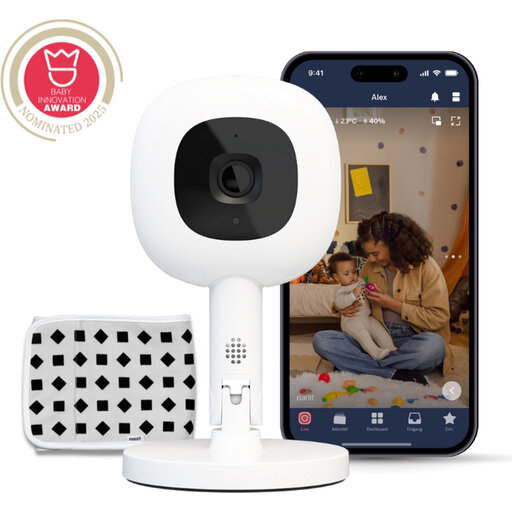
Why This Fits Their Persona: You want more than just video and audio. Features like breathing motion monitoring and detailed sleep analysis give you extra assurance and insight into your baby's well-being.
Nanit is transparent about its Nanit Insights subscriptions for advanced features. The basic functionality works without one, but the smart extras are a deliberate choice. Furthermore, the connection is extra secure with 256-bit encryption.
Offers sensor-free breathing motion monitoring with the included band. The app provides smart alerts for sound and motion and offers sleep analytics (with a subscription).
We have compiled a complete, up-to-date list of products that meet these strict selection criteria and local safety regulations.
Yes, provided you take a few precautions. Choose a model from a reputable brand that uses strong encryption (like 256-bit AES). Always use a unique and strong password for both your Wi-Fi network and the baby monitor app. A non-Wi-Fi baby monitor with a direct FHSS connection is, by definition, a closed system and therefore less vulnerable to external risks.
Manufacturers often advertise a range of up to 300 metres in an open field. In practice, indoors, this range is significantly less due to walls, floors, and other sources of interference. You can count on a reliable range of about 30 to 50 metres. This is more than sufficient for most homes.
Not necessarily. A higher resolution (like 1080p) provides a more detailed image, but it's not a strict requirement. A stable, smooth video stream is far more important. A camera with a good lens and clear night vision is often more valuable than a model that only has high resolution on paper but delivers a choppy feed in practice. Buying the baby monitor that best suits your home and needs is the smartest move.
