
Vandaag of morgen in huis

Kwaliteit gegarandeerd

Welkomstaanbiedingen ontgrendelen: GRATIS bezorging | Tot 80% korting | Gratis 30 dagen JoyPlus-proefperiode
Download de app
A baby monitor with a camera lets you keep an eye on your child when you’re not in the same room. However, baby monitors differ greatly in connectivity, picture quality, range and storage. A model that promises lots of features on the product page won’t automatically suit your home, travel plans or the way you’ll use it.
As Joybuy Product Recommendation Officer, I distil the essentials into practical points. This helps you avoid paying for features you won’t use, or discovering only after purchase that a camera won’t work without Wi‑Fi.
A manufacturer might quote a long range, but walls, floors, metal structures and other wireless devices reduce it. With a video baby monitor with parent unit, it’s important to check whether the connection runs directly between the camera and the parent unit, or via your home network.
A range of, for example, 300 metres or 960 ft is usually for open space. In a home with multiple floors, the practical distance can be lower.
A baby monitor with night vision often uses infrared imaging, which is usually black and white. Products with “full‑colour night vision” may, according to the product description, use extra light or built‑in illumination. Don’t automatically expect bright colour footage in a completely dark room.
Watch out for reflections from white walls, glass or bedding. These can affect the infrared image.
A baby camera with Wi‑Fi can be handy if you want to view footage on a smartphone when you’re away from home. You’ll usually need an app, an account, a stable router connection and software updates. Also check the privacy settings and use a strong, unique password for your network.
If you mainly want to view at home, a baby monitor without Wi‑Fi may be a better fit. It works with its own parent unit and isn’t dependent on a cloud service or internet connection.
Choose a wireless baby monitor based on how you plan to use it:
A wireless connection doesn’t automatically mean the camera is battery‑powered. Many cameras need continuous power.
A resolution of 720p, 1080p or 3MP tells you something about detail, but not everything about the final image. Screen size, lens angle and lighting all play a role.
For a cot, an adjustable camera is useful. Pan‑tilt‑zoom, digital zoom and a wide field of view help you capture more of the room. With a 360‑degree security camera, check how many degrees the camera actually rotates horizontally and vertically. A 360‑degree rotation doesn’t necessarily mean every part of the room is visible at once.
Two‑way talk lets you speak through the camera. Some models also offer cry detection, motion detection, temperature alerts or lullabies. These are aids and don’t replace supervision by an adult.
For storage, check:
A standard indoor baby monitor isn’t suitable for outdoor use. An outdoor camera with night vision must be explicitly designed for outdoor use and have an appropriate IP rating.
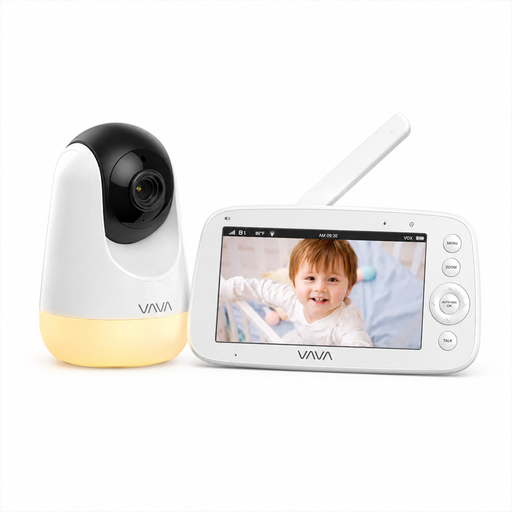
Why this suits the profile: This set uses a direct 2.4GHz link between the camera and parent unit. You don’t need an app, account or cloud service for the core features.
You’re not dependent on Wi‑Fi, a smartphone or recurring cloud fees. The stated 300‑metre range applies in open space according to the product information.
720p display, infrared night vision, two‑way talk, temperature alerts and up to 24 hours in audio mode.
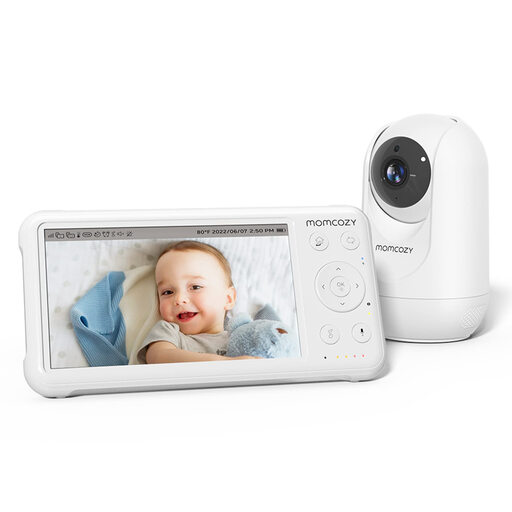
Why this suits the profile: The 5‑inch parent unit offers a larger screen and the camera can pan, tilt and zoom remotely. Ideal for parents who want to see more detail from one spot.
The product information lists a parent unit, night vision and a range of up to 960 ft in open space. So you can see in advance exactly what’s included in the set.
1080p display, PTZ control, 5000mAh battery in the parent unit, temperature monitoring and support for up to four cameras.
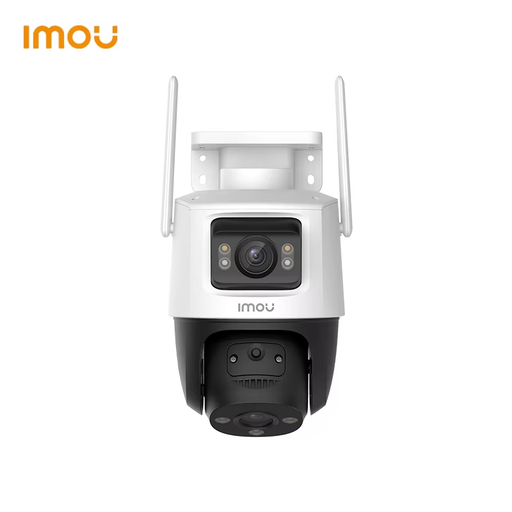
Why this suits the profile: This camera is aimed at monitoring around the home. It isn’t a standard baby monitor, but it can suit those who want one system for outdoor security and alerts.
The product information explicitly states IP66 for outdoor use. Even so, check that connections remain dry and properly sealed.
Dual lenses totalling 6MP, four night‑vision modes, person and vehicle detection, two‑way talk and microSD storage up to 256GB.
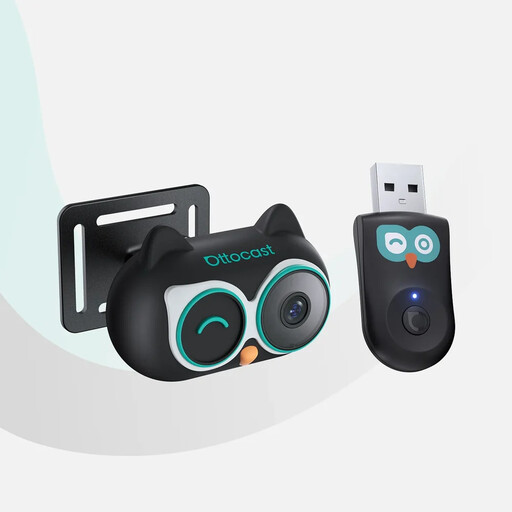
Why this suits the profile: This model is designed for in‑car use and shows the camera feed on a compatible touchscreen with wired CarPlay.
Compatibility is clearly defined: a car with OEM wired CarPlay and touchscreen is required. Android Auto isn’t supported.
1080p video, 150° field of view, 360° adjustable camera angle and infrared night mode without visible red light.
We’ve put together a complete, up‑to‑date list of products that fully meet these strict selection criteria and the applicable European safety regulations.
Mount the camera out of a child’s reach and keep cables away from the cot. According to the product information for the Momcozy BM01, a distance of around 1.5 to 4.5 metres from the cot is recommended. Always follow the manual for your chosen model.
A baby monitor is an aid and not a substitute for adult supervision. Also, don’t point an indoor or outdoor security camera at neighbours’ spaces or other private areas. Inform people in your home and visitors when you’re recording, and check the applicable privacy rules.
It can, but range is affected by walls, floors and other electronic devices. Use the parent unit where you usually spend time and check the connection before permanently mounting the camera.
This varies by model and usage mode. According to the product information, the VAVA VA‑IH006 PRO offers up to 10 hours with the screen on and up to 24 hours in audio mode. A large screen, constant video and active alerts use more power.
Not always. Some cameras offer local storage via a memory card or built‑in storage. Other features may require a cloud subscription. Check before buying which functions work without a subscription and where video is stored.
