
Vandaag of morgen in huis

Kwaliteit gegarandeerd

Welkomstaanbiedingen ontgrendelen: GRATIS bezorging | Tot 80% korting | Gratis 30 dagen JoyPlus-proefperiode
Download de app
A baby monitor with camera might seem easy to choose, until you start comparing product pages. One retailer highlights 2K picture quality, another an app, night vision or artificial intelligence. But a long list of features doesn’t always tell you how a product will perform in everyday use in a British home.
Look out for these three common pitfalls:
For a camera in the nursery, a stable picture is often more important than high resolution alone. 1080p is usually enough to see whether your child is awake or moving. 2K or 3MP can show more detail, but also requires more bandwidth and storage space.
Also check:
A baby monitor with night vision only works well when the lens is unobstructed and there are no blankets, curtains or bright backlighting directly in front of the camera.
A model with a parent unit often works without an internet connection between the camera and the screen. This can be useful if you mainly want to monitor your child at home. A baby monitor with app gives you remote access, for example while you’re at work or out and about, but depends on Wi-Fi, account security and the accompanying app.
A dual-mode model combines both options. Always check:
Change the default password after installation, use a strong Wi-Fi password and install firmware updates when they become available.
A baby monitor with motion detection can send an alert to your phone when it detects movement or sound. Check whether you can set up zones and whether the feature can distinguish between people, pets and general noise. Manufacturer claims about ‘smart’ recognition come from the brand itself, so treat them as product information rather than a guarantee of faultless alerts.
Also consider the storage options:
A baby monitor with two-way communication is handy for talking remotely or calling a pet. It isn’t a substitute for supervision. Place the camera out of your child’s reach, keep cords away from the cot and secure wall- or ceiling-mounted models firmly.
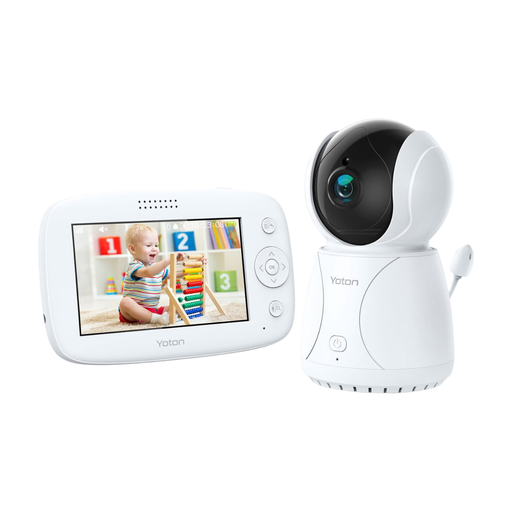
Why it suits this profile: This model has a 4.3-inch LCD screen and is designed for basic nursery monitoring, without the need to open an app.
The product information specifies a separate LCD screen, so you don’t have to rely entirely on a Wi-Fi connection or cloud subscription.
4.3-inch screen, night vision, pan-and-tilt function, two-way communication and a temperature gauge for reference.
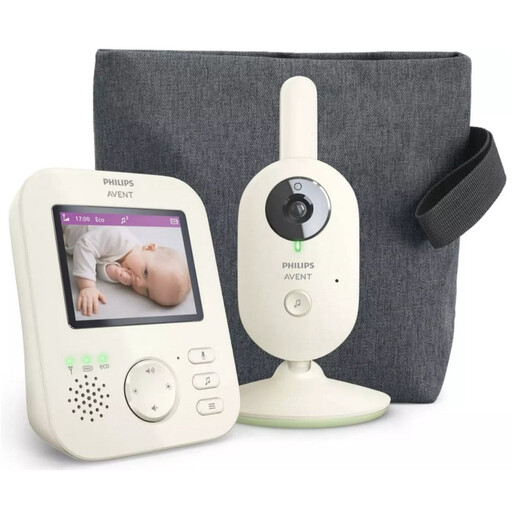
Why it suits this profile: Ideal for parents who want a traditional video connection with a parent unit and value features such as zoom, eco mode and lullabies.
The stated connection works with a paired parent unit. The product information gives a range of up to 50 metres indoors and up to 300 metres outdoors; walls can reduce this range.
2.8-inch colour screen, infrared night vision, zoom, VOX mode, two-way communication and eco mode.
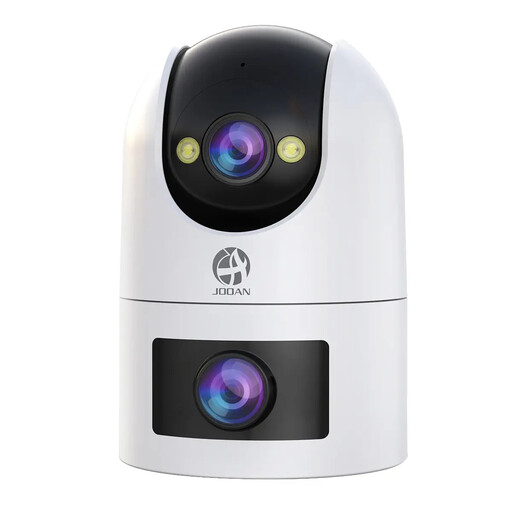
Why it suits this profile: This indoor security camera is a good fit for families who want to use one camera to monitor children, pets or several parts of a room.
According to the product information, the camera supports local recording on cards up to 256GB. Cloud storage is available for a fee; check the terms before use.
Dual lenses, 360-degree view via pan and tilt, 2.4GHz and 5GHz Wi-Fi, night vision, motion and sound alerts, and two-way audio.
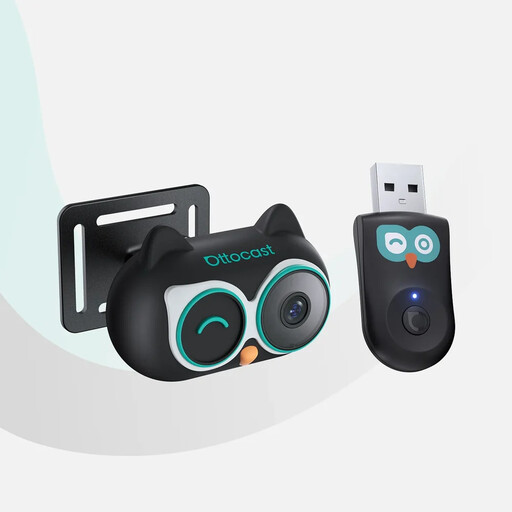
Why it suits this profile: Designed for parents who want to check on their child in the back seat using the car’s screen while travelling.
Compatibility is clearly limited: a car with wired OEM CarPlay and a touchscreen is required. Android Auto is not supported.
1080p picture, 150° viewing angle, adjustable camera angle, night vision with no visible red light and several viewing modes.
We’ve put together a complete, up-to-date list of products that meet these strict selection criteria and current European safety regulations.
It depends on the model. Some cameras remain available on your home network if the internet connection drops. You’ll usually need an internet connection to use the camera when you’re away from home. A baby monitor with a separate parent unit often uses its own wireless connection, making it less dependent on the internet.
Its lifespan depends on continuous use, power supply, cables, software support and battery quality. A model with a mains power supply can keep working for a long time, but check the cables, plugs and mounting regularly. For a smart baby monitor, it’s also worth checking how long the manufacturer provides app and security updates.
It depends on the storage method. A camera that records locally to a microSD card usually has no monthly storage costs, although you may need to buy the card separately. Cloud storage, advanced alerts or analytics may require a subscription after a trial period. So check the current terms in the product information before you buy.
