
Vandaag of morgen in huis

Kwaliteit gegarandeerd

Welkomstaanbiedingen ontgrendelen: GRATIS bezorging | Tot 80% korting | Gratis 30 dagen JoyPlus-proefperiode
Download de app
A baby monitor with a camera lets you see and hear your baby remotely, both during the day and at night. However, there are big differences between models. Some devices work only via Wi-Fi and an app, while others use a dedicated parent unit. Features such as night vision, motion detection and temperature monitoring may sound appealing, but they won’t always be useful for your home or daily routine.
The following points will help you tell practical features apart from marketing claims.
A manufacturer may quote an impressive range, but walls, ceilings and other wireless devices can affect the connection. So a baby monitor with a long range won’t necessarily work over the same distance in a terraced house as it would in an open field. Check whether the range is specified for both indoor and outdoor use.
For example, the Philips Avent SCD882/26 has a stated range of up to 50 metres indoors and up to 300 metres outdoors. Treat this as a maximum under specific conditions, not a guarantee for every home.
A baby monitor with night vision usually uses infrared imaging. The picture is often black and white, and details may look different from those in daylight. Consider the screen size, resolution and viewing angle. A camera that only points straight ahead may be less practical if your baby moves around in their cot.
A Wi-Fi baby monitor or a baby monitor with an app is handy if you want to check in while you’re out. However, the camera depends on your network, the app and your account settings. Use a strong password, install firmware updates and check where video footage is stored.
A baby monitor without Wi-Fi connects directly to a parent unit. This can make setup easier and limits the number of online services you use. Make sure the camera and parent unit are paired correctly, and that the signal is strong enough in your home.
These features matter for everyday use:
A security camera can technically be used as a baby monitor too, but take extra care with its positioning and app security, and bear in mind that it won’t include a dedicated parent unit.
A baby monitor with two-way talk is useful if you want to speak to your baby briefly from another room. However, talking through the monitor isn’t a substitute for supervision. Also check the battery life and how it was measured. A stated runtime in audio mode isn’t the same as continuous use with the screen switched on.
According to the product information, the VAVA VA-IH006 PRO offers up to 10 hours of use with the screen switched on and up to 24 hours in audio mode. The stated range of up to 300 metres applies in open spaces; indoors, it may be shorter.
Features such as lullabies, VOX mode, motion detection and temperature monitoring can be handy, but choose them based on your needs.
Always place the camera out of your child’s reach. Keep cords away from the cot, bedding and play area. A baby monitor is a useful aid, but it doesn’t replace proper supervision.
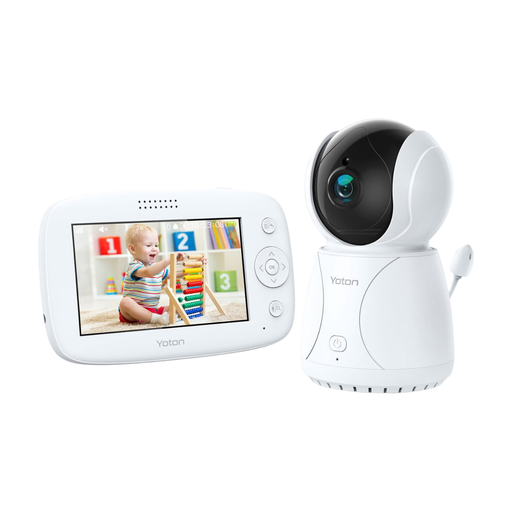
Why it suits this profile: The 4.3-inch parent unit combines a live view with temperature display, a rotating camera and two-way audio. It gives you the essentials at a glance, without the need for an app or cloud storage.
The product description lists a separate LCD screen, night vision and a rotation function. Temperature readings are for reference only and shouldn’t be treated as medical measurements.
4.3-inch screen, temperature sensor, night vision, rotation function and two-way audio.
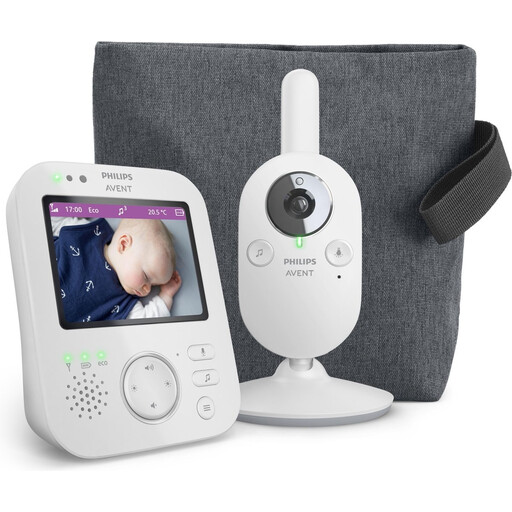
Why it suits this profile: This model uses its own parent unit for private monitoring without an app. The 3.5-inch screen, VOX mode and digital zoom are a good fit for parents who want straightforward controls.
The product information lists secure handset pairing, a wireless connection and a range of up to 50 metres indoors. The stated outdoor range is up to 300 metres.
3.5-inch screen, 2x digital zoom, VOX mode, infrared night vision and two lullabies.
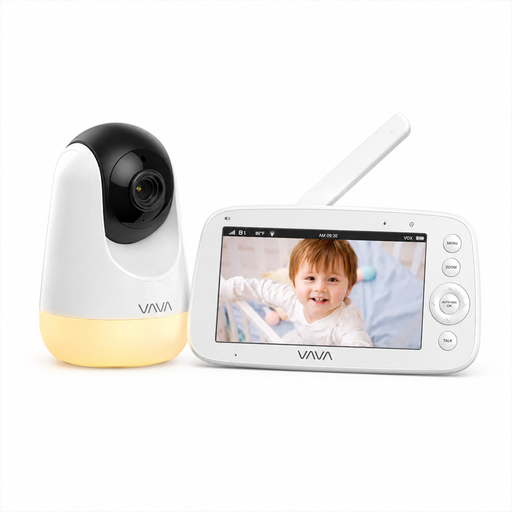
Why it suits this profile: The direct 2.4GHz connection works without Wi-Fi, an account or a cloud service. With a 5-inch screen, temperature readings and long battery life in audio mode, it’s practical for everyday use at home.
According to the product information, no app or cloud service is required. The stated range of 300 metres applies in open spaces, while indoor walls can reduce it.
720p screen, infrared night vision, 2x and 4x digital zoom, two-way audio and up to 24 hours in audio mode.
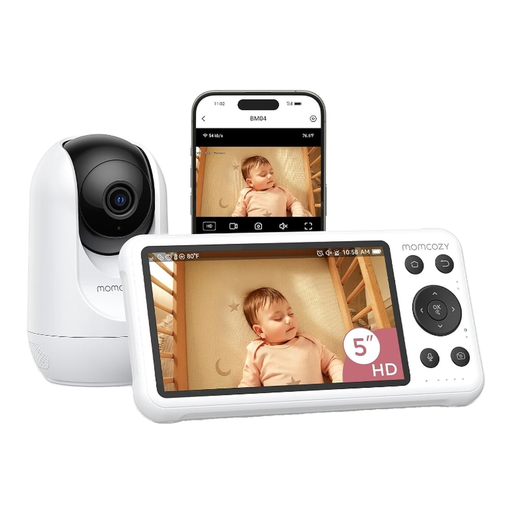
Why it suits this profile: This dual-mode system combines a 5-inch parent monitor with Wi-Fi access via an app. You can use the monitor at home and the app when you’re out, provided your network and settings are working properly.
The product description lists both a dedicated monitor and app control. Protect your Wi-Fi with a strong password, and check how local recordings and alerts are configured before you buy.
1080p video, motion and crying detection, night vision, two-way audio and local recording.
We’ve put together a complete, up-to-date list of products that meet these strict selection criteria and comply with current European safety regulations.
No. A model with its own parent unit can connect directly to the camera. A Wi-Fi baby monitor is mainly useful if you want to check in remotely via an app. If you’ll only use it indoors, a baby monitor without Wi-Fi may be all you need.
Place the camera securely and out of your child’s reach. Keep cords well away from the sleeping and play areas, and make sure no cables run along the cot. Always follow the manufacturer’s setup instructions. Once installed, check that the camera can’t be knocked over.
As well as the purchase price, you may need to factor in electricity, a microSD card or a cloud subscription. A model with local storage can help keep ongoing costs down. If you choose a camera with an app, you’ll also need to consider Wi-Fi, updates and any paid features. Check these costs before buying to make sure they suit the way you plan to use it.
