
Vandaag of morgen in huis

Kwaliteit gegarandeerd

Welkomstaanbiedingen ontgrendelen: GRATIS bezorging | Tot 80% korting | Gratis 30 dagen JoyPlus-proefperiode
Download de app
A baby fruit snack might seem simple to choose: grab a pouch or jar of fruit and you’re done. Yet products vary widely in age guidance, ingredients, packaging and shelf life. Especially when shopping online, it’s wise to look beyond a cheerful label or the words “natural” and “organic”.
A product labelled from 4 months isn’t automatically suitable for every baby of that age. Introducing solid foods depends on your child’s development and your personal circumstances. Always follow the advice on the packaging and, if in doubt, consult your health visitor or another healthcare professional.
Also pay attention to the difference between:
Fruit naturally contains sugar. A fruit purée with no added sugar can still contain sugars. So check the ingredients list and the nutritional information per 100g. Look out for added sugar, syrup, honey or other sweeteners.
The products in this guide state no added sugar, but that doesn’t mean they are free from naturally occurring fruit sugars.
A baby fruit squeeze pouch is handy for on the go, but eating straight from the packet can make it harder to see how much your baby is eating. For younger babies, squeezing the purée onto a spoon or into a bowl is often more practical. Always check the cap, packaging and warnings. A loose cap can be a choking hazard.
First, choose a product that matches the age recommendation on the packaging. A product for 12 months and older isn’t intended as a substitute for one from 4 or 6 months. Also note the texture: a smooth purée and a thicker pouch are not the same.
Look at the order of ingredients. The ingredient listed first is present in the largest amount. For example, with Olvarit Apple Strawberry Banana, the purée consists of apple, strawberry and banana, supplemented with water, rice flour and other ingredients according to the product information.
Always check the allergen information. The Pear Apple Yogurt variant states it contains milk on the label. Organix with oats mentions oats (gluten). An organic product is therefore not automatically free from allergens.
A 200g jar is handy for home, while a 100g or 120g pouch can be suitable for a day out. Storage instructions vary after opening:
Always follow the packaging. Information on a web shop may differ from the current label.
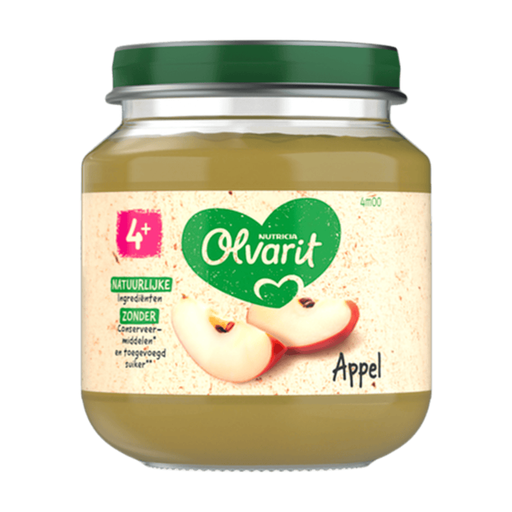
Why this fits the profile: A straightforward first fruit purée with a single fruit type and a 125g content. According to the product information, it is suitable as a complementary food from 4 months.
The age recommendation and usage instructions are clearly stated. The product information mentions no added sugar and advises that leftovers should be stored in the fridge and used within 48 hours.
Single fruit type, 125g content, no added sugar according to the product information, and free from gluten and cow’s milk protein according to the label.
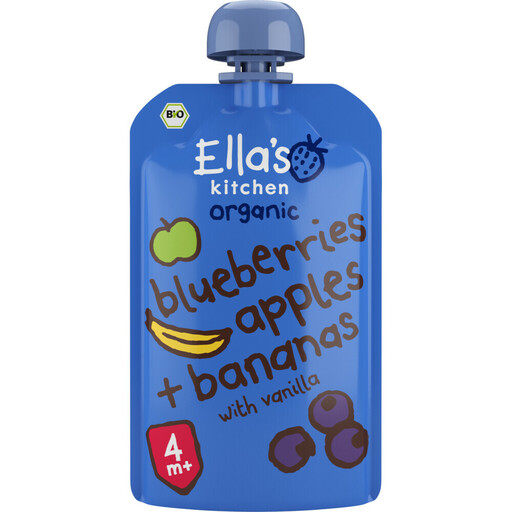
Why this fits the profile: For parents looking for organic baby food with fruit and a short, recognisable ingredients list. According to the product information, it is suitable from 4 months.
The pouch is not intended for babies under 4 months. The product information advises giving the purée on a spoon or in a bowl, so the cap is not used as a separate part.
Organic apple, banana and blueberry; 120g content; no added sugars according to the product information; no allergens listed.
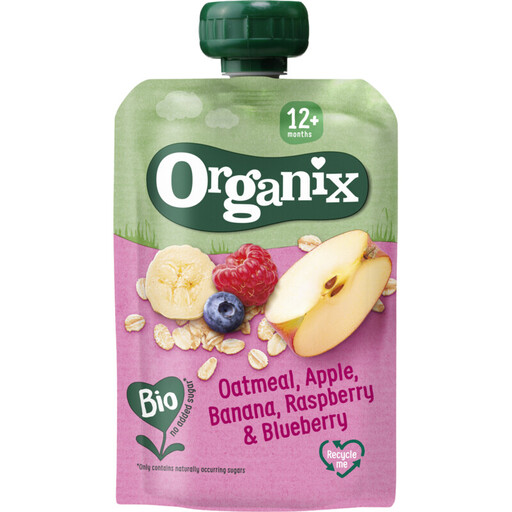
Why this fits the profile: An organic baby snack for on the go for children from 12 months, with fruit and grains in a handy squeeze pouch.
The age limit of 12 months is clearly stated. Oats are also listed as an allergen, so parents don’t rely solely on the fruit image.
Organic recipe, 100g content, oats and fruit in one pouch, and no added sugars according to the product information.
We’ve put together a full, up-to-date list of products that fully meet these strict selection criteria and comply with current European safety regulations.
That depends on the product. Some purées are labelled as suitable from 4 months, others from 6, 8 or 12 months. Always check the age recommendation and, if in doubt, discuss introducing solid foods with your health visitor.
Yes, a pouch is compact and usually doesn’t need to be warmed up. Take the pouch unopened with you and check the best-before date. For young children, it’s best to serve it on a spoon or in a bowl. Store leftovers in the fridge and follow the time stated on the packaging.
That depends on the packaging and the brand. In the product information for the items mentioned, this varies from 24 hours to 48 hours in the fridge. Always follow the shortest time stated on the current label, and throw the product away if the packaging is damaged, bloated or smells unusual.
