
Vandaag of morgen in huis

Kwaliteit gegarandeerd

Welkomstaanbiedingen ontgrendelen: GRATIS bezorging | Tot 80% korting | Gratis 30 dagen JoyPlus-proefperiode
Download de app
A baby fruit purée might seem simple to choose – just grab a jar or pouch with a flavour your baby likes. But products vary widely in age guidance, ingredients, portion size and packaging. Marketing terms like “pure”, “natural” or “organic” don’t tell you everything about what’s actually inside.
For parents in the UK, these are the key pitfalls to watch out for:
First, look at the age guidance on the label. The range includes products for:
The age on the packaging is a practical guide. The introduction of solid foods varies from child to child. If you’re unsure, discuss the transition with your health visitor. According to the product information for various 4M+ products, breast milk remains the main source of nutrition until 6 months, with fruit purée as a supplement.
With fruit that claims “no added sugar”, you need to check that no sugar, syrup or sweetener has actually been added to the ingredients. “No added sugar” doesn’t mean the product contains no sugar – natural fruit sugars are still present.
Also look out for:
For example: the ingredients list of Olvarit Pear Fruit Purée 4M+ 125g states 99.98% pear and L-ascorbic acid. The product information says it’s free from gluten-containing cereals and milk. Always check the current packaging with each purchase, as recipes and labels can change.
A 125g glass jar is practical for a baby’s first fruit meal and makes spooning out portions easy. A pouch is lightweight and handy for trips out, but follow the instructions:
A multipack can be good value if you use it regularly, but only once you know the flavour and portion size you like.
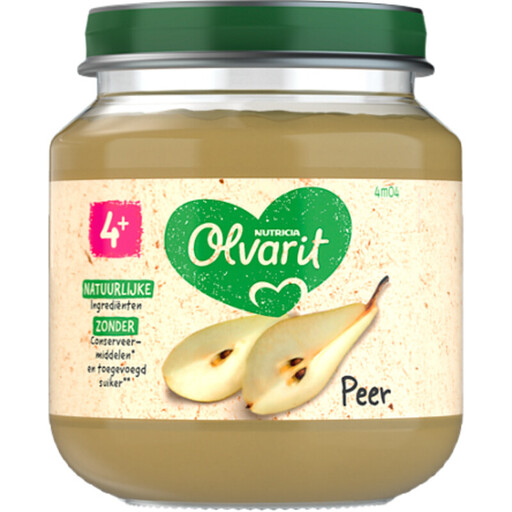
Why it fits the profile: A straightforward choice for first taste introductions, with one clear fruit base and a 125g portion.
According to the product information, the recipe is almost entirely pear. This means you don’t have to assess multiple fruit varieties at once during the first introduction.
125g; pear as the main ingredient; according to the stated specifications, free from gluten-containing cereals and milk.
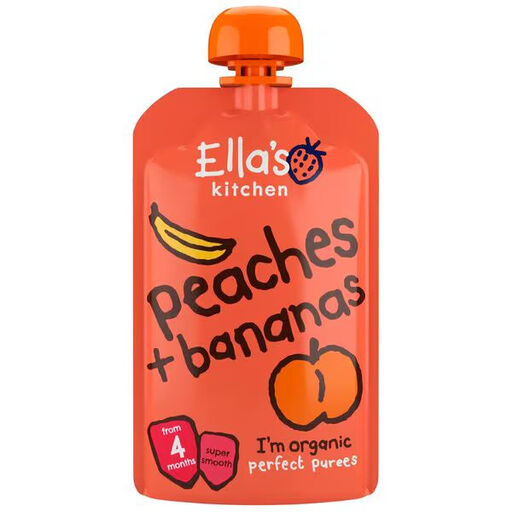
Why it fits the profile: Ideal for parents specifically looking for organic baby fruit and a short ingredients list.
The product description states 100% organic fruit, no added water and no added sugars. Do check this information on the packaging itself.
120g; 52% organic banana and 48% organic peach; suitable from 4 months according to the product information.
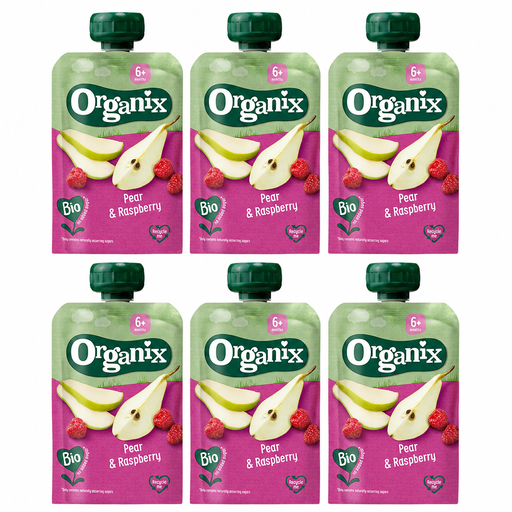
Why it fits the profile: A multipack for families who regularly take a portion to nursery, work or a day out.
The portions are individually packed, so you don’t have to open a larger jar each time and store leftovers.
Six 100g pouches; organic fruit recipe according to the product description; suitable from 6 months according to the product name.
We’ve put together a full, up-to-date list of products that fully meet these strict selection criteria and comply with current European safety regulations.
Choose a product that clearly states it’s suitable from 4 months, such as a smooth pear, banana, peach or peach-banana purée. Start with small amounts and follow the advice from your health visitor. Breast milk or formula remains important at this stage.
This varies by product. Many stated products must be stored in the fridge after opening and used within 48 hours. Some pouches, such as certain Organix products, state a shorter time. Always follow the packaging of the specific product.
No. The organic certification tells you about how the ingredients are grown, not automatically about sugar content. Check the ingredients list and look for a clear statement like “no added sugars”. Even then, fruit purée will contain naturally occurring sugars.
