
Vandaag of morgen in huis

Kwaliteit gegarandeerd

Welkomstaanbiedingen ontgrendelen: GRATIS bezorging | Tot 80% korting | Gratis 30 dagen JoyPlus-proefperiode
Download de app
Choosing a fruit purée for your baby may seem simple: pick a flavour your child likes and check the recommended age. However, there are clear differences between jars, pouches and ordinary compote. A product may look suitable but contain too much sugar, be unsuitable for your baby’s age or be designed mainly for convenience on the go rather than calm spoon-feeding.
With this practical guide, you can compare fruit purée for babies based on the factors that really matter. This helps you avoid a disappointing purchase and choose an option that suits your baby’s stage of eating and your daily routine.
Fruit purée for babies is often labelled 4M+, 6M+, 8M+ or 12M+. This information is not just packaging decoration. The texture, portion size and ingredients may vary depending on the recommended age.
A product suitable from 4 months is intended as an addition to your baby’s diet. Until around 6 months, milk remains the main source of nutrition according to product information from several brands. Introduce new foods in line with advice appropriate for your child and always follow the instructions on the label.
Fruit naturally contains sugars. No added sugars therefore does not mean sugar-free. Check the ingredients list for words such as sugar, syrup or concentrated fruit juice. A natural fruit flavour can still taste relatively sweet.
For comparison, the Olvarit and Ella’s Kitchen products mentioned state in their product descriptions that they contain no added sugar. By contrast, sugar is listed as an ingredient in g’woon Apple-Apricot Compote. This compote is also not specifically described as baby food. So don’t just look at the front of the pack—read the full packaging.
A fruit purée pouch for babies is practical in the pushchair, car or on holiday. However, drinking straight from the pouch is not ideal in every situation. By serving the purée in a bowl or on a spoon, you can see more clearly how much your child is eating and keep mealtimes more structured.
Also pay attention to warnings about the cap. Ella’s Kitchen, for example, states that the cap may pose a choking hazard to young children. Do not use a pouch that is damaged or swollen.
Start with the age shown on the packaging. For baby food from 4 months, single flavours such as pear, banana, mango or plum are easy to understand. This allows your baby to gradually discover different tastes.
With baby food from 8 months, you will more often find combinations such as apple, strawberry and banana. According to the product information, Olvarit Apple Strawberry Banana 8M56 contains, among other ingredients, 36.32% apple, 20% strawberry, 20% banana and 5% blackcurrant, combined with water, rice flour and other ingredients. For a child from 12 months, more complex combinations and convenient portions for taking out and about may be appealing.
For baby food from 6 months and baby food from 12 months, pay particular attention to the texture. A smooth fruit purée for babies is not the same as a product with more texture. The right choice depends on what your child can already eat safely.
Check the following points on the label:
For organic fruit purée, check the organic wording and certification mark on the current packaging. According to the product descriptions, various Ella’s Kitchen and Organix varieties are sold as organic. The wording ‘only naturally occurring sugars’ is a product claim made by the brand; always check this on the packaging.
A 125-gram jar is suitable for use at home and can be served with a spoon. A 70 to 120-gram pouch takes up less space and is convenient for days out. A multipack, such as six pouches, can be useful if you regularly use fruit purée.
After opening, follow the instructions on the packaging. The supplied product information states that several varieties must be refrigerated and used within 48 hours. Organix Apple, Peach & Mango states that it should be used within a maximum of one day after opening. The instructions therefore vary from one product to another.
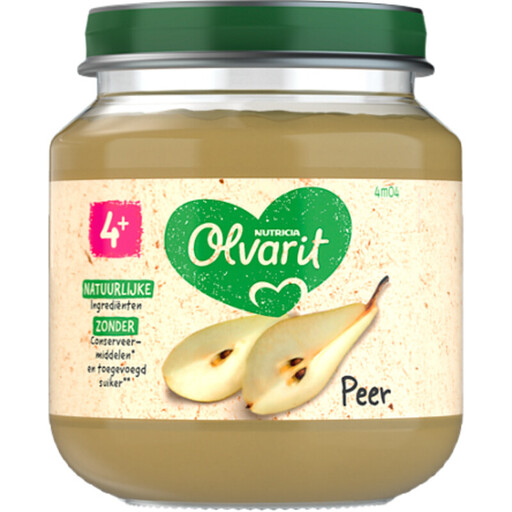
Why it suits this profile: The single-flavour pear purée in a 125-gram jar is a straightforward choice for your baby’s first fruit tastings at home.
The 4M+ age recommendation is clearly shown. According to the product information, this variety consists of 99.98% pear and L-ascorbic acid, with no added sugar listed.
125 grams, pear as the main ingredient and suitable as complementary fruit food from 4 months.
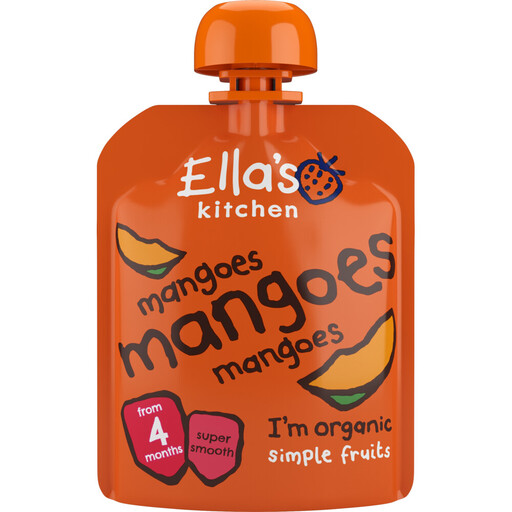
Why it suits this profile: This organic mango purée is designed for parents who prefer a short ingredients list and a pouch that can be used flexibly.
The product description states that it contains 100% organic mango and less than 1% organic concentrated lemon juice. According to the brand’s product information, no sugar is added.
Suitable from 4 months, 70 grams per pouch and can be served on a spoon or in a bowl.
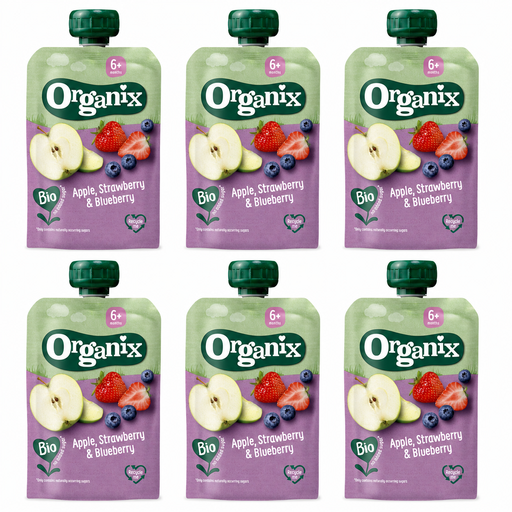
Why it suits this profile: A pack of six pouches is ideal for families who regularly use fruit purée pouches, at home or on the go.
The product title states 6m+ and the pack contains six portions. Check the current age and ingredients information on the packaging, as the online description is limited.
100 grams per pouch, a six-pack and a practical format for keeping in stock and taking on days out.
We’ve put together a complete, up-to-date list of products that fully meet these strict selection criteria and the applicable European safety regulations.
This varies by product. Many options in the range are labelled as suitable from 4 months, while others are intended from 6, 8 or 12 months. The age recommendation on the current packaging is the one to follow. For young babies, fruit purée is an addition to their diet, not a replacement for milk feeds.
Always follow the label. The product information for several varieties states that an opened product must be refrigerated and used within 48 hours. Some Organix products should be used within one day. Do not use a product if the packaging is swollen or damaged.
No. Fruit naturally contains sugars. ‘No added sugars’ means that, according to the ingredients list, no extra sugar has been added. So compare both the ingredients and the nutritional values per 100 grams.
