
Vandaag of morgen in huis

Kwaliteit gegarandeerd

Welkomstaanbiedingen ontgrendelen: GRATIS bezorging | Tot 80% korting | Gratis 30 dagen JoyPlus-proefperiode
Download de app
Finding a suitable fruity snack might seem straightforward, until you browse the shelves and product pages. Age recommendations vary, packaging comes in different sizes, and terms like “pure” or “natural” don’t always tell you enough about what’s inside. With these checkpoints, you can make a more informed choice when selecting baby fruit purée, baby fruit mash or a handy baby squeeze pouch.
The front often features a prominent fruit, while the ingredients list tells a different story. Always check the order of the ingredients. It starts with the ingredient that makes up the largest proportion of the product. For example, a purée with apple, strawberry and banana might be mostly apple.
Fruit naturally contains sugars. Baby food with no added sugar therefore doesn’t mean the product is sugar-free. Look at the ingredients list and the nutritional information per 100 grams. Also keep an eye on ingredients such as fruit juice concentrate, rice flour or grains. These can affect the composition and allergen information.
A product labelled fruit purée from 4 months isn’t automatically suitable for every baby. The introduction of solid foods varies from child to child. Follow the age recommendation on the packaging and, if in doubt, discuss when to start with your health visitor.
Once opened, a jar or squeeze pouch usually needs to be kept in the fridge and used within a limited time. That time varies by product: some state 24 hours, others 48 hours. Always check the label and never use a damaged or swollen package.
The age on the packaging is a first filter:
Don’t just look at the recommended age, but also at how it’s meant to be served. It’s better to offer a squeeze pouch on a spoon or in a small bowl, so your child doesn’t drink directly from the packaging all the time.
Compare the fruit percentages and check whether milk, oats, gluten or other allergens are present. For a product containing yoghurt, milk is obviously relevant. An organic label refers to the origin and production method according to the relevant regulations, but doesn’t mean the product contains no natural sugars.
With organic baby food such as Ella’s Kitchen or Organix, you still need to check the full ingredients list. According to the product information, the Ella’s Kitchen purée with blueberries, apple and banana contains organic fruit and vanilla extract. Organix products in the range include organic squeeze pouches with apple, peach and mango, or with apple, strawberry and quinoa.
A 100-gram pack is handy for a trip out or a small snack. Jars of 125 or 200 grams can be more practical when you want to divide a portion at home. Pay attention to the storage time after opening and the instruction to keep leftovers sealed in the fridge.
Also compare the packaging with how you’ll use it:
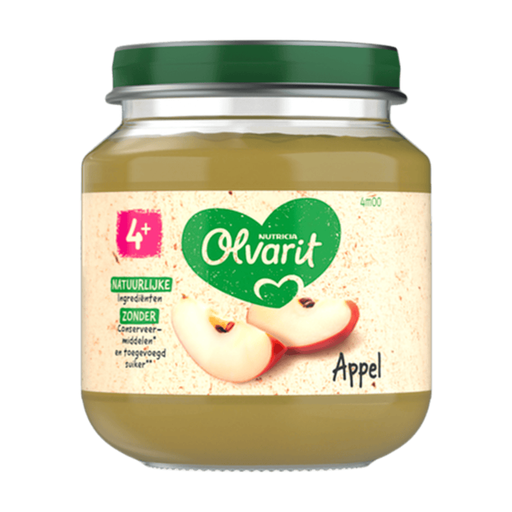
Why this fits the profile: A straightforward option for first tastes, with apple as a single fruit variety and a 125-gram content.
The age indication and usage information are clearly stated. According to the product information, it contains no added sugar or preservatives.
Suitable from 4 months according to the product label, apple as the main ingredient and a 125-gram portion.
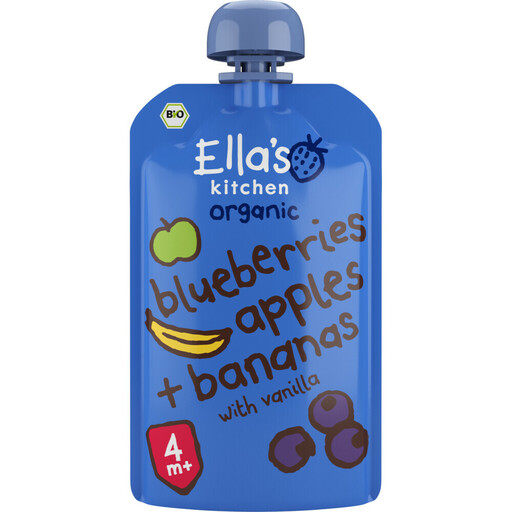
Why this fits the profile: This organic fruit purée combines apple, banana and blueberry in a 120-gram portion for home or on the go.
The product information lists the fruit percentages, no added sugars and suitability from 4 months. Check the packaging for the current details.
Organic ingredients according to the product label, 120-gram squeeze pouch and only naturally occurring fruit sugars.
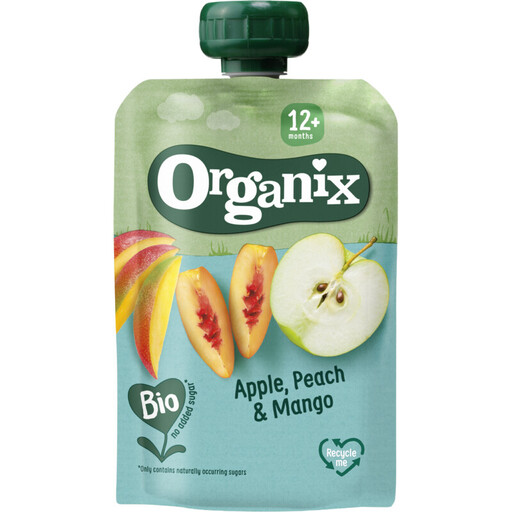
Why this fits the profile: A compact snack for toddlers from 12 months, ideal for days when you’re often out and about.
The 12-month age limit prevents you from choosing a product that doesn’t match the stated stage. Once opened, it should be used within one day according to the product information.
Handy 100-gram squeeze pouch, organic product line and, according to the product information, no added sugars.
We’ve put together a full, up-to-date list of products that fully meet these strict selection criteria and comply with current European safety regulations.
No. The age on the label is a guideline from the manufacturer. The introduction of solid foods also depends on your baby’s development and individual circumstances. Until 6 months, breast milk or formula remains the main source of nutrition. If in doubt, ask your health visitor for advice.
It varies by product. In the product information for the varieties mentioned, it’s usually 24 or 48 hours in the fridge. Seal the jar or pouch properly, use clean utensils and always follow the storage instructions on the packaging.
Not always. Compare the price per 100 grams rather than just the price per pack. A squeeze pouch can be extra practical for on the go, while a larger jar at home might work out more cost-effective per portion. Also pay attention to the shelf life after opening, so you don’t have to throw anything away.
