
Vandaag of morgen in huis

Kwaliteit gegarandeerd

Welkomstaanbiedingen ontgrendelen: GRATIS bezorging | Tot 80% korting | Gratis 30 dagen JoyPlus-proefperiode
Download de app
A baby fruit pouch might seem straightforward to pick, but the differences are often in the details. Is it suitable for your child’s age? Does it contain only naturally occurring sugars? Does it include milk, oats or other grains? And can you store an opened pouch?
Marketing terms like “pure”, “natural” and “no sugar” don’t always tell the full story. So always check the ingredients list, the age recommendation and the storage instructions. That way, you can avoid buying a large pack that doesn’t match your baby’s eating stage, or choosing a squeeze pouch that turns out to be less practical at home.
A product with no added sugar can still contain sugars. These come naturally from ingredients like apple, banana, mango or berries. Look at both the ingredients and the nutritional information on the label. With a baby fruit pouch that has no added sugars, the claim doesn’t mean the product is sugar-free.
A fruit pouch from 4 months may contain not only fruit but also lemon juice, yoghurt, oats or other grains. From 6 months, some fruit pouches include milk components or grains. Always check for allergens before introducing a new flavour, especially with products containing milk, oats, wheat, spelt, rye or gluten-containing grains.
A squeeze pouch is handy for on the go, but drinking straight from it makes it harder for your baby to practise calmly with a spoon and different textures. Where possible, serve the purée on a spoon or in a bowl when it suits your child’s development. Also, pay attention to the cap: keep it out of reach and never use a pouch that is damaged or bloated.
The age on the packaging is your first point of reference:
The age recommendation is not a substitute for the usage instructions. Always read the current label before giving the product to your child.
A short ingredients list makes it easier to compare. According to the product information, Olvarit Pear Fruit Puree 4M+ 125g consists of 99.98% pear and L-ascorbic acid. Ella’s Kitchen 4+M Strawberry + Apples 120G contains, according to the stated composition, 78% apple, 22% strawberry and less than 1% concentrated lemon juice.
With an organic fruit pouch, you can look at both the organic certification and the full ingredients list. Organic doesn’t automatically mean the product is free from milk or gluten. For example, Ella’s Kitchen organic mango breakfast 6M+ contains yoghurt and oats. According to the product description, Olvarit Mango Spelt Squeezable Fruit Smoothie contains milk, spelt and oats.
A pouch of 70 to 125 grams is practical for a small portion or for on the go. Larger jars of 200 grams can be more convenient when you’re at home and want to divide a fruit pouch across several mealtimes.
After opening, pay attention to the storage time:
The exact shelf life, temperature and preparation method are on the product label. Do not heat a pouch in the microwave. Pour the purée into a bowl or warm the sealed pouch only according to the instructions.
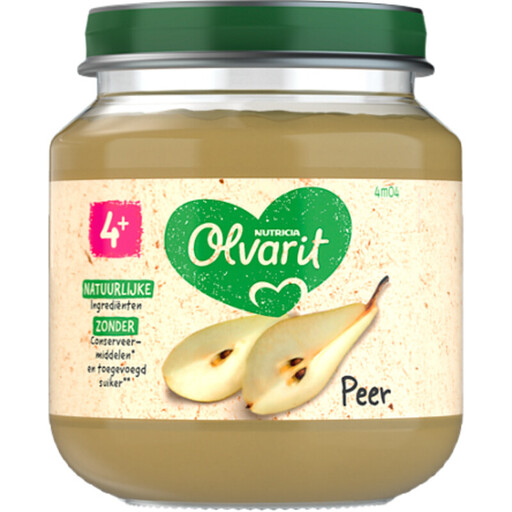
Why this fits the profile: A single-ingredient pear purée is straightforward for your baby’s first taste of fruit. The pack contains 125g and is suitable from 4 months according to the product information.
The short ingredients list makes it easier to introduce new flavours step by step and to check for allergens.
99.98% pear according to the product information; 125g; suitable from 4 months.
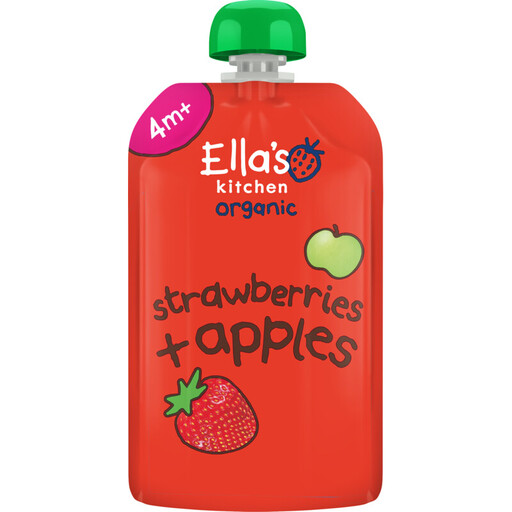
Why this fits the profile: This organic fruit purée combines apple and strawberry and is suitable from 4 months according to the product information. The pouch works well both at home and on the go.
The ingredients list mentions apple, strawberry and a small amount of lemon juice, with no added sugar according to the product description.
100% organic fruit purée according to the product information; 120g; no added sugars.
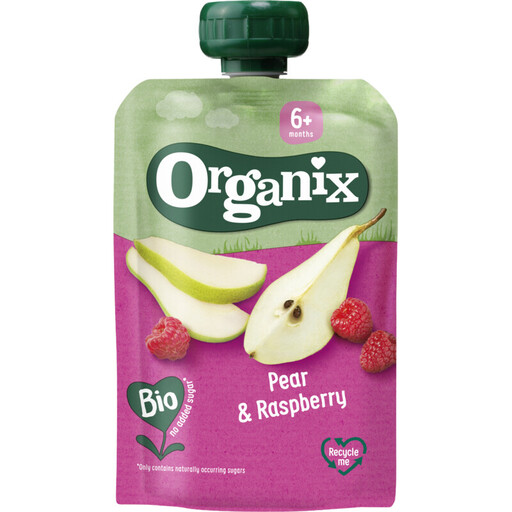
Why this fits the profile: The 100g pouch is designed for use from 6 months and suits parents who regularly take a baby fruit snack along on walks, to nursery or on days out.
The age, content and storage time are clearly specified. Once opened, the product must be refrigerated and used within one day.
Organic pear and raspberry purée; ratio 90% pear and 10% raspberry; no added sugars.
We’ve put together a full, up-to-date list of products that fully meet these strict selection criteria and comply with current European safety regulations.
This varies per child and according to feeding advice. On the product pages you’ll find varieties from 4, 6, 8 or 12 months. Use the age recommendation as a guide and, if needed, discuss the introduction of solid foods with your health visitor.
It depends on the brand and variety. The range includes products with a maximum storage time of both 24 hours and 48 hours. Store an opened product sealed in the fridge and always follow the instructions on the packaging.
A baby squeeze fruit product is mainly practical for on the go. Where possible, serve it with a spoon or in a bowl from time to time, so your child also gets used to different ways of eating and various textures. Also check the ingredients, age suitability and any allergens before buying a product.
