
Vandaag of morgen in huis

Kwaliteit gegarandeerd

Welkomstaanbiedingen ontgrendelen: GRATIS bezorging | Tot 80% korting | Gratis 30 dagen JoyPlus-proefperiode
Download de app
Choosing the right baby food seems simple, until you compare labels, age recommendations and packaging. A colourful fruit pouch is not automatically suitable for a young baby, and “no added sugar” does not mean that the product contains no sugars.
As a Joybuy Product Recommendation Officer, I filter the most important product information according to three points: age, ingredients and when to use it. This helps you see more quickly which fruit purée is suitable for your baby or toddler, and which pitfalls are best avoided.
Terms such as “pure”, “natural” and “fruity” say little about the composition on their own. Always check the ingredients list. Look for:
A fruit purée with no added sugar may still contain naturally occurring sugars from fruit. This is an important distinction when comparing products.
Baby food from 6 months, baby food from 8 months and baby food from 12 months are separate categories for a reason. The texture, ingredients and portion size may differ.
Use the age recommendation as a starting point, but also consider your child’s development. The product packaging takes precedence. If you are unsure about introducing a food, ask your health visitor or another suitable healthcare professional for advice.
A fruit pouch is practical when you are out and about, but it is usually intended as a snack or part of a mealtime. The smooth purée makes independent eating easy, but regularly drinking straight from the packaging provides fewer opportunities to practise using a spoon and experiencing different textures.
At home, you can serve fruit purée in a bowl. When you are out and about, a pouch is convenient, as long as you follow the usage and storage instructions.
First check whether the product is intended for:
The age stated on the product page may differ from that on older packaging. Therefore, always check the physical label when your order arrives.
You can recognise organic baby food not only by words such as “organic” or “bio”, but also by the official information on the packaging. According to the product information, Ella’s Kitchen The Yellow One is made with 100% organic fruit purée. Its ingredients include banana, apple, mango and apricot.
According to the product information, De Kleine Keuken Organic Fruitjes with Apricots also contains organic ingredients. This snack consists of dried apricots, dates, banana and rice flour. The product is intended for children from 12 months and may contain traces of nuts.
Pay attention to the difference between:
According to the product information, the Olvarit and Ella’s Kitchen fruit products mentioned contain no added sugar. This makes them suitable for parents specifically looking for a fruit purée with no added sugar, but it says nothing about the total amount of natural fruit sugars.
A 200-gram jar is practical for use at home, while a 90 to 100-gram pouch is easy to fit into a changing bag. After opening, pay attention to the storage period:
The exact shelf life and temperature are stated on the packaging. Do not use a product if the packaging is damaged or if the storage conditions have not been followed.
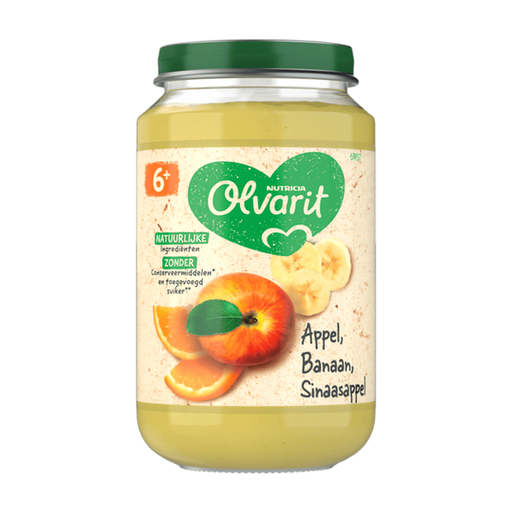
Why this suits the profile: A simple fruit purée for parents looking for a first product from 6 months, with a familiar fruit combination.
The age recommendation and ingredient proportions are specified: 78% apple, 18% banana and 4% orange juice according to the product information.
200 grams per pack, suitable from 6 months and a short ingredients list.
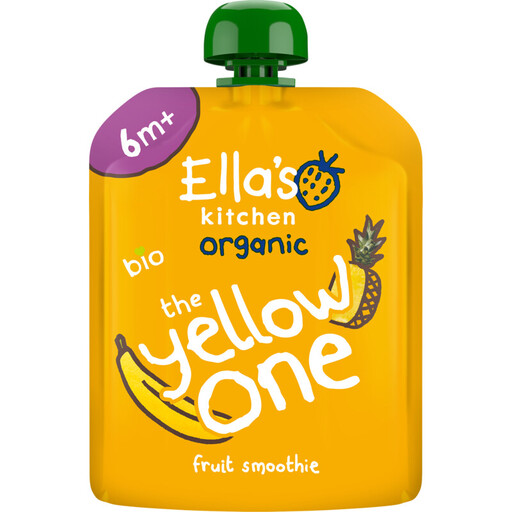
Why this suits the profile: Ideal for parents looking for organic baby food with several types of fruit in a compact pouch.
The product information states that it contains organic ingredients and no added sugars. Check the current packaging for the age recommendation.
90 grams, several types of fruit and, according to the product information, suitable from 6 months.
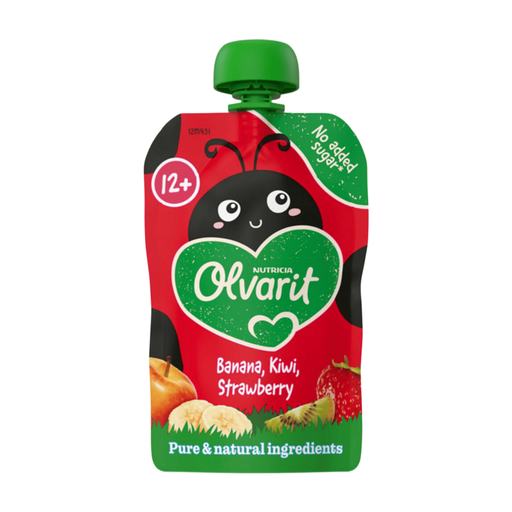
Why this suits the profile: A practical option for toddlers from 12 months and parents who often take a snack with them when out and about.
The product clearly states “from 12 months” and, according to the product information, contains no added sugars.
100 grams, resealable after use and a combination of banana, apple, strawberry and kiwi.
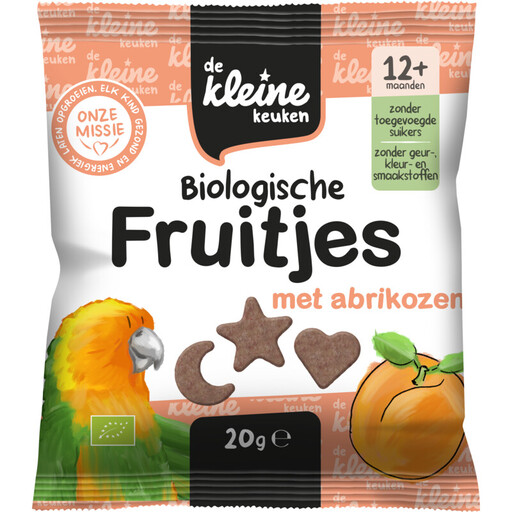
Why this suits the profile: Suitable for parents looking for a compact organic fruit snack for their toddler after the purée stage.
The age recommendation from 12 months is stated. It also indicates that the product contains only naturally occurring sugars.
20 grams per portion, organic ingredients according to the product information and convenient as an occasional snack.
We have put together a complete, up-to-date list of products that fully meet these strict selection criteria and the applicable European safety regulations.
Choose a product that explicitly states that it is suitable from 6 months. Also pay attention to a smooth texture, the ingredients list and any allergens. The product information for Olvarit Apple Banana Orange and Ella’s Kitchen The Yellow One, among others, recommends them from 6 months. Always check the current label when purchasing.
This varies by product. Many fruit purées should be stored sealed in the fridge and used within 24 to 48 hours. A pouch may have a shorter storage period than a jar. Always follow the instructions on the packaging and do not use leftovers if they have been left out of the fridge for too long.
A fruit pouch can be a convenient snack, particularly when you are out and about. However, check the minimum age, ingredients and sugar information. Do not automatically use it as a replacement for every eating experience: serving it in a bowl at home can help you continue offering spoon-feeding and different textures.
