
Vandaag of morgen in huis

Kwaliteit gegarandeerd

Welkomstaanbiedingen ontgrendelen: GRATIS bezorging | Tot 80% korting | Gratis 30 dagen JoyPlus-proefperiode
Download de app
Buying baby food seems straightforward, until you put different jars, pouches and cereal products side by side. Terms like “pure”, “natural” and “no added sugar” don’t tell the whole story. The age indication, allergens and preparation method determine whether a product really suits your situation.
Confusion can also arise in search results. If you search for baby food, you might come across results for cat treats too. So always check the species and product category before you order.
A baby meal with no added sugar can still contain natural sugars from fruit, milk or yoghurt. So don’t just look at the front of the packaging – also check the ingredients list and the nutritional information table.
With fruit purée, a higher sugar content isn’t automatically a problem: fruit naturally contains sugars. However, it’s a good idea to alternate between fruit, vegetables and complete meals. That way, you prevent your child from getting used to only sweet flavours.
Baby food from 4 months, baby food from 6 months, baby food from 8 months and baby food from 12 months often differ in texture, composition and ingredients. A product labelled from 8 months is not intended as a general guideline for a younger baby.
Also pay attention to the preparation method. A fruit purée, vegetable purée for babies and a complete baby meal each have a different purpose. If you’re unsure about introducing solid foods or allergens, you can consult your health visitor or another healthcare professional.
A bulk pack isn’t always better value if you have to use an opened product within 48 hours. Check:
Always follow the instructions on the packaging. Product information on a webpage can change or differ from the current label.
For first tastes, smooth purées are often practical. According to the product information, Olvarit Apple 4M+ and Olvarit Cauliflower Baby Purée 4M+ consist of apple and 100% cauliflower respectively. They are intended as a supplement; until 6 months, milk feeding remains the most important source of nutrition.
From 6 months, you can look at combinations with vegetables, fruit, grains or yoghurt. From 8 months, chunkier textures and complete meals such as carrot-chicken-potato or spaghetti bolognese are available. Always check that the texture matches your child’s development.
Read the ingredients from top to bottom. The ingredients listed first are present in the largest amounts. Pay particular attention to:
Ella’s Kitchen fruit purées, for example, state no added sugars, but some varieties do contain yoghurt or oats. That makes the allergen information more important than a short marketing claim on the front.
Don’t just compare per 100 grams, but also per pack or stated serving. With baby porridge, the nutritional value after preparation can differ from the dry form. According to the product information, Olvarit fine grains from 8 months contains 367 kcal per 100 grams of dry product and 92 kcal per 25-gram serving.
Nestlé Junior Cereals Multifruit is described as suitable from 8 months and contains grains, fruit, iron and vitamin D. The ingredients list includes wheat, oats, rye, barley and spelt. This is relevant information for parents who want to check for gluten or possible traces.
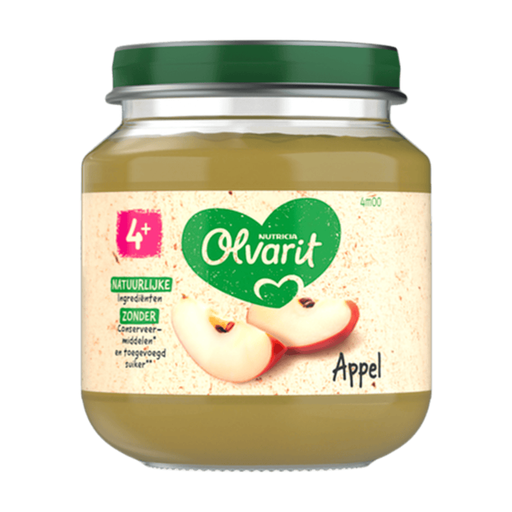
Why this fits the profile: A manageable portion for parents starting first tastes who want to try one flavour at a time.
The product information states no added sugar and an age indication from 4 months. Check the current label before use.
125 grams, apple as the main ingredient and, according to the listing, free from gluten and cows’ milk protein.
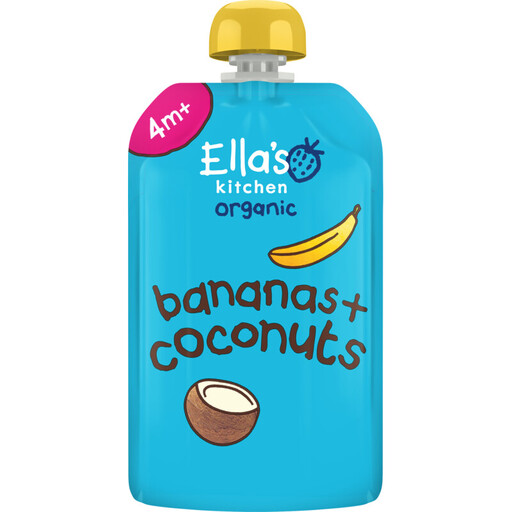
Why this fits the profile: Ideal for parents looking for organic fruit purée for home and on the go.
The product description mentions 100% organic ingredients and no added sugars. The composition consists of banana, coconut milk and lemon juice.
Suitable from 4 months; after opening, keep refrigerated and use within 48 hours.
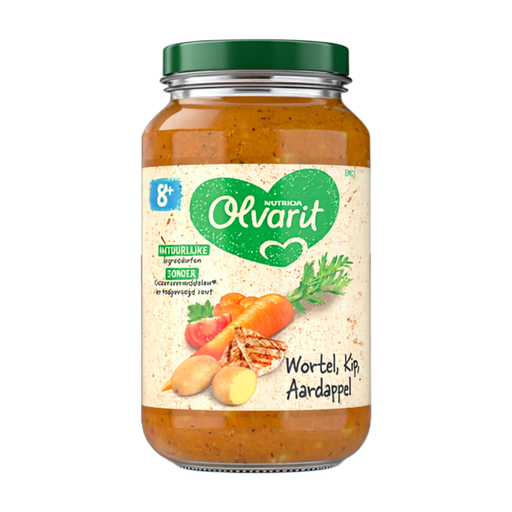
Why this fits the profile: A practical choice for lunch or an evening meal from 8 months when cooking from scratch isn’t convenient.
The ingredients and nutritional values are specified: including 33% carrot, 19% potato and 8% chicken. The listing mentions wheat as an allergen.
200 grams, 63 kcal per 100 grams according to the product information, and keeps for a maximum of 48 hours refrigerated after opening.
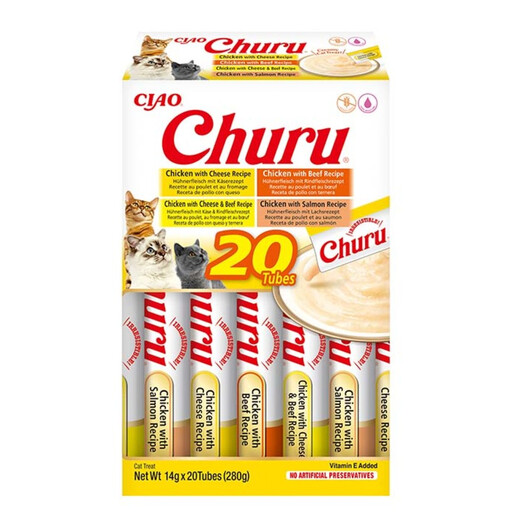
Why this fits the profile: For cat owners looking for a moist, low-calorie reward as a treat, topping or aid for giving medication.
This is clearly cat food and not baby food. The product information states 91% moisture and 6 kcal per tube; give it to cats only.
Multipack with 20 tubes, chicken and beef as protein sources and an analytical moisture content of 91%.
We’ve put together a full, up-to-date list of products that fully meet these strict selection criteria and comply with current European safety regulations.
Products with a clear indication from 4 months, such as smooth fruit purée or vegetable purée, are designed for this. Start with small amounts and follow the advice from your health visitor. Always check the current packaging.
Baby porridge is usually prepared with milk or water and eaten with a spoon. Drinking porridge for babies is more liquid and, according to the product instructions, is offered directly from a pack or bottle. Bambix Drinkable Porridge Biscuit is, according to the product information, suitable from 12 months. Shake the pack and follow the storage advice after opening.
This varies per product. Many purées and meals must be stored covered in the fridge after opening and used within 48 hours. Dry cereal products, such as Olvarit fine grains or Nestlé baby cereals, should be stored dry and tightly sealed. The packaging is always the deciding factor.
