
Vandaag of morgen in huis

Kwaliteit gegarandeerd

Welkomstaanbiedingen ontgrendelen: GRATIS bezorging | Tot 80% korting | Gratis 30 dagen JoyPlus-proefperiode
Download de app
Buying baby food seems simple, until you have to choose between fruit purées, vegetable purées, meal jars, breakfast products and snacks. Age recommendations vary, ingredient lists differ, and a handy pouch is not automatically suitable as an everyday meal.
For parents and carers in the UK, there are three common pitfalls to look out for:
Start by choosing a product that matches the age recommendation on the label. Baby food from 6 months, for example, includes soft fruit purées and smooth vegetable and meal combinations. From 8 months, you’ll often find more distinctive flavours and a thicker texture suited to this stage.
An age recommendation is no substitute for personalised advice. Every child develops differently, so follow the instructions on the packaging and ask your health visitor or doctor for advice if you’re unsure.
For baby food from 8 months, check more than just the age recommendation. Look at:
Ingredients are listed in order of quantity. For fruit products, it’s useful to see which fruit makes up the largest proportion. For organic baby food, check whether the product is actually labelled as organic and which ingredients are organic.
A product labelled no added sugar may still contain natural sugars from fruit. You can see this in the nutrition table. According to the product information, Organix Bio Mango & Pear Granola contains only naturally occurring sugars, and its recipe is made up of 48% mango, 48% pear and 4% oat flakes. Always check the current packaging yourself, as recipes and labels can change.
It’s also important to check each variety of familiar products such as Olvarit baby food. The ingredients in a fruit jar differ from those in a meal jar containing meat, fish, pasta or grains.
Allergens are usually clearly listed on the label. Examples from the range include:
Once opened, products often need to be kept in the fridge for a short time only. Product information may specify a maximum of 24 or 48 hours, depending on the variety. Always follow the instructions on the packaging. Check the lid, pouch or packaging for damage, and don’t use a product if it’s swollen.
The options below are based on objective information such as age recommendation, quantity, ingredients and storage instructions. The information is based on the available product descriptions; always follow the packaging.
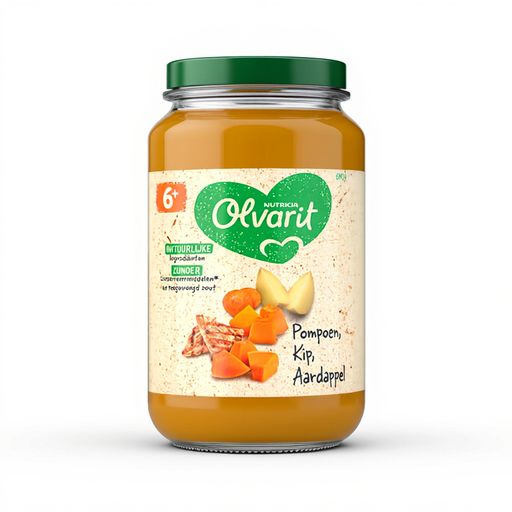
Why it suits this profile: A meal jar for babies from 6 months, for carers looking for a clear age recommendation and a familiar combination.
The ingredients and nutritional values are listed. According to the product information, the recipe includes 43% pumpkin and 8% chicken; check the allergens and current packaging before use.
200 grams, suitable from 6 months and, according to the product information, contains no added salt.
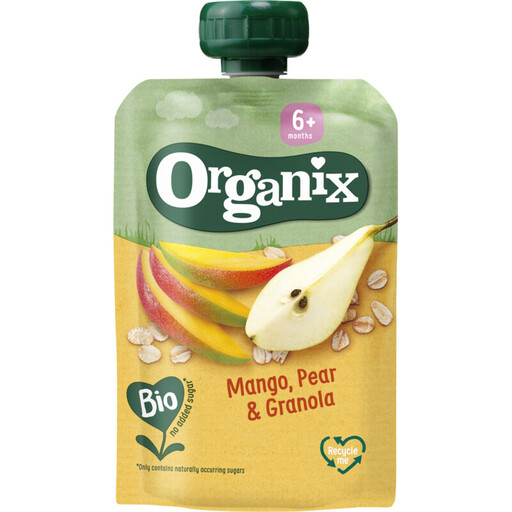
Why it suits this profile: A good choice if you want to compare organic baby food made with fruit and grains, and check the ingredients carefully for yourself.
The organic and no added sugar claims come from Organix product information. The nutrition table also shows that the product contains natural sugars.
Suitable from 6 months, 100 grams, and made with mango, pear and oat flakes according to the stated recipe.
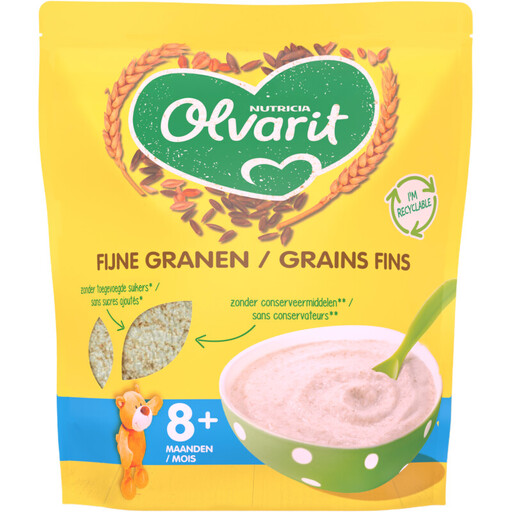
Why it suits this profile: A practical choice for families who regularly prepare baby porridge for breakfast from 8 months and want to keep a supply in the cupboard.
The packaging states the mixing ratio, allergens and storage time after opening. The product contains cereals with gluten, so check this before use if your child has an allergy or intolerance.
200 grams, 10 grams of fibre per 100 grams according to the product information, and no added sugar.
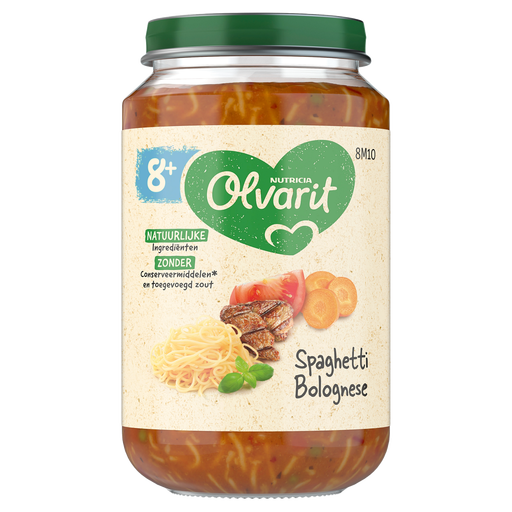
Why it suits this profile: An option for families wanting to introduce a variety of flavours and textures from 8 months, alongside vegetable purées.
The product information lists the main ingredients and allergens, including wheat and egg. This lets you check what’s in it rather than relying on the meal name alone.
200 grams, suitable from 8 months and, according to the product information, contains 32% tomato juice, 18% carrot and 8% beef.
We’ve put together a complete, up-to-date list of products that meet these strict selection criteria and the applicable European safety requirements.
That depends on your baby’s development and the instructions on the label. The range includes products from 6 months such as fruit purée, soft vegetable purées and meal jars with ingredients such as pumpkin, chicken and potato. If you want to keep an eye on your child’s reaction, introduce new ingredients one at a time.
This varies by product. Some dairy products should be kept refrigerated for no more than 24 hours after opening; meal jars and fruit purées often state a maximum of 48 hours. Always check the packaging, seal any leftovers and store them in the fridge. Only heat the amount you need.
No. Baby food with no added sugar can still contain natural sugars from fruit, grains or milk. So check both the ingredients list and the nutrition table. For example, a fruit purée may contain relatively high levels of natural sugars, even when no sugar has been added.
