
Vandaag of morgen in huis

Kwaliteit gegarandeerd

Welkomstaanbiedingen ontgrendelen: GRATIS bezorging | Tot 80% korting | Gratis 30 dagen JoyPlus-proefperiode
Download de app
From 6 months, your baby’s eating routine starts to change. Alongside breast or bottle feeds, small portions of solid food come into the picture. That often means looking for a suitable fruit purée for your baby, a vegetable purée, a complete baby meal or convenient food for when you’re out and about.
Packaging doesn’t always make it easy to choose. Words such as “natural”, “organic” or “for self-feeding” only tell you so much, so check the ingredients, age guidance and storage advice too. Use this checklist to avoid unsuitable buys and choose baby food that suits your needs.
A cheerful pack or a claim such as “no added sugar” doesn’t tell the whole story. Fruit purée naturally contains sugars, so check the ingredients list and nutritional information per 100 grams. Also look for milk, gluten, soya or other allergens.
According to the product information, Organix Bio Pear & Raspberry is made up of 90% pear purée and 10% raspberry purée. It contains no added sugar, but it does contain naturally occurring sugars. This is useful information when comparing different organic baby food options.
Not every jar or pouch labelled from 6 months is intended for the same purpose. Fruit purée is different from a meal containing vegetables, rice and chicken. Always check that the product is suitable for your baby’s age and that the texture is right for what your child can already eat.
A product labelled “6 months and over” isn’t an automatic recommendation to introduce every type of food at once. If you’re unsure about starting complementary feeding or introducing allergens, speak to your health visitor or another healthcare professional.
Many long-life products can be stored unrefrigerated while unopened. Different rules often apply once they’ve been opened. For example, the product information for several Olvarit products says that leftovers should be kept sealed in the fridge and used within 48 hours. Some pouches should be used within 24 hours at most.
You could note the opening date on the lid or pouch. Don’t serve food from packaging that is damaged, swollen or past its use-by date.
First, check the age category. Then look at the texture: smooth purée, porridge, yoghurt-style food or a meal with several ingredients. A 100-gram pack, for example, is handy as a snack, while a 200-gram meal pack may be more suitable for a mealtime at home.
A vegetable purée for your baby often contains vegetables with rice, potato or meat. Olvarit Pumpkin, Chicken & Potato product information lists 43% pumpkin, 8% chicken, 8% carrot and 8% potato, among other ingredients. Olvarit Carrot Chicken Rice is listed as containing 50% carrot, 25.1% rice and 8.5% chicken. Percentages like these help you compare products objectively.
Read the full ingredients list, especially if your baby has already reacted to certain foods. Look out for:
A product with no added sugar isn’t sugar-free: fruit naturally contains sugar. And “organic” doesn’t automatically mean a product is free from allergens. Always check the label.
For formula, such as Nutrilon follow-on milk 2, the preparation instructions are particularly important. According to the product information, the powder should be made up with clean, boiled water that has cooled to around 40 °C. Prepared formula should be used within one hour; leftovers must not be reheated or stored. Always follow the latest instructions on the pack and ask a healthcare professional for advice if you’re unsure.
With ready-to-eat food, convenience is a key difference. A baby dessert such as Yogolino can be stored unopened at room temperature, according to the product information. Once opened, it should be kept in the fridge and used within 24 hours at most. Check the pack, as storage advice may differ between varieties.
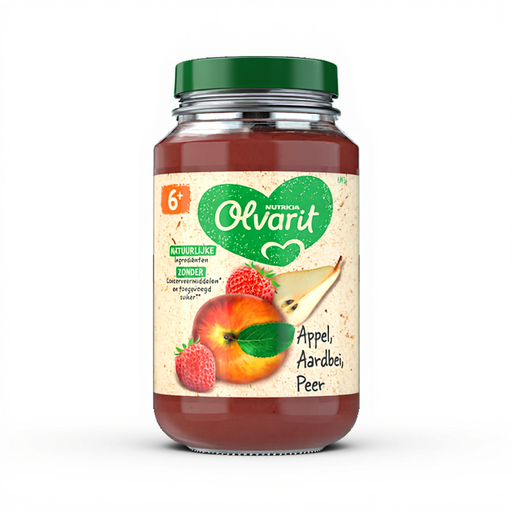
Why it suits this profile: The 200-gram pack is a good choice if you want to plan several mealtimes and are looking for fruit purée with apple, strawberry and pear.
The age guidance from 6 months and the ingredients list are clearly shown with the product. Once opened, keep it refrigerated and use within 48 hours.
Fruit purée with apple, strawberry and pear; 200-gram portion; suitable from 6 months according to the product information.
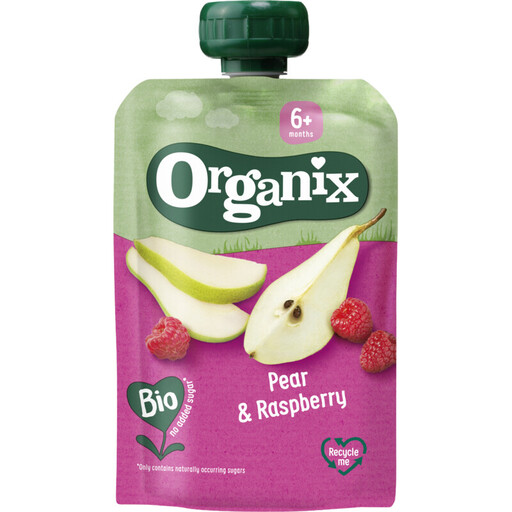
Why it suits this profile: An organic fruit option with a short ingredients list, designed for parents who place particular importance on the product’s origin and ingredients.
The product information lists 90% organic pear and 10% organic raspberry, with no added sugar. Naturally occurring sugars are still present.
Organic fruit purée; 100 grams; suitable from 6 months; a handy fruit pouch for when you’re out and about.
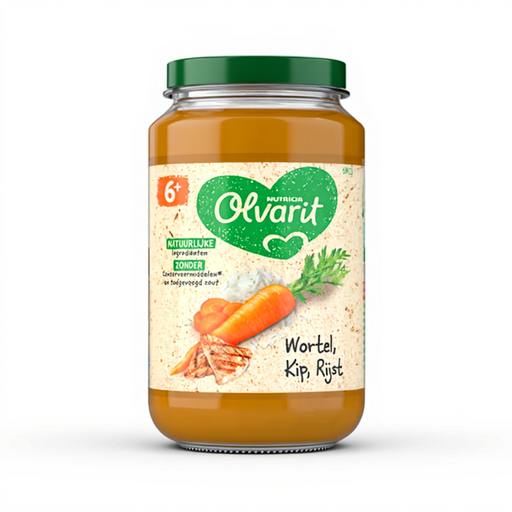
Why it suits this profile: A ready-made baby meal for parents who want to serve a combination of vegetables, rice and chicken on busy days.
The product information lists the ingredients, nutritional values and storage period. It also states that the product is free from cow’s milk protein and gluten; always check the packaging again.
200 grams; 50% carrot and 8.5% chicken according to the product information; 61 kcal per 100 grams; once opened, keep refrigerated for up to 48 hours.
We’ve put together a complete, up-to-date list of products that meet these strict selection criteria and the current European safety regulations.
It depends on the mealtime and your baby’s development. You could consider fruit purée, vegetable purée, baby porridge, a soft baby meal or a dairy product labelled as suitable from 6 months. Always check the packaging, ingredients and texture.
It varies by product. Product information often gives storage times of 24 or 48 hours. Baby fruit pouches often need to be used within one day. Keep opened food sealed in the fridge and always follow the label if its instructions differ.
No. “Organic” refers to how the ingredients are produced; it doesn’t automatically tell you about allergens, texture or age suitability. Check whether it contains milk, gluten, soya or other ingredients, and choose a product with suitable guidance from 6 months.
