
Vandaag of morgen in huis

Kwaliteit gegarandeerd

Welkomstaanbiedingen ontgrendelen: GRATIS bezorging | Tot 80% korting | Gratis 30 dagen JoyPlus-proefperiode
Download de app
From 6 months, your baby’s eating habits can change quickly. Alongside milk, fruit purées, vegetables, grains and sometimes dairy desserts start to feature. There’s a wide range of baby food from 6 months available, but attractive packaging doesn’t always tell you exactly what you’re buying. Age suitability, ingredients, allergens and storage instructions all help you decide whether a product is right for your situation.
A product can be baby food with no added sugar and still contain natural sugars from fruit. For example, Organix Bio Pear & Raspberry states that it contains only naturally occurring sugars. The ingredients are 90% organic pear purée and 10% organic raspberry purée.
So don’t just look at the claims on the front of the pack. Check the full ingredients list and nutritional information per 100 grams. A fruit purée for babies from 6 months made with several kinds of fruit may taste relatively sweet, even without added sugar.
“From 6 months” doesn’t automatically mean that every product is suitable for every baby of that age. Always check:
For example, baby yoghurt, a baby dessert or fruit purée isn’t a substitute for all milk feeds. Follow-on milk from 6 months is intended to be part of a varied diet. If you’re unsure, speak to your health visitor or a doctor.
A baby food pouch is handy when you’re out and about, but eating straight from the pack reduces opportunities to practise using a spoon and trying different textures. Where possible, squeeze the fruit purée onto a spoon instead. Check the cap, too, and supervise your baby while they eat from the pouch. Once opened, pouches often need to be used within a short time, such as 24 or 48 hours when kept in the fridge.
Start with products clearly labelled as suitable from 6 months. A smooth purée can be practical for those first tastes. As your baby develops, you can try more textured options.
Check the pack size:
Read the ingredients list from top to bottom: the ingredient listed first is generally present in the largest quantity. Pay particular attention to milk, soya, fish, oats and gluten. For example, Nestlé Yogolino Pear contains milk and isn’t listed as suitable for babies with a cow’s milk allergy or lactose intolerance.
You should check organic baby food for allergens, too. Organic refers to how the ingredients are produced; it doesn’t mean the product is free from milk, gluten or other allergens.
Use the packaging as your guide. Examples from the range:
Also check the use-by date and look for any packaging that’s bulging or damaged. Don’t use baby food if the packaging smells unusual, is leaking or is swollen.
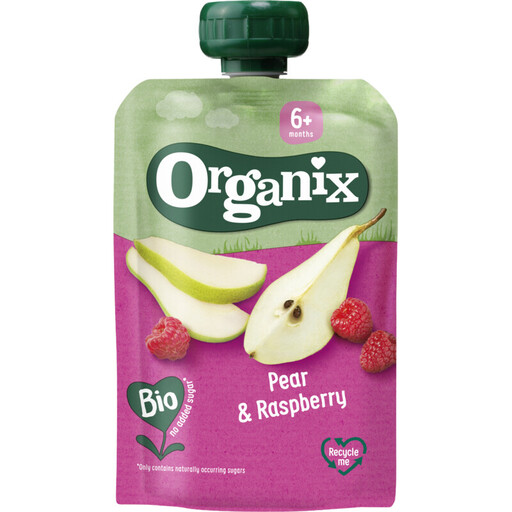
Why it suits this profile: A 100 gram portion with two types of fruit and a simple ingredients list. Handy for introducing new flavours without opening a large pack.
The product information states that no sugars have been added. Check the label, though, as the 10 grams of sugar per 100 grams occur naturally in the fruit.
Organic fruit, 46 kcal per 100 grams and suitable from 6 months.
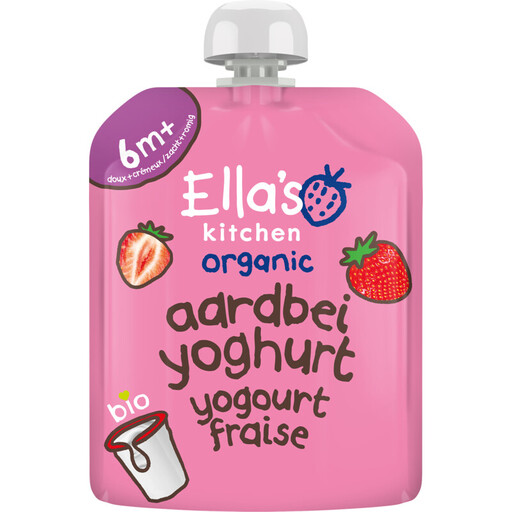
Why it suits this profile: A small organic yoghurt option with fruit, designed as a snack or dessert from 6 months.
The portion size is clearly defined. Before buying, check the current packaging and allergen information, as milk is listed.
Positioned as an organic product, 90 grams per pack and suitable from 6 months.
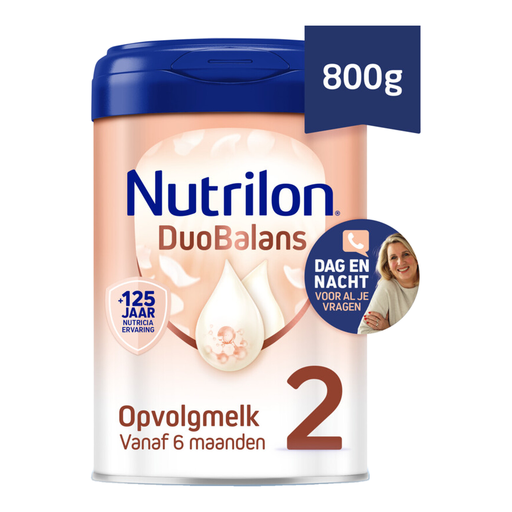
Why it suits this profile: An 800 gram pack for families who regularly use follow-on milk and can follow the preparation instructions consistently.
The product information recommends 14.6 grams of powder per 100 ml of water and says to use the product within four weeks of opening. This makes it easier to plan how much you’ll use and how long it can be stored.
Suitable from 6 months, 800 grams in each pack and product information covering milk, soya and fish allergens.
Vitamin D for babies is a food supplement, not everyday baby food. Davitamon Vitamin D Oil states on its label that each daily dose of 10 drops provides 10 micrograms of vitamin D3. The product contains peanut oil. Give the recommended amount, and don’t combine it with other vitamin D supplements without seeking advice.
Take extra care with specialist products such as Nutrilon A.R. 2. According to the product information, this is a food for special medical purposes for babies from 6 months and should only be used under medical supervision. Don’t choose this type of product based solely on an online description.
We’ve put together a complete, up-to-date list of products that meet these strict selection criteria and the applicable European safety requirements.
No. Follow-on milk from 6 months can be part of your baby’s diet, but the right choice depends on what your baby eats and the advice of your health visitor. Always follow the preparation instructions on the pack.
It varies from product to product. Often, it will keep for one to two days in the fridge, but follow the instructions on the pack. For example, Organix says to use the product within one day of opening, while some Ella’s Kitchen and Olvarit products can be kept chilled for up to 48 hours.
A baby dessert or baby yoghurt can be offered as part of a varied diet. Check the ingredients, portion size and allergens. It doesn’t automatically replace a complete milk feed or a varied meal.
